
You’ll want a simple, evidence-based winter plan that soothes sensitivity, restores your skin barrier, and stays budget-friendly. Start with gentle cleansing and layering humectants before ceramide-rich creams, protect exposed skin, and save harsh actives for warmer months — there are practical swaps and timing tips that make this doable without breaking the bank, and a few targeted tricks will help stubborn patches heal.
Gentle Daily Cleansing With Lukewarm Water
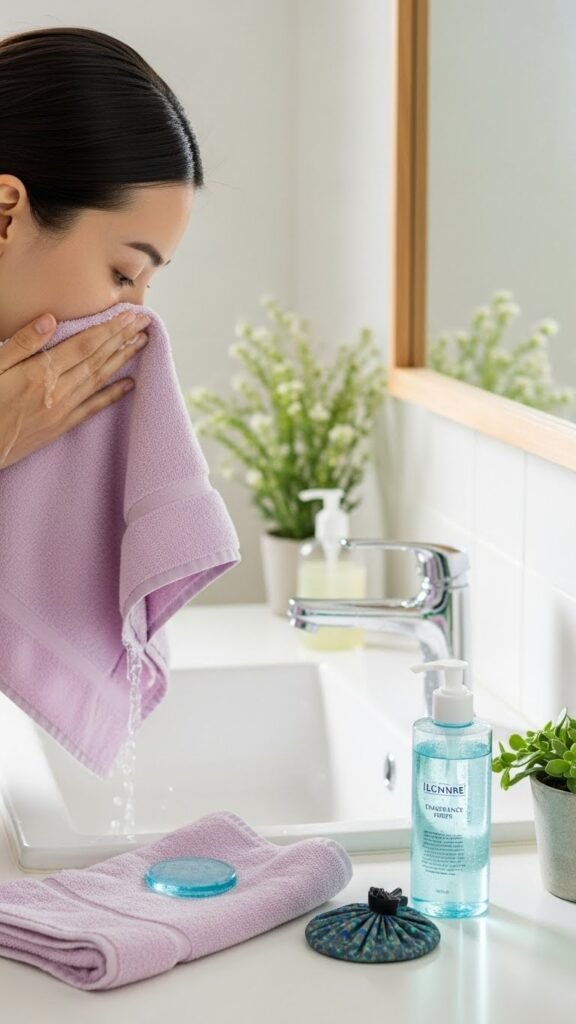
Start your winter skincare routine by gently cleansing your face once or twice a day with lukewarm water and a mild, fragrance-free cleanser. You’ll respect temperature sensitivity, avoiding hot water that strips oils.
Keep cleansing brief, pat dry, and follow targeted pore closing rituals like cool compresses or lightweight toner. This practical approach preserves barrier function, saves money, and lets you control results.
Choose a Mild Hydrating Cleanser
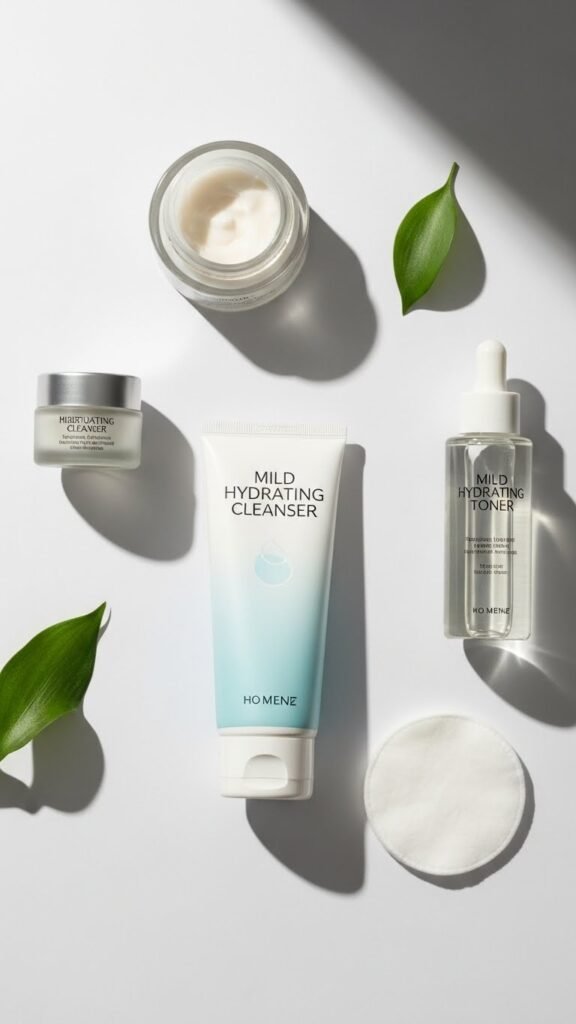
When winter air dries your skin, pick a mild hydrating cleanser that removes dirt without stripping natural oils; look for gentle surfactants (like cocamidopropyl betaine or decyl glucoside), humectants (glycerin, hyaluronic acid), and few to no fragrances or alcohols.
Choose sulfate free cleansers or fragrance free foams to reduce irritation. Test patch products, use minimal product, and rinse gently to keep barrier intact.
Shorten Shower Time to Preserve Moisture

After switching to a gentle hydrating cleanser, shorten your showers to help lock in moisture and protect your skin barrier. Aim for short showering—5–7 minutes—using lukewarm water temperature rather than hot.
Shorter exposure reduces lipid loss and irritation, so you’ll retain hydration and feel freer from constant dryness. Pat skin dry and apply moisturizer within minutes to seal in benefits and support sensitive skin.
Remove Makeup Gently With Micellar Water
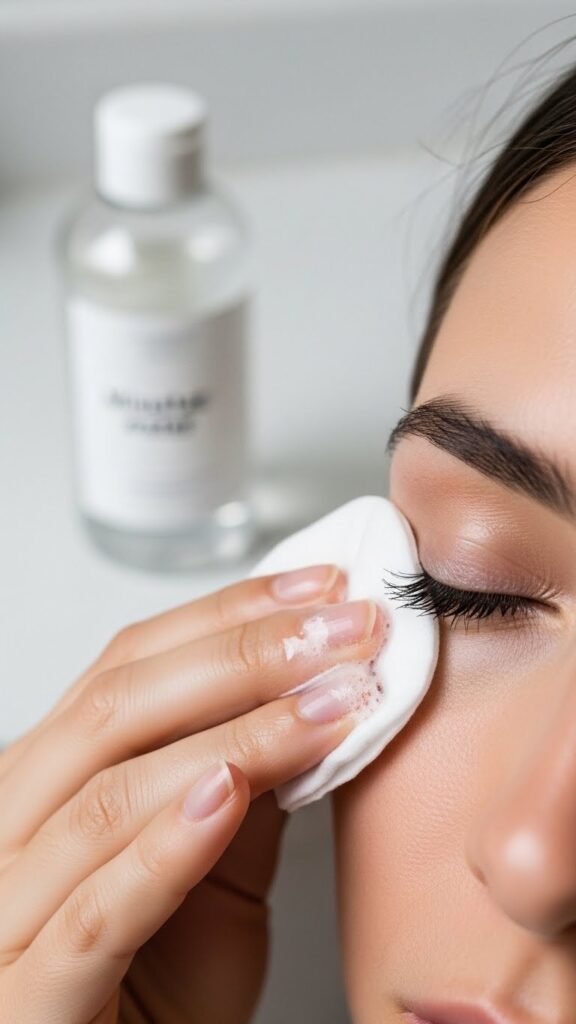
Reach for micellar water to lift makeup without rubbing hard or stripping your skin; its tiny micelles attract oil and dirt so you can cleanse with minimal friction.
Use biodegradable pads to swab gently, focusing on the sensitive eye area and lashes. You’ll remove waterproof makeup efficiently, reduce irritation, and avoid harsh cleansers. Rinse only if residue bothers you.
Pat Skin Dry Instead of Rubbing
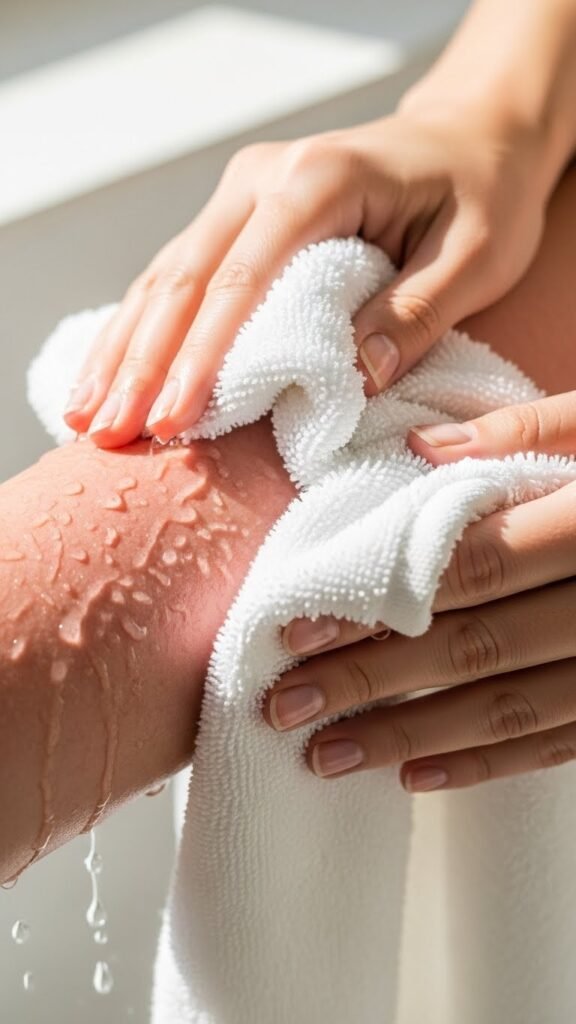
Micellar water removes makeup without scrubbing, but how you dry matters just as much for barrier health. Use a gentle patting technique with a soft, clean cotton or microfiber cloth to avoid friction that strips lipids.
Choose towel selection for low-abrasion — avoid rough terry. You’ll preserve moisture and reduce irritation, supporting sensitive skin while keeping your routine simple and freeing.
Apply Moisturizer Immediately While Skin Is Damp
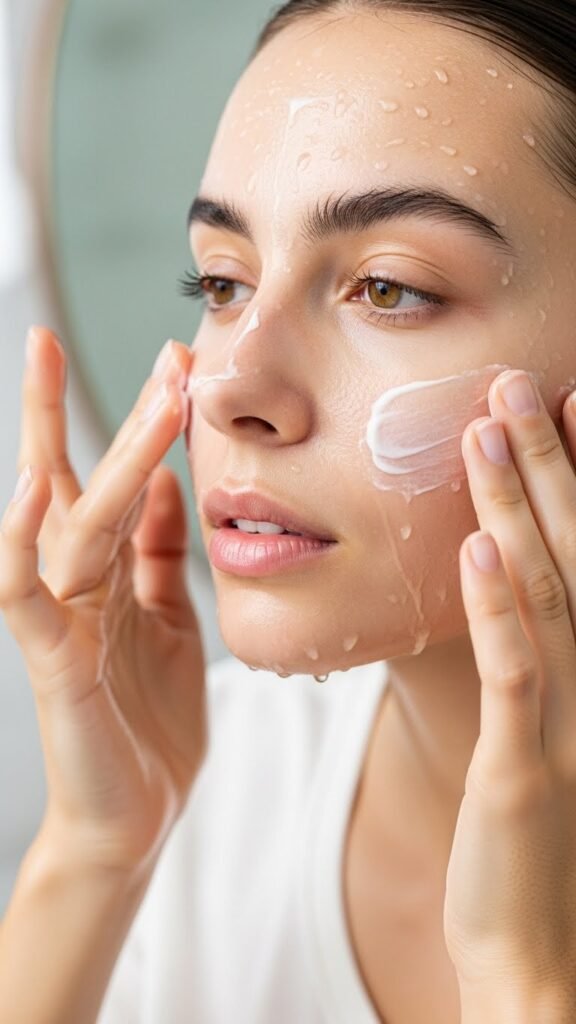
Usually apply your moisturizer right after you pat your skin damp, because trapping that surface water helps lock in hydration and reinforces the skin barrier.
After a post shower routine, you’ll perform effective moisture locking to reduce transepidermal water loss. This quick step supports skin sealing, minimizes temperature sensitivity, and’s budget-friendly—protecting sensitive skin without extra products or time.
Layer a Humectant Serum Under Moisturizer
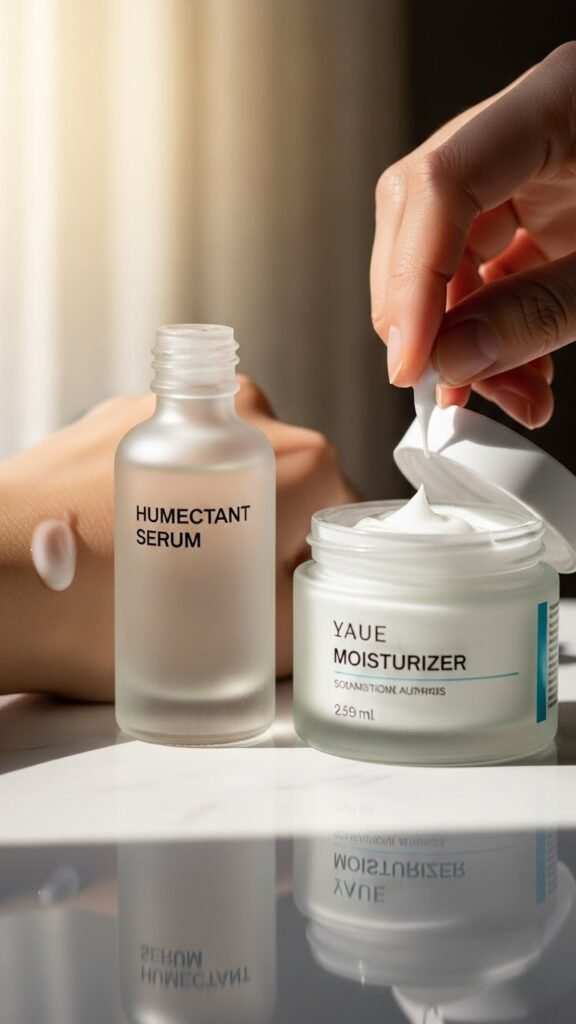
Often you’ll get the best hydration by applying a humectant serum (like 2–5% hyaluronic acid, 3–5% glycerin, or 2–4% propanediol) directly onto damp skin before your moisturizer; humectants draw water into the stratum corneum, increasing skin water content, while the moisturizer seals that water in.
Use this layering technique for clear ingredient timing: apply serum, wait seconds, then moisturize to lock hydration.
Opt for Emollient-Rich Products on Hands and Feet
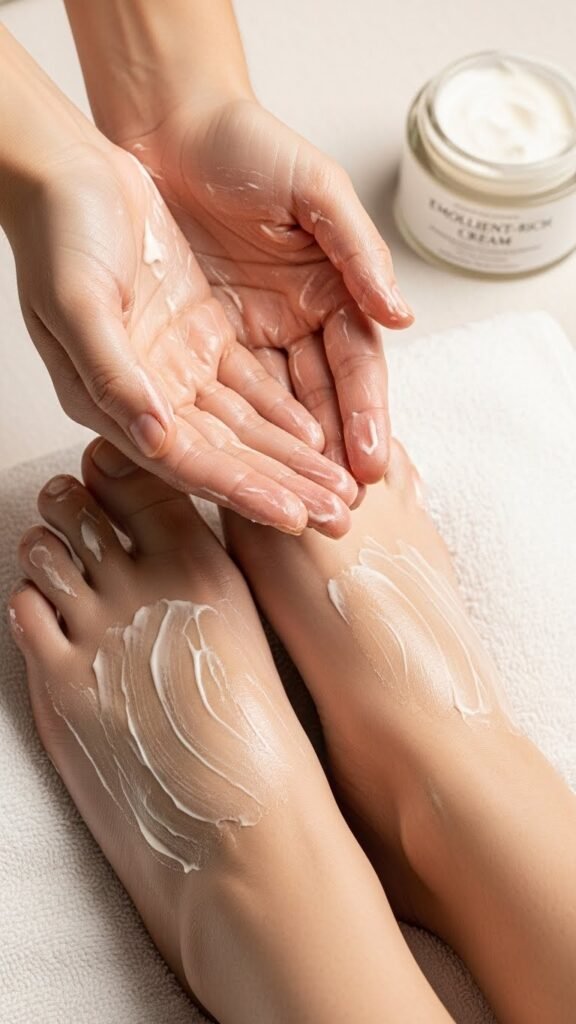
Choose emollient-rich creams and balms for your hands and feet to restore flexibility and prevent cracks—look for ingredients like petrolatum, shea butter, ceramides, and fatty alcohols (cetyl/stearyl alcohol) that fill gaps between skin cells and reduce trans-epidermal water loss.
Apply a concentrated hand cream after washing and a thicker foot balm at night, wearing cotton gloves or socks to boost absorption and protect skin barrier.
Keep a Multi-Purpose Ointment for Very Dry Patches
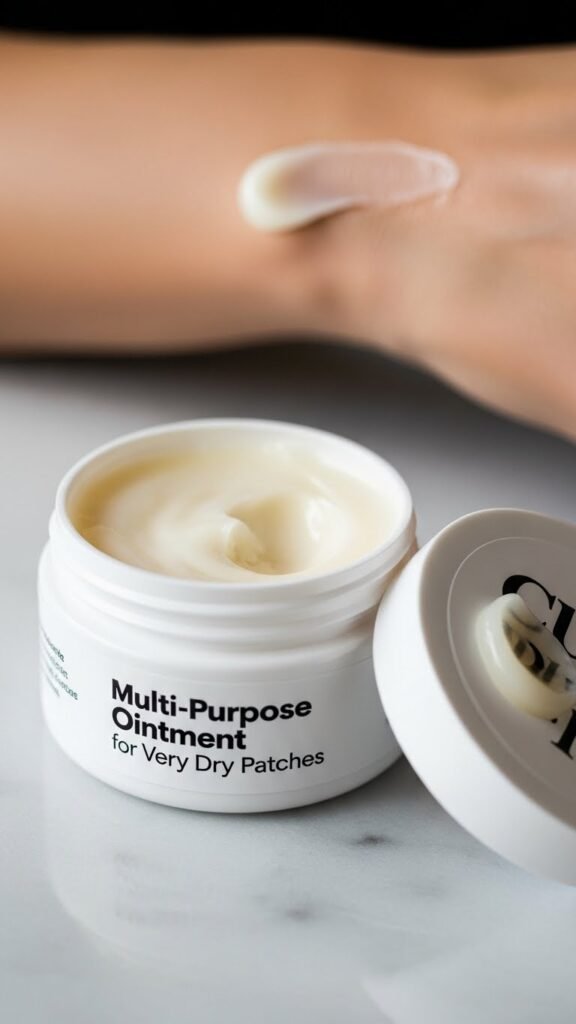
Keep a multi-purpose ointment on hand for stubborn dry patches you need to treat quickly. You’ll apply a thick layer to cracked areas, choosing petroleum alternatives if you prefer plant-based options. Evidence supports overnight occlusion to boost repair and reduce transepidermal water loss. Use sparingly, patch-test first, and carry a small tube so you can act fast without compromising sensitive skin’s comfort and freedom.
Wear Soft, Breathable Layers Against Skin

Layer soft, breathable layers directly against your skin to reduce friction and trap moisture without overheating. Choose lightweight fabrics with proven fabric breathability—merino, silk blends, or synthetic wicks—for effective thermal layering.
You’ll limit irritation, stay mobile, and regulate temperature during activity. Wash gently, avoid harsh detergents, and replace items that pill to maintain barrier function and extend wear with minimal waste.
Protect Face and Lips With Scarves and Balaclavas

Pull a scarf or balaclava up over your nose and mouth to shield delicate skin from windburn and moisture loss—both common triggers for irritation in cold weather. Choose breathable balaclava fabrics like merino or technical blends to cut wind while letting skin breathe. Pair coverage with lip balm layering—occlusive over emollient—to lock moisture. Replace damp coverings promptly to prevent chill and irritation.
Use Gloves to Shield Hands From Cold and Wind
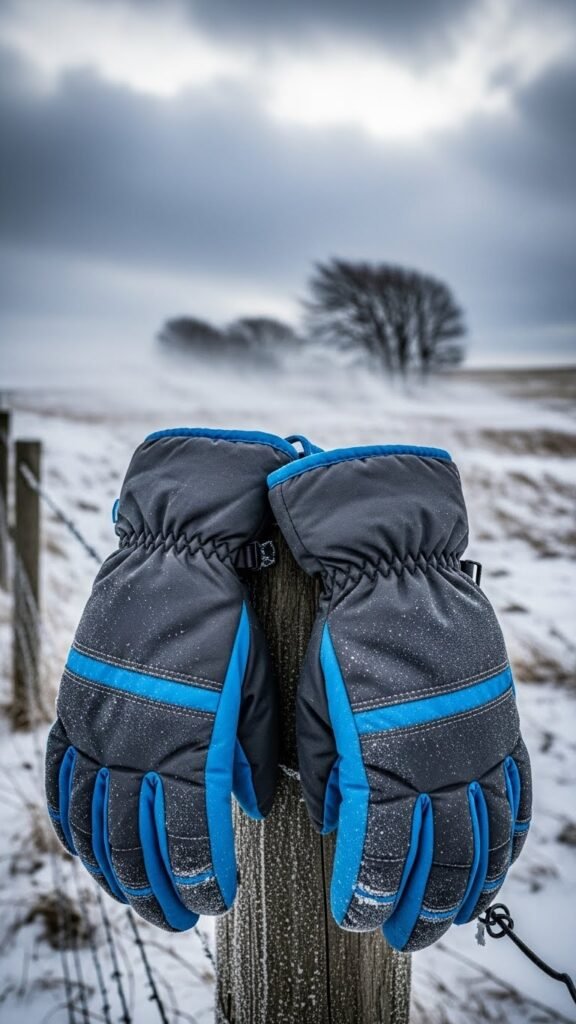
When temperatures drop, wearing insulated, windproof gloves prevents moisture loss and reduces the risk of chapping and cracking. Choose gloves with breathable glove lining to trap warmth without sweating. Prioritize thermal dexterity so you can grip, drive, and use your phone. Apply fragrance-free hand cream before putting gloves on and after removing them to restore barrier function and stay independent outdoors.
Swap Harsh Fabrics for Cotton or Silk Next to Skin

Swap out scratchy wool and synthetic blends for cotton or silk next to your skin to reduce irritation and preserve moisture. You’ll lower chafing and flare-ups if you’re prone to fabric allergies.
Choose breathable cotton for daily wear and lightweight silk for layers; follow simple silk maintenance—gentle wash, air dry—to keep performance. These swaps protect skin without limiting movement or style.
Reapply Lip Balm With SPF on Sunny Winter Days

Protecting skin from cold fabrics goes beyond clothing—your lips need their own defense on bright winter days. You should choose an SPF lip product and commit to winter reapplication every two hours or after eating.
A tinted balm combines color and sun protection for freedom from frequent makeup steps. Look for broad-spectrum labels and keep a tube accessible for reliable daily use.
Limit Exfoliation Frequency and Use Gentle Acids
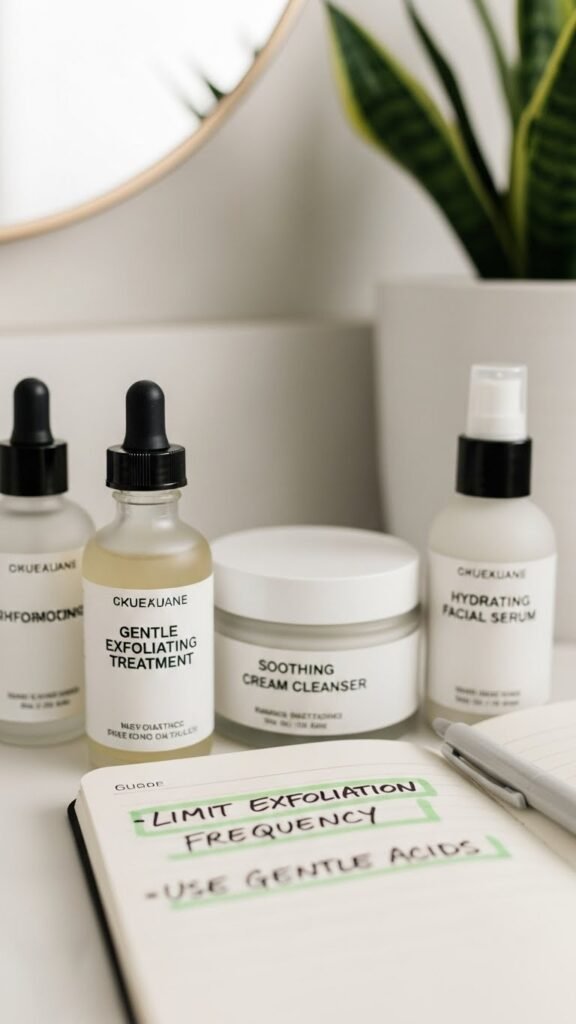
Usually, you should cut back on exfoliation in winter because cold, dry air weakens the skin barrier and makes it more prone to irritation.
Limit treatments to once weekly, choose low‑concentration AHA or BHA and favor seasonal glycolysis approaches.
Patch testing new acids is essential.
If redness or stinging appears, stop use, restore hydration, and consult guidance before resuming.
Try Bakuchiol as a Sensitive Skin-Friendly Retinol Alternative
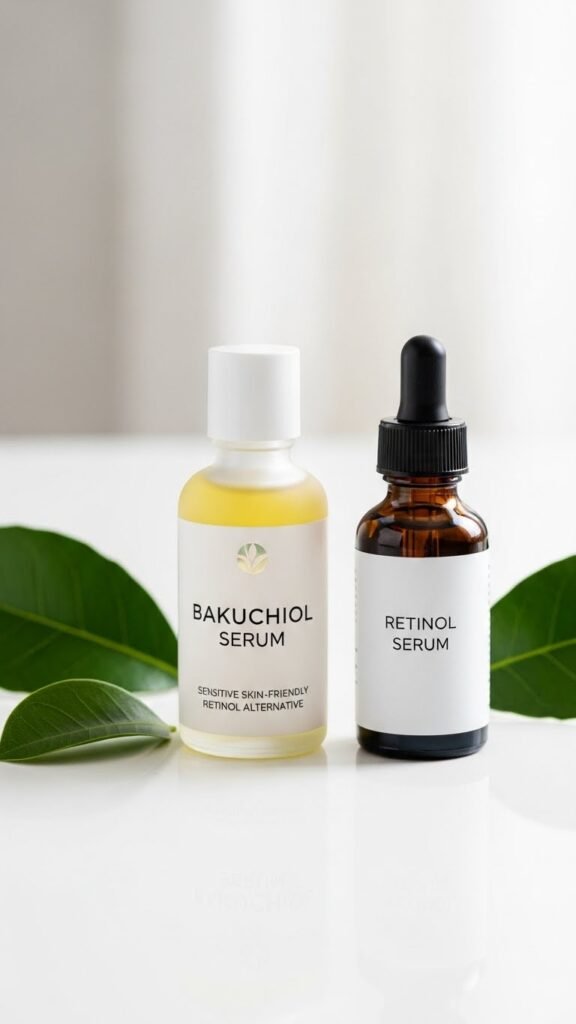
If your skin’s feeling too sensitive for regular retinoids after cutting back on exfoliation, try bakuchiol as a gentler alternative. You’ll get many bakuchiol benefits—retinoid-like collagen support and reduced lines—without typical irritation.
Choose products with proven formulation stability and start twice weekly, increasing as tolerated. Pair with a basic moisturizer and sunscreen; monitor redness and adjust frequency to keep your skin calm and free.
Introduce Niacinamide to Reduce Redness and Strengthen Barrier
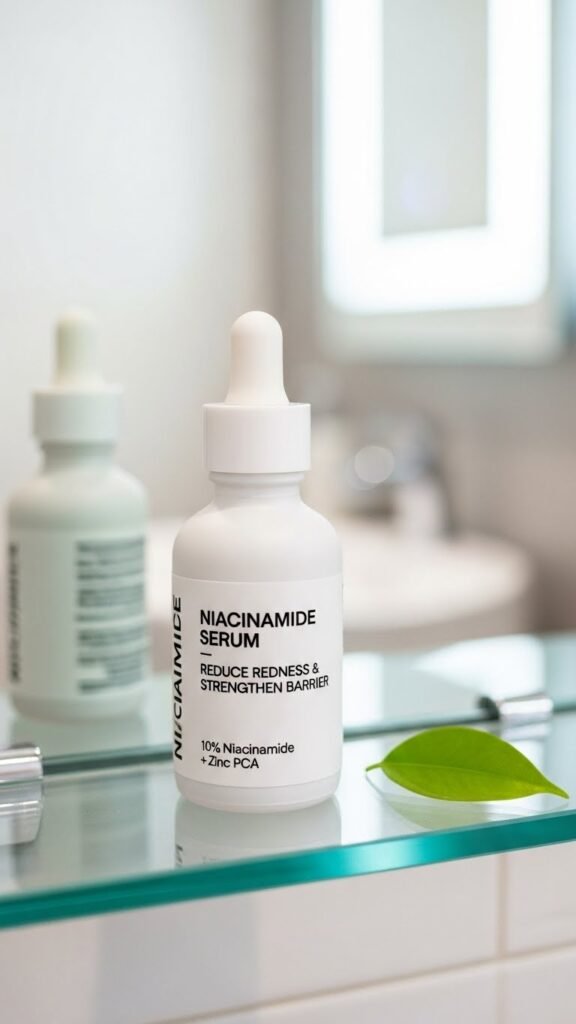
Regularly adding niacinamide can calm redness and fortify your skin barrier without fuss.
Use 2–5% niacinamide serum daily to reduce Redness signaling and support Barrier modulation backed by clinical studies.
Apply after cleansing, before moisturizer.
It’s non-irritating, pairs well with most actives, and helps normalize oil production and hydration.
You’ll get measurable comfort and resilience without complicated steps.
Choose Alcohol-Free, Hydrating Toners When Needed
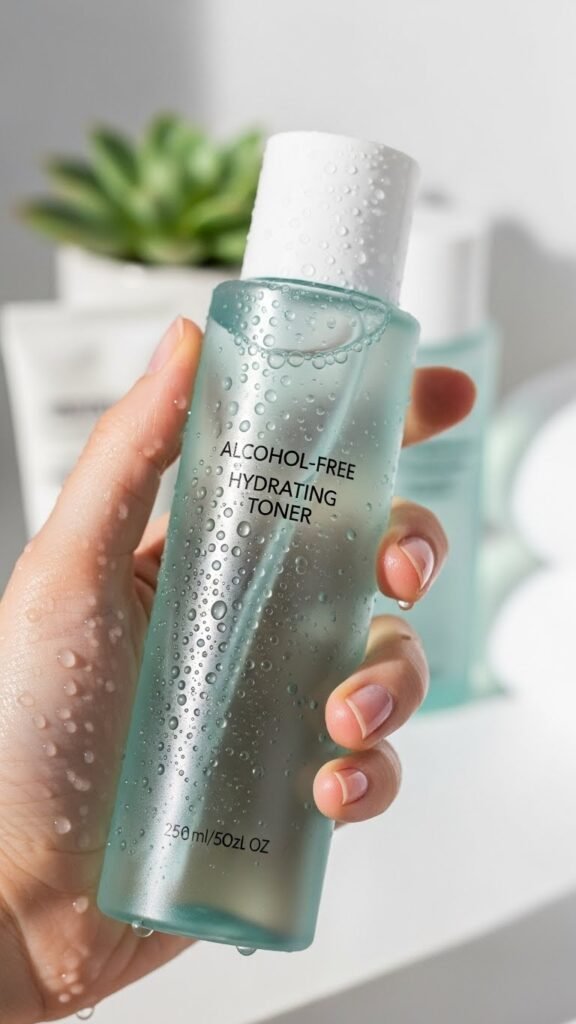
Since niacinamide helps calm redness and support barrier function, pairing it with an alcohol-free, hydrating toner will boost moisture without stripping your skin.
Choose alcohol free toners with soothing, humectant hydrating ingredients like glycerin, hyaluronic acid, and panthenol. Apply to damp skin to lock in hydration, avoid fragrances and drying alcohols, and keep routines simple so your skin can stay resilient and free.
Use Squalane-Based Eye Creams for Gentle Hydration
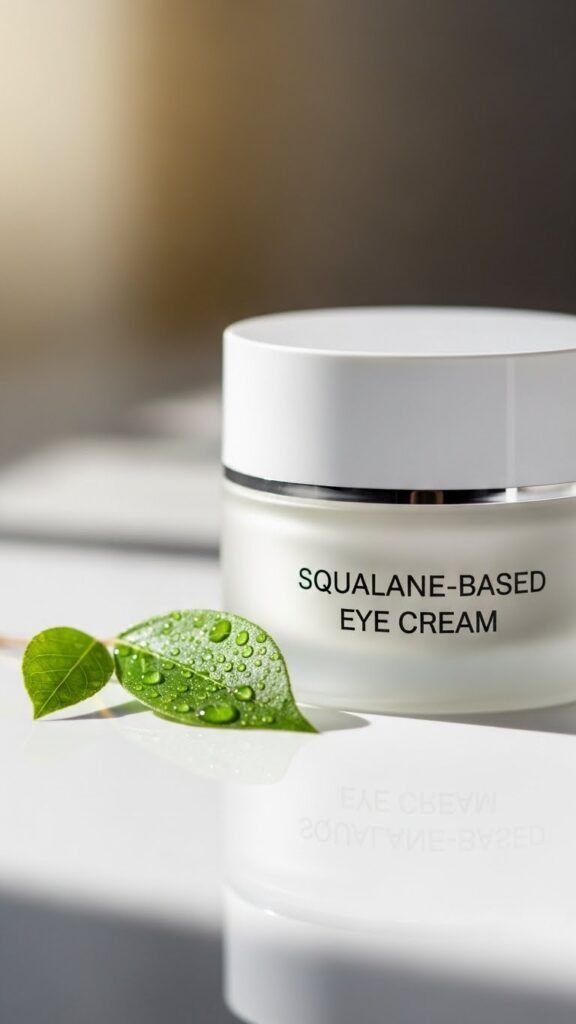
Reach for a squalane-based eye cream to add lightweight, non-greasy hydration to the delicate eye area without clogging pores. You’ll get squalane benefits like barrier support and reduced moisture loss.
Dab sparingly along the orbital bone and perform a gentle eye massage to boost absorption and circulation. It’s budget-friendly, suitable for sensitive skin, and won’t feel heavy under makeup.
Patch-Test New Products on a Small Area First
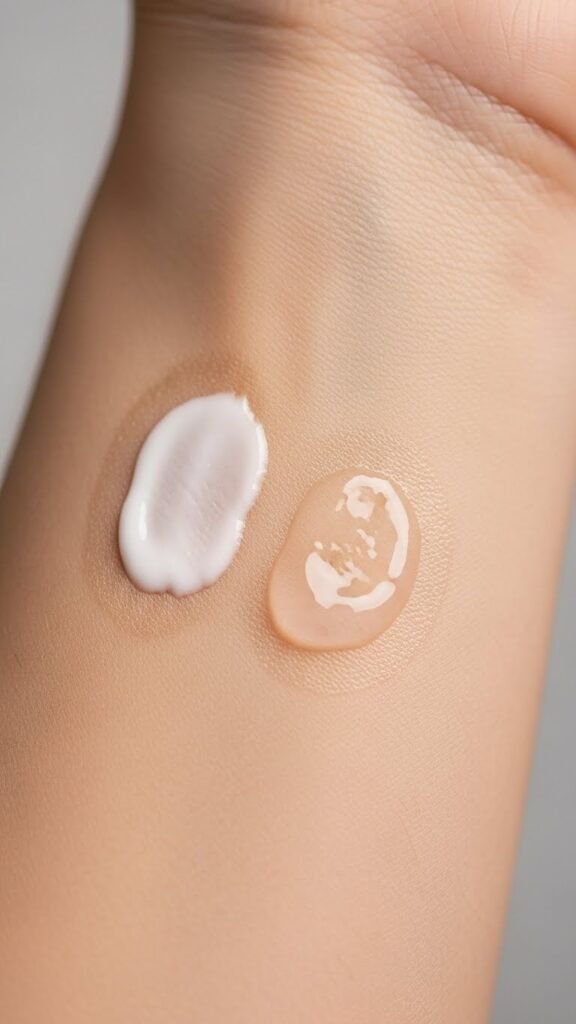
Before you slather a new serum or cream over your whole face, test it on a small patch—like behind your ear or on your inner forearm—to check for irritation, redness, or swelling over 24–48 hours. Treat reactions like sunburn simulation; stop use immediately.
Note product expiry, document brand and date, and repeat tests for active ingredients so you keep freedom to choose safely.
Opt for Fragrance-Free Formulas to Minimize Irritation
Shop Budget Brands With Ceramides and Hyaluronic Acid

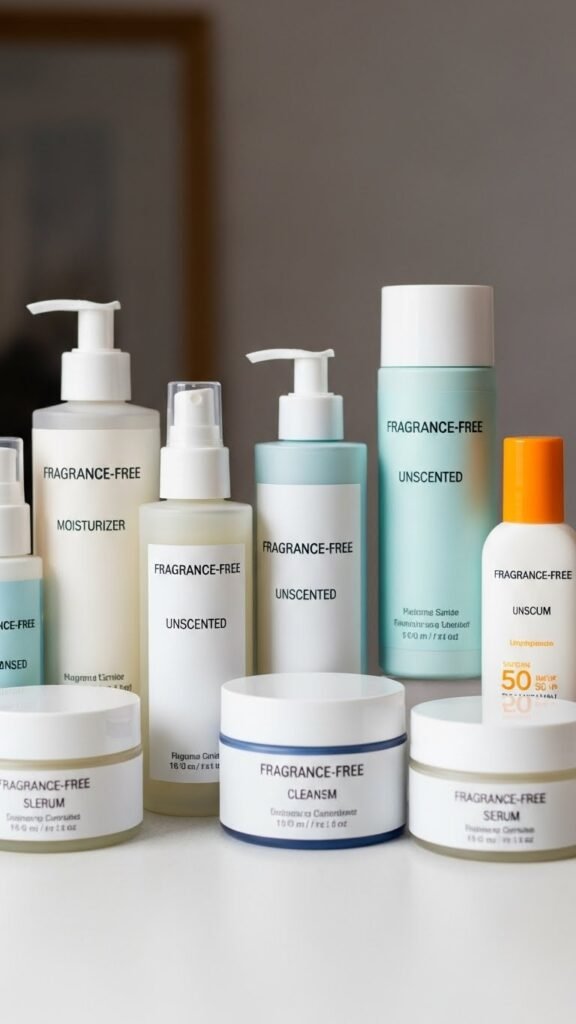
Fragrance-free products reduce irritation, but you’ll also want ingredients that repair and hydrate—without blowing your budget.
Seek drugstore ceramides in lotions and cleansers to restore barrier function; look for hyaluronic dupes like sodium hyaluronate or glycerin for lasting hydration.
Choose clinically backed, simple formulas, patch-test new items, and prioritize consistency so your skin stays protected and resilient all winter.
Stock Up During Sales and Use Coupons for Savings

Many people save big by timing purchases around seasonal sales and using coupons, and you can do the same: track major sale periods (Black Friday, end-of-season, annual sitewide events) and sign up for retailer emails for exclusive codes.
Combine clearance hunting with coupon stacking to cut costs on staples. Buy duplicates of trusted items, check expiry dates, and store receipts for returns.
Keep Travel-Size Moisturizers Handy for On-the-Go Care
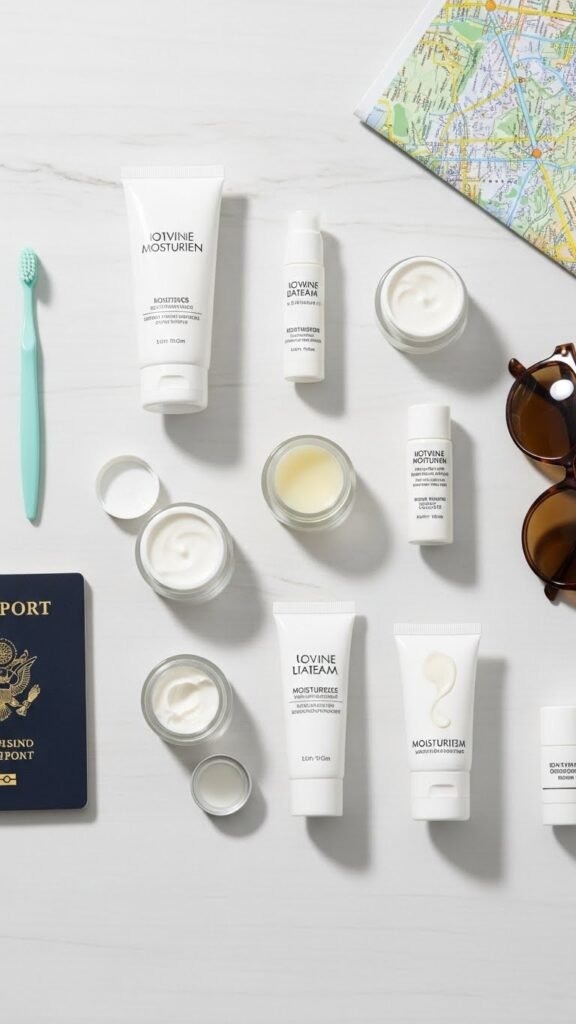
You’ll often find that keeping travel-size moisturizers in your bag or coat pocket prevents dry, chapped skin before it starts. Carry travel size sunscreens and fragrance-free creams for daytime protection, plus pocket sized ointments for hands and lips.
You’ll act fast after exposure to wind or indoor heat, maintain barrier function, and avoid costly treatments — practical, evidence-based care that supports your freedom to move.
Use Gentle Makeup Removers and Soft Cloths for Eyes
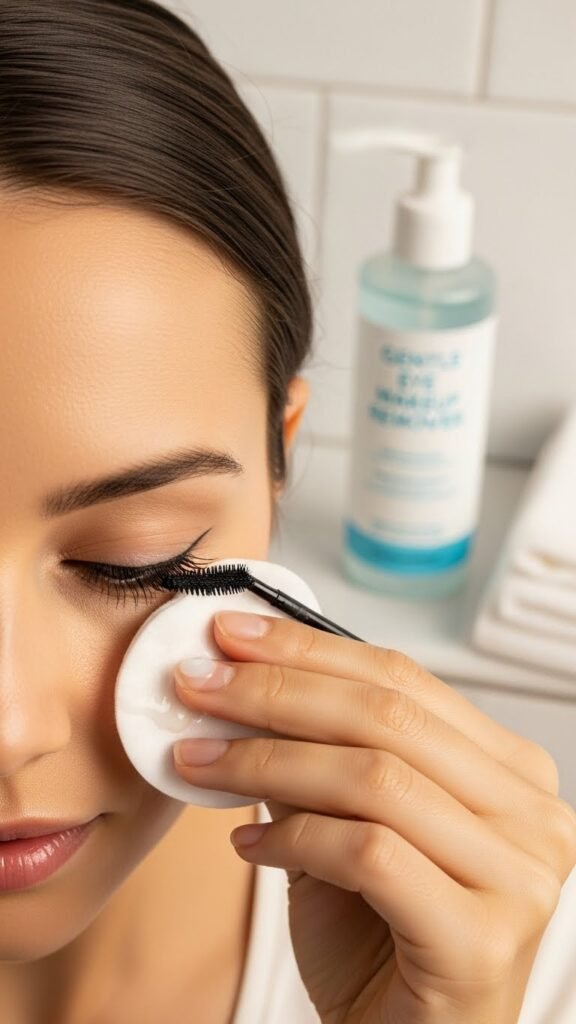
Don’t scrub—use a gentle, oil-based remover and a soft, lint-free cloth to dissolve eye makeup without tugging delicate skin. You’ll protect eyelid sensitivity by removing makeup slowly, pressing remover for a few seconds, then wiping downward.
Opt for fragrance-free formulas and reusable microfiber pads or soft cotton to reduce irritation and waste. Rinse gently and pat dry; avoid rubbing or harsh cleansers.
See a Dermatologist for Persistent Dryness or Irritation
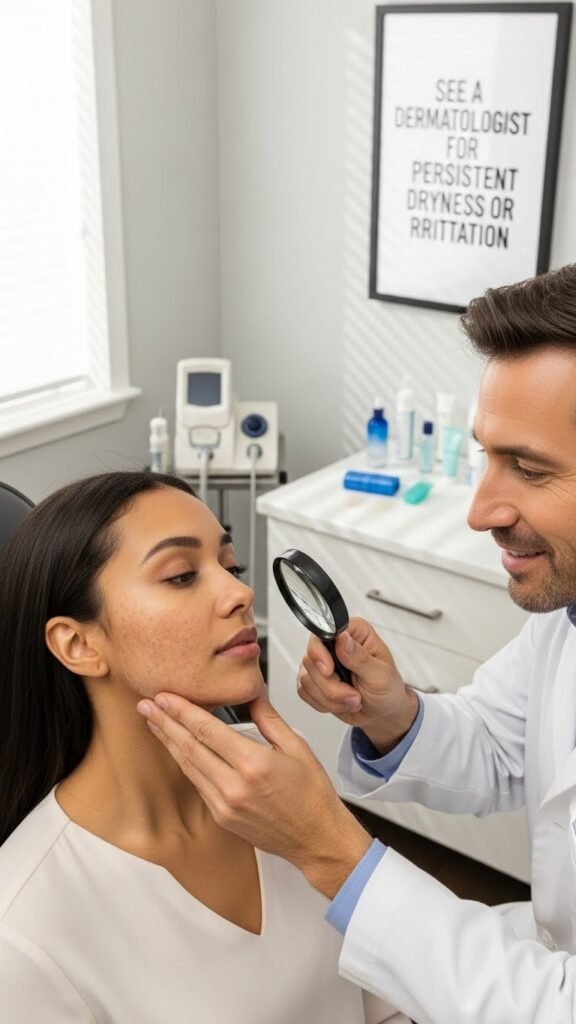
If gentle removers and soft cloths don’t stop persistent redness, flaking, or tightness around your eyes or face, see a dermatologist. They’ll assess for eczema, contact dermatitis, or rosacea and recommend targeted treatments.
Expect a medication review, possible patch or allergy testing, and clear management steps you can follow. Early evaluation preserves skin function and lets you confidently enjoy winter activities.