
You’ll want a simple, practical winter hair routine that keeps moisture in and damage out. Cut back on washes, swap to sulfate‑free cleansers, use lukewarm water with a cool rinse, and add targeted weekly treatments—deep conditioners, light protein masks, and occasional scalp oil. These small, consistent shifts will stop flakes and frizz before they start, and they’ll set you up for the 23 specific tips that follow.
Shampoo Less Frequently to Preserve Natural Oils
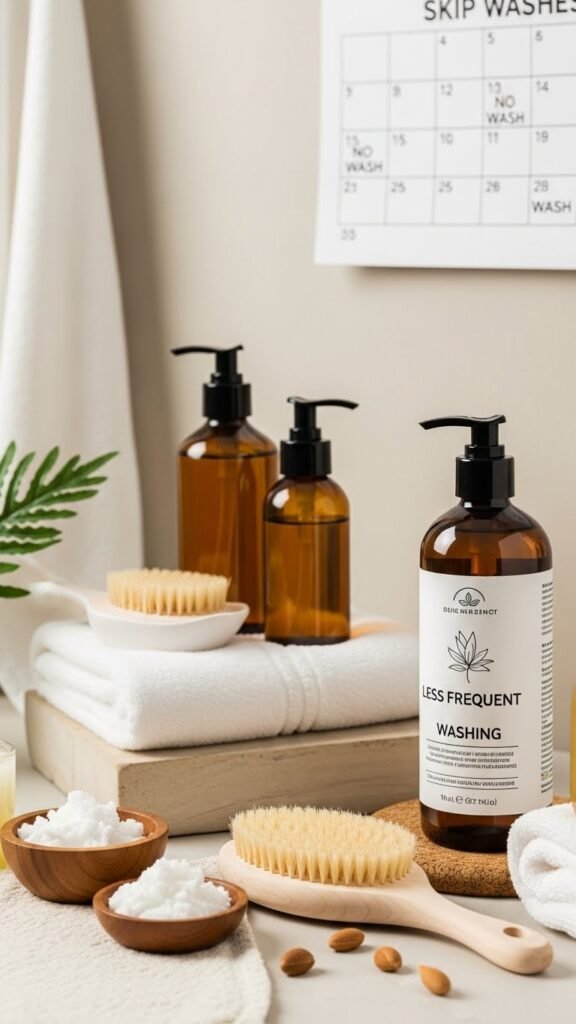
Often, you can skip a wash or two each week to let your scalp’s natural oils protect and moisturize hair; shampooing less frequently prevents overstripping those oils, reduces dryness and frizz, and keeps color and treatments lasting longer.
You’ll support microbiome balance, cut styling time, and enjoy softer strands. When needed, use gentle scalp exfoliation to remove buildup without disrupting that protective layer.
Choose Sulfate-Free, Hydrating Shampoos

Switch to a sulfate-free, hydrating shampoo to keep winter dryness at bay and protect your hair’s natural oils. Choose formulas with plant derived surfactants that cleanse gently without stripping. Look for fragrance free cleansers if you want simplicity and fewer irritants. Use moisturizing ingredients like glycerin and ceramides, and rinse thoroughly.
You’ll preserve texture, reduce frizz, and keep your scalp comfortable all season.
Incorporate Dry Shampoo Between Washes
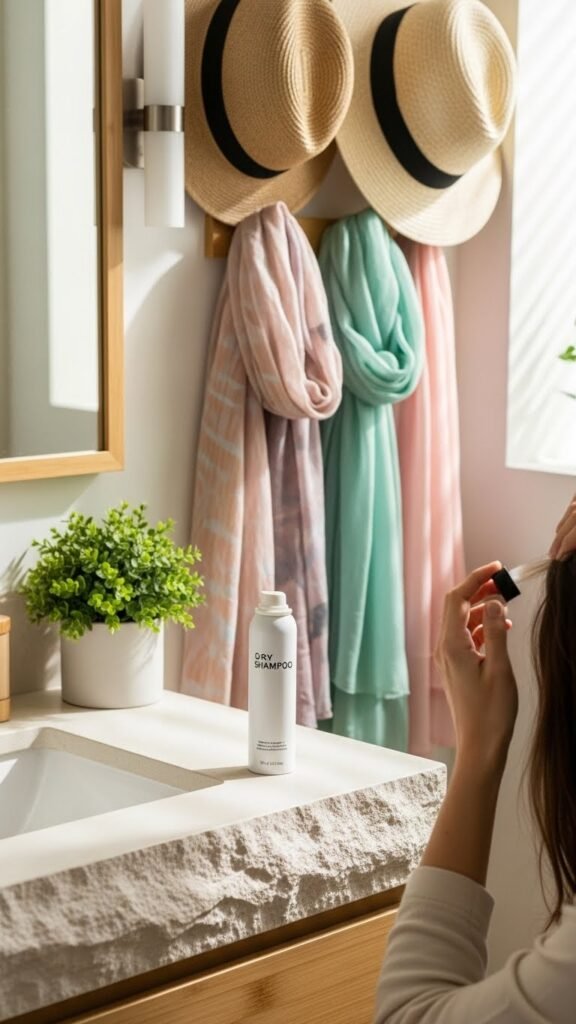
Frequently, you can stretch time between washes by using a dry shampoo to absorb oil, add texture, and refresh your roots without stripping moisture from hair and scalp.
Apply sparingly at roots, massage to distribute, and target oily spots.
Choose a lightweight formula that doubles as a fabric refresh for scarves and hats, and use scent layering to maintain a fresh, liberated vibe between washes.
Finish Rinsing With Cold Water to Seal the Cuticle
Apply Weekly Deep Conditioning Treatments
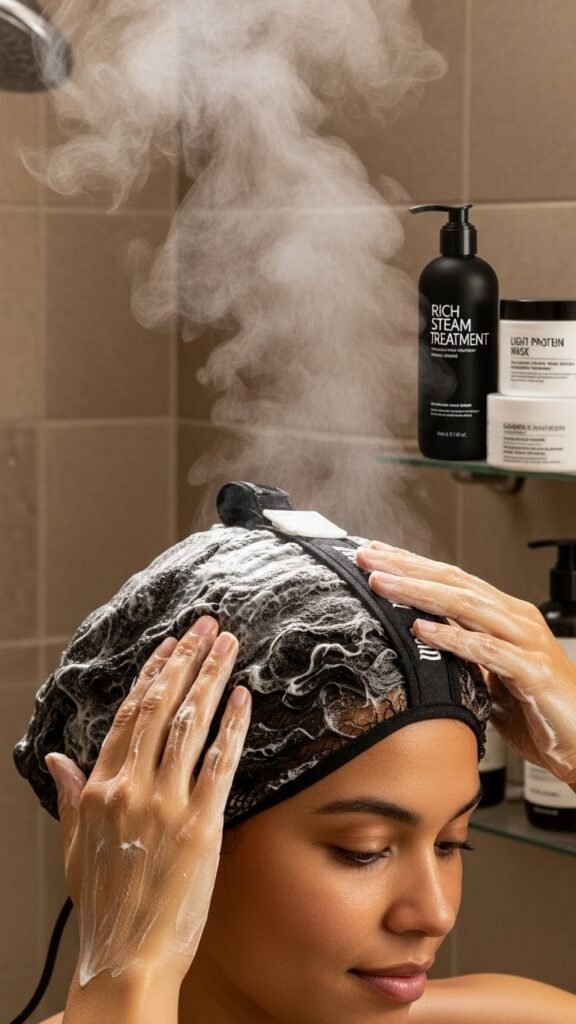
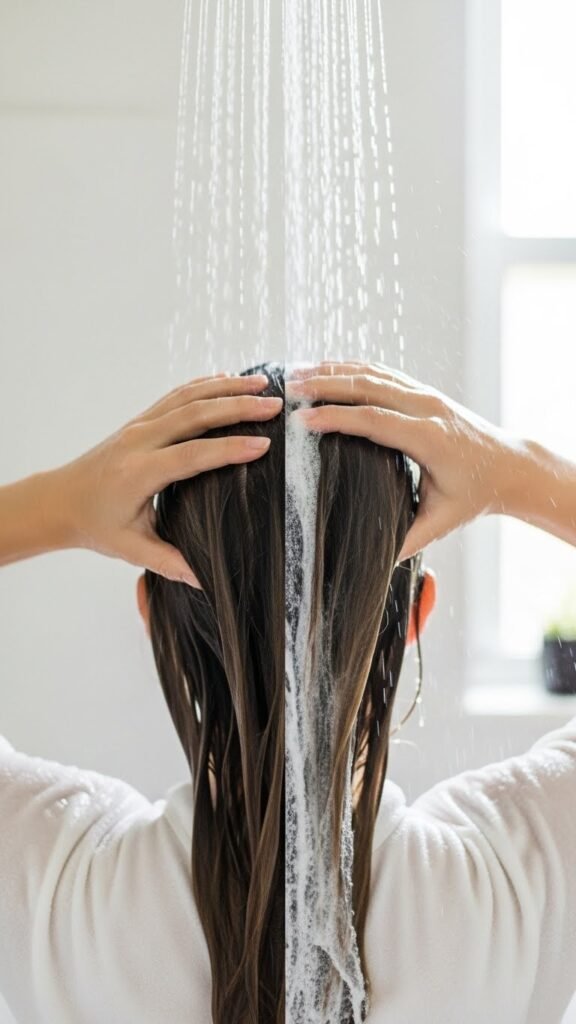
Sealing the cuticle with a cold rinse sets the stage for deeper repair, so plan a weekly deep-conditioning session to restore moisture and strengthen strands.
You’ll alternate rich steam treatments for hydration and light protein masks to rebuild integrity, choosing products by need. Apply mid-length to ends, cover with heat or a cap for 20–30 minutes, then rinse gently to maintain freedom and control.
Use Nourishing Hair Oils for Scalp Massage

Warm a few drops of nourishing oil between your palms and massage it into your scalp for 5–10 minutes to boost circulation, hydrate follicles, and ease winter dryness.
Choose lightweight Ayurvedic oils like brahmi or neem, and enjoy scalp aromatherapy to calm your mind.
Do this once or twice weekly, then wash gently—it’s a simple ritual that preserves moisture and keeps you free.
Apply Leave-In Conditioner After Towel-Drying

After towel-drying, spritz or smooth a lightweight leave-in conditioner through damp hair to lock in moisture and reduce winter frizz. Use a microfiber turban first to gently remove excess water, then apply a leave in spray or cream from roots to ends.
You’ll protect strands, detangle easily, and keep styling quick—freedom to move without crunchy buildup or weighed-down hair.
Opt for Restorative Treatments During Haircuts
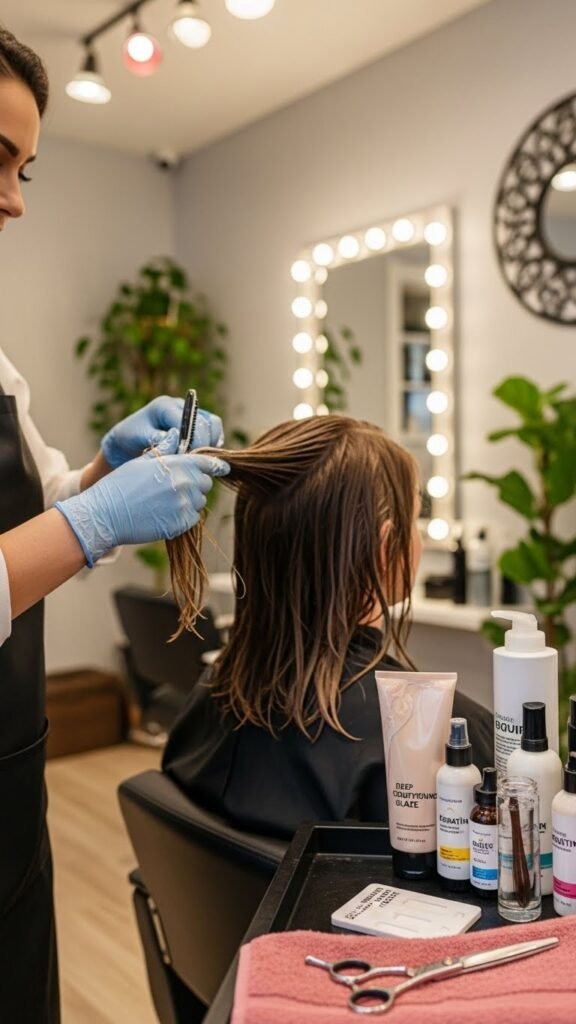
When you schedule a trim, ask your stylist to include a restorative treatment—like a protein-repair mask or a deep-conditioning glaze—so you’ll leave with healthier, stronger ends instead of just a shorter length.
Request a porosity assessment to tailor products, and insist on cutting techniques that preserve integrity.
You’ll free your hair from winter brittleness and keep styling options open.
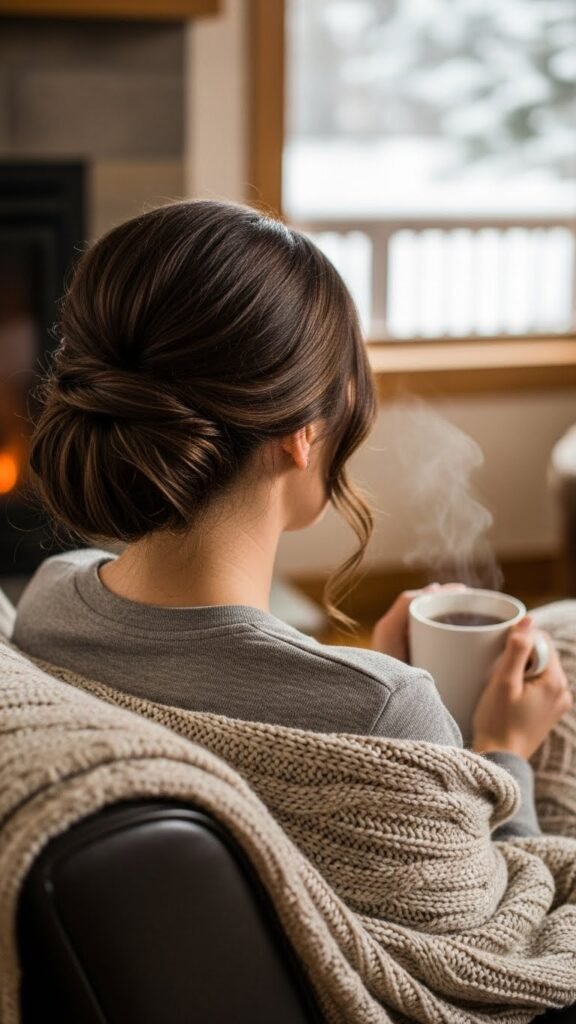
Minimize Heat Styling to Reduce Dryness
Use Heat Protectant and Low-Heat Settings
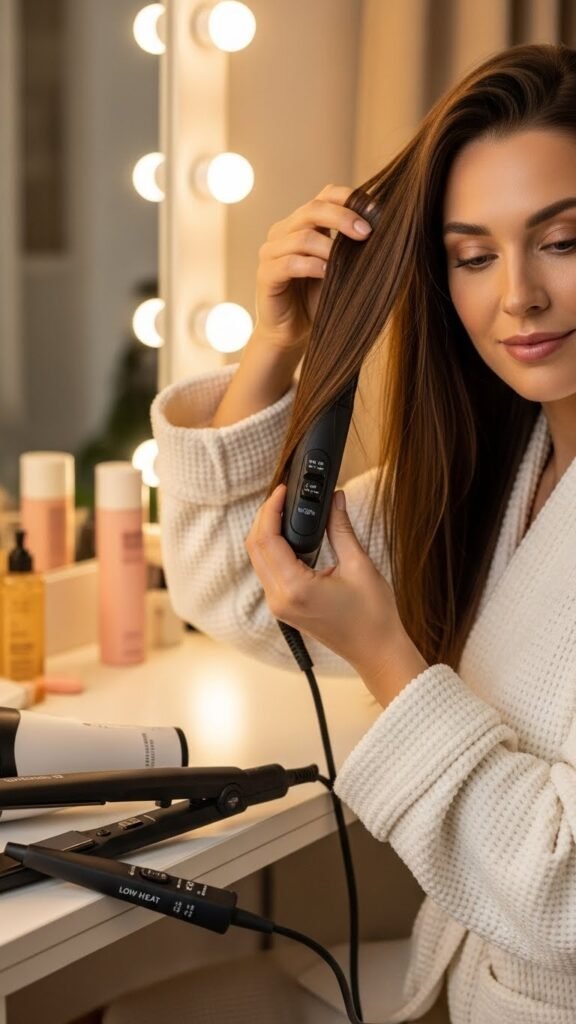
You’ve already cut down on heat styling to keep hair hydrated, but sometimes you’ll still need a blow dryer or flat iron—so protect the strand before applying heat. Use lightweight thermal primers and spritz evenly; they shield cuticles without weighing you down.
Favor ceramic tools on low to medium settings, glide slowly, and maintain freedom to style while minimizing damage and winter dryness.
Embrace Natural Hairstyles to Reduce Damage
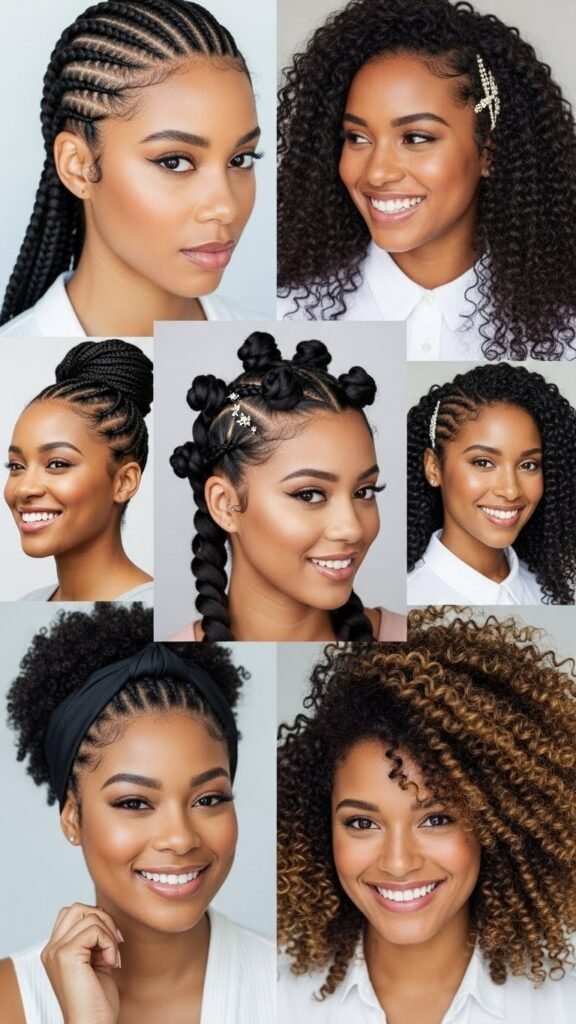
When you lean into your hair’s natural texture, you cut down on heat and chemical stress and give strands a better chance to stay strong through winter. Choose protective styles and low manipulation styling to minimize breakage, retain moisture, and simplify routines.
Rotate gentle updos, twists, or loose braids, protect edges with satin, and let your hair breathe—freedom without sacrifice.
Use a Humidifier to Add Indoor Moisture

Protect Hair From Wind and UV With Hats or Scarves

Adding moisture inside helps, but you also need to shield hair from outdoor stressors—wind can tangle and abrade strands while winter sun and reflective snow increase UV exposure.
Wear sun protective turbans or hats with a UV rating, and choose windproof silk wraps to prevent friction and breakage. Secure covers loosely to avoid crushing styles, and reapply a light leave-in UV protectant for extra defense.
Maintain a Diet Rich in Vitamins and Healthy Fats

Although cold weather strips moisture from your hair, what you eat plays an equally important role, so focus on vitamins and healthy fats that support scalp health and strong strands.
Choose foods rich in vitamin D, biotin, and omega-3s; prioritize whole foods that boost gut health and nutrient absorption. Consider targeted omega supplementation if your diet lacks fatty fish to keep hair resilient.
Stay Hydrated by Drinking Plenty of Water

By keeping a steady intake of water throughout the day, you’ll help your scalp maintain its natural moisture barrier and prevent brittle, break-prone strands. Aim for regular sips, not massive gulps, to support consistent water intake and ideal electrolyte balance.
Pair hydration with light humidifiers and leave-in conditioners to lock moisture in, so your hair stays flexible and resilient all winter.
Reduce Chemical Treatments Like Coloring or Bleaching

Keeping your hair hydrated helps, but you should also cut back on chemical services like coloring or bleaching during winter.
Opt for scalp friendly alternatives such as ammonia-free dyes or subtle glosses, and schedule fewer sessions to prevent moisture loss.
Try bonding treatments to repair existing damage rather than repeating harsh processes.
You’ll protect texture, keep freedom to style, and reduce breakage risk.
Massage the Scalp Once or Twice a Week

Regularly massaging your scalp once or twice a week boosts circulation, helps distribute natural oils, and can improve hair strength and shine.
You’ll use mindful breathing to relax, then apply gentle, rhythmic fingertip pressure in small circles across the scalp for five to ten minutes.
Keep movements steady, avoid tugging, and focus on consistency—this simple ritual protects moisture and supports resilient, free-flowing hair.
Use Gentle, Scalp-Soothing Products
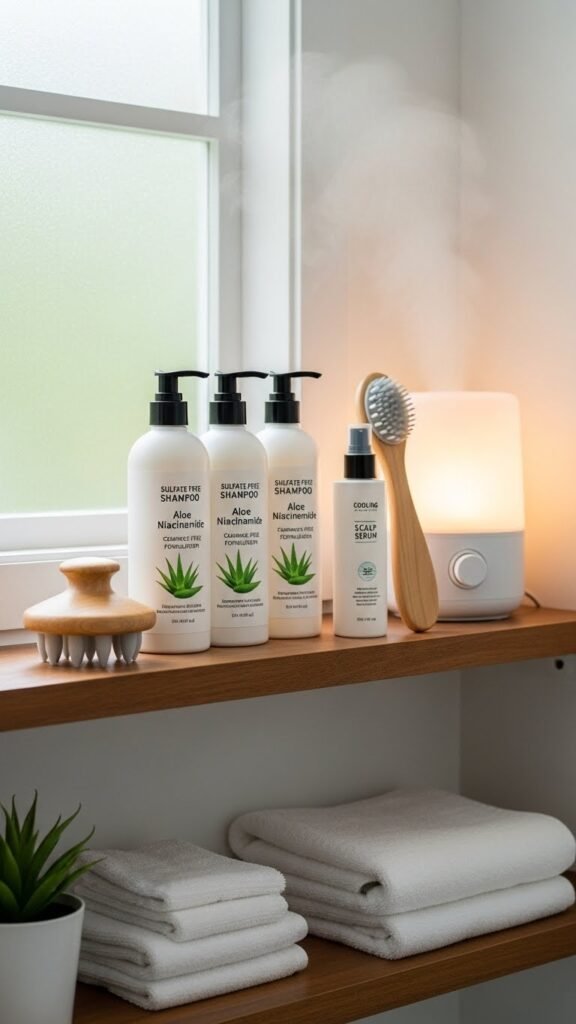
After a soothing scalp massage, choose products that calm and protect rather than strip moisture.
You’ll prefer gentle, sulfate-free options formulated for a sensitive scalp, with calming ingredients like aloe and niacinamide.
Pick fragrance free formulations to avoid irritation, and use cooling serums sparingly to soothe flakes and itch.
Apply lightly, monitor response, and stick to a minimal, effective routine that preserves scalp resilience.
Remove Product Buildup Without Over-Cleansing
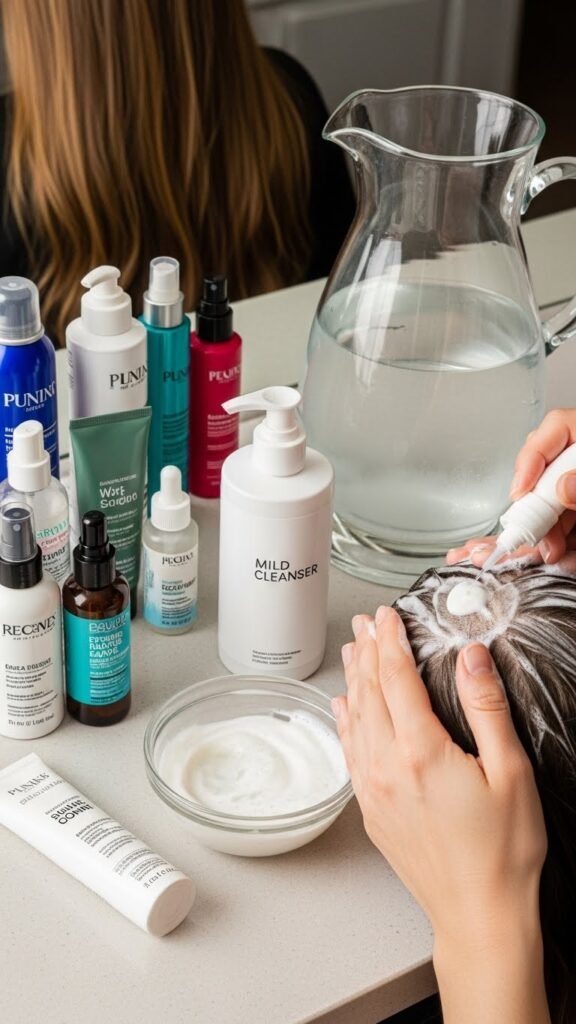
Build up can sneak in from styling products and hard water, but you don’t have to strip your scalp to remove it—use clarifying treatments sparingly and target them to trouble spots. Choose a gentle clarifying clarifier or chelating rinse, spot-treat roots, and follow with a mild cleanser.
Preserve microbial balance and natural oils so your hair stays healthy, manageable, and free to move.