
You’ll want a clear, practical plan to turn winter downtime into spring advantage, so start by evaluating last season’s yields, pests, and problem spots; test soil, inventory tools, and sketch bed rotations now while you can. Take notes on microclimates, mulch and cover supplies, and repairs needed for frames or cloches, because a few targeted moves this winter will save work and boost harvests come spring.
Assess Last Season’s Successes and Failures
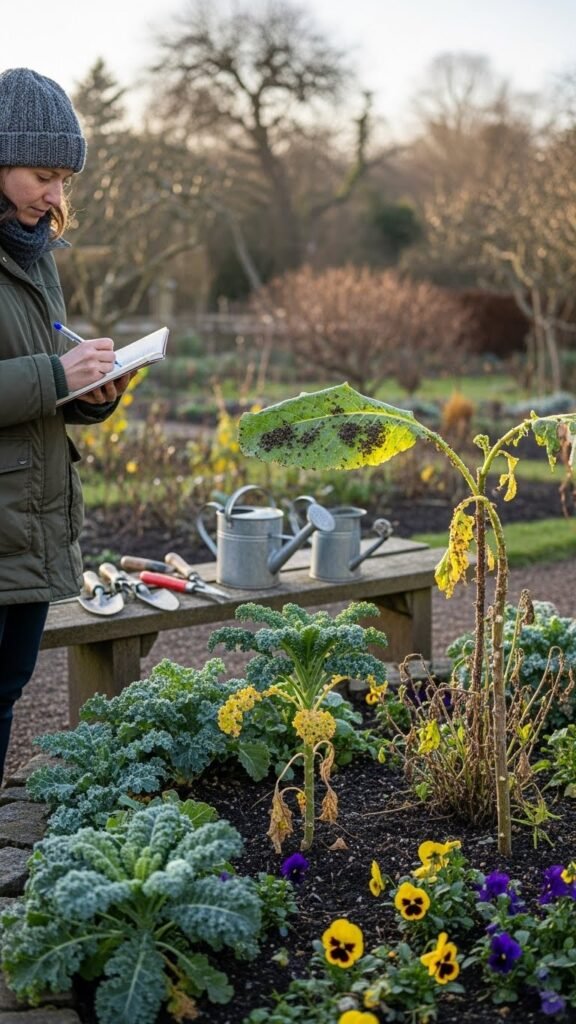
Before you plant a single seed or move a pot, review last winter’s garden with fresh eyes: note what thrived, what struggled, and where pests or diseases first appeared. You’ll compile yield reflections and perform trait analysis—compare vigor, flavor, and timing. Decide what to repeat, what to replace, and what cultural tweaks will give you more freedom and consistent success next season.
Track Pest and Disease Patterns

When you map last season’s pest and disease occurrences, patterns that once felt random will reveal actionable trends, so note timing, weather conditions, and the exact locations where problems first emerged. Use seasonal pest mapping and pathogen trendtracking to build concise records. You’ll prioritize resilient varieties, targeted controls, and habitat adjustments, freeing your choices while minimizing repeat outbreaks and preserving beneficial insects.
Plan Crop Rotations for Soil Health

Because healthy soil starts with diversity, set up a rotation plan that moves related crops through distinct beds over multiple seasons so you disrupt pest and disease cycles, balance nutrient demands, and build structure.
You’ll schedule legumes, brassicas, and roots, integrate cover crops in fallow years, and use nutrient mapping to target amendments.
Rotate rigorously to free your garden from predictable problems and enrich resilience.
Inventory and Repair Garden Tools
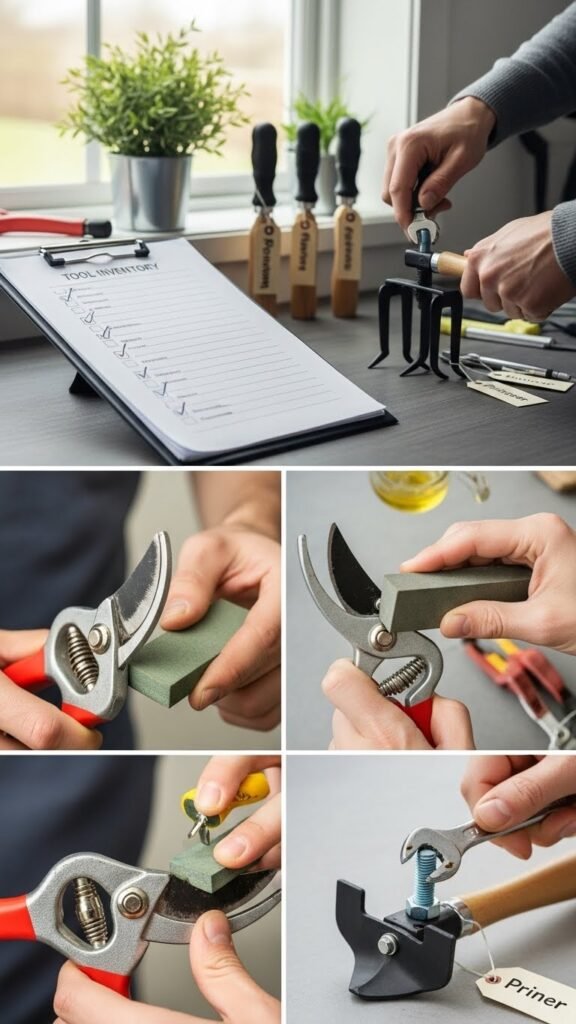
Start by laying out every tool you own—gloves, pruners, shovels, trowels, rakes, hoses, and power equipment—so you can spot wear and missing pieces at a glance.
Catalog a tool inventory, note blades to sharpen, replace tires, and tighten bolts.
Prioritize handle repairs, oil moving parts, and label items.
You’ll reclaim control and freedom for spring work.
Create a Detailed Spring Garden Layout

When you sketch your spring garden layout, think in layers—paths, beds, structural plants, and seasonal patches—so every element has space and purpose.
Map exact plant spacing, note sun and wind exposure, and position paths for effortless access.
Define bed shapes that free movement and support diversity.
Label areas for rotation, irrigation runs, and focal points so your plan stays practical and liberating.
Make a Plant Wishlist With Requirements

Although your spring layout gives you the framework, you now need a focused plant wishlist that ties each bed to clear requirements—light, soil pH, mature size, water needs, and seasonal timing—so you can choose species that actually thrive in their assigned spots. List plants with precise light requirements, soil pH tolerance, expected height and spread, irrigation frequency, and bloom season to guide confident, flexible choices.
Separate Perennial Food Garden Planning
If you want a low-maintenance, high-yield section in your winter garden, plan a separate perennial food garden that groups long-lived edibles by soil, light, and water needs so each patch needs care on its own schedule.
You’ll map beds for berries, asparagus, culinary herbs and perennial greens, use companion planting to reduce pests, and set simple paths and irrigation for independent, freeing management.
Research Soil Amendments to Apply in Spring
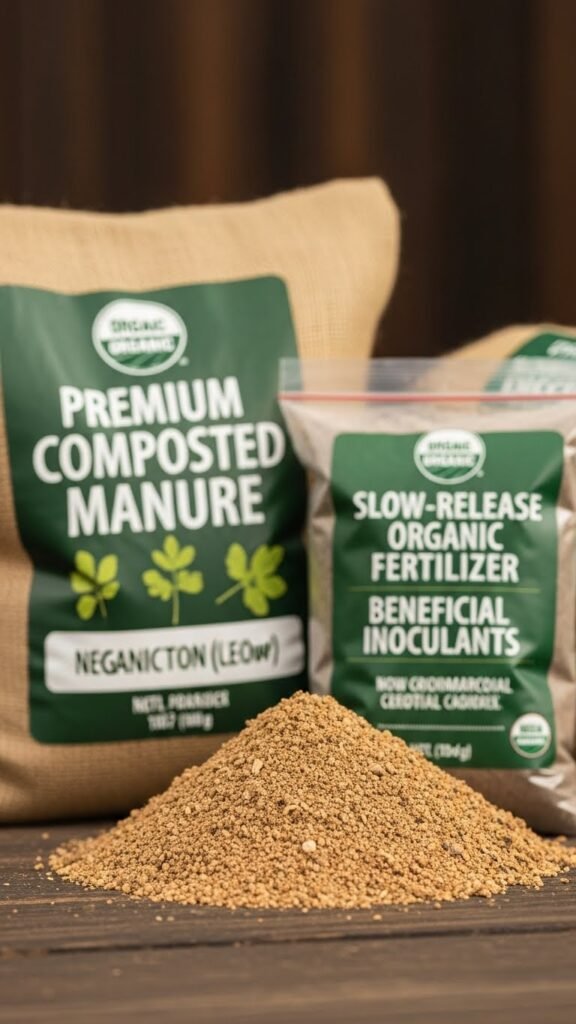
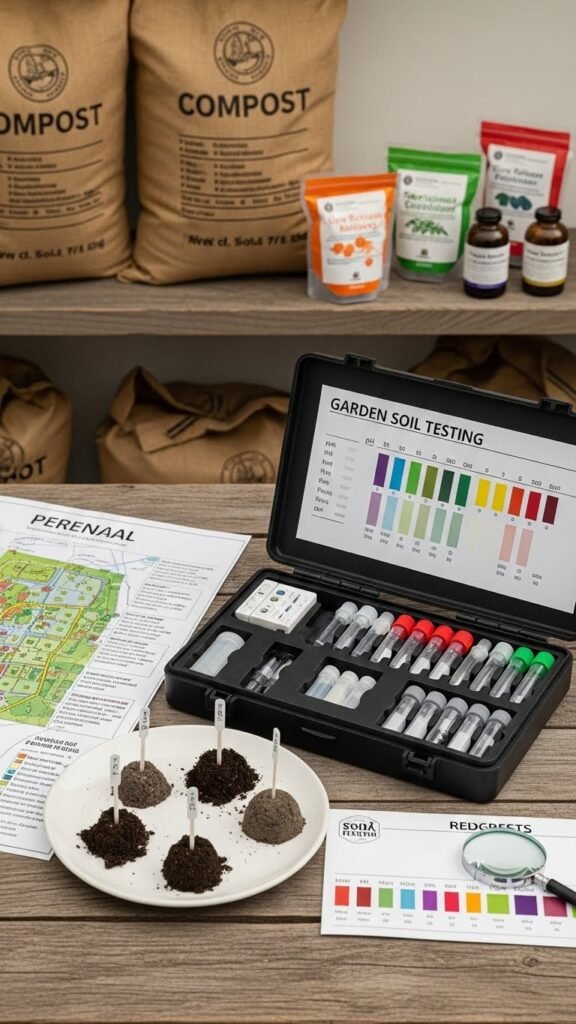
Start by testing your soil to identify exactly what it needs—pH, texture, nutrient levels, and organic matter all drive which amendments will help your perennial beds thrive. Use results to plan targeted additions: compost, slow‑release organics, microbial inoculants to boost biology, and carbonate amendments to correct acidity.
Map application rates, timing, and sources so you act confidently come spring.
Order Seeds and New Cultivars Early

Get your seed and cultivar orders in now so you won’t be scrambling in spring when popular varieties sell out or shipping gets delayed.
Plan deliberately: prioritize early cultivars for staggered harvests, verify seed sourcing reputations, and note germination rates and days to maturity.
You’ll gain control over choices, avoid substitutions, and free yourself to focus on planting schedules and garden goals come spring.
Collect and Store Organic Mulch Materials
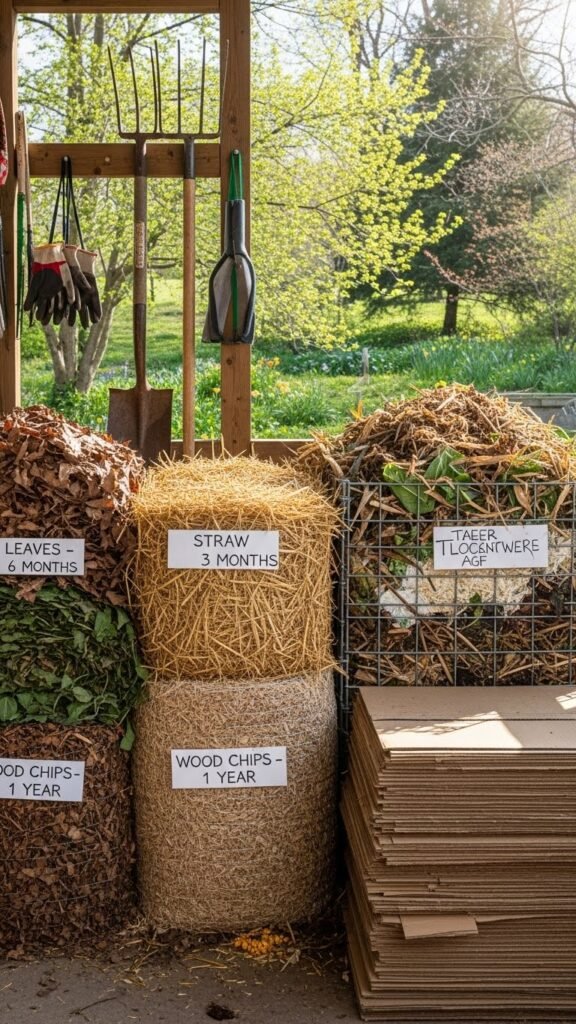
Collecting and storing organic mulch now lets you build a reliable, high-quality supply before spring work ramps up. You’ll gather leaves for leaf composting, straw, and wood chips, keeping them dry and aerated in separate piles. Label ages, turn periodically, and shred bulky material.
Save flattened cardboard for cardboard lasagna beds. This system frees you to apply nutrient-rich mulch precisely when planting begins.
Prepare Cold Frames and Cloches
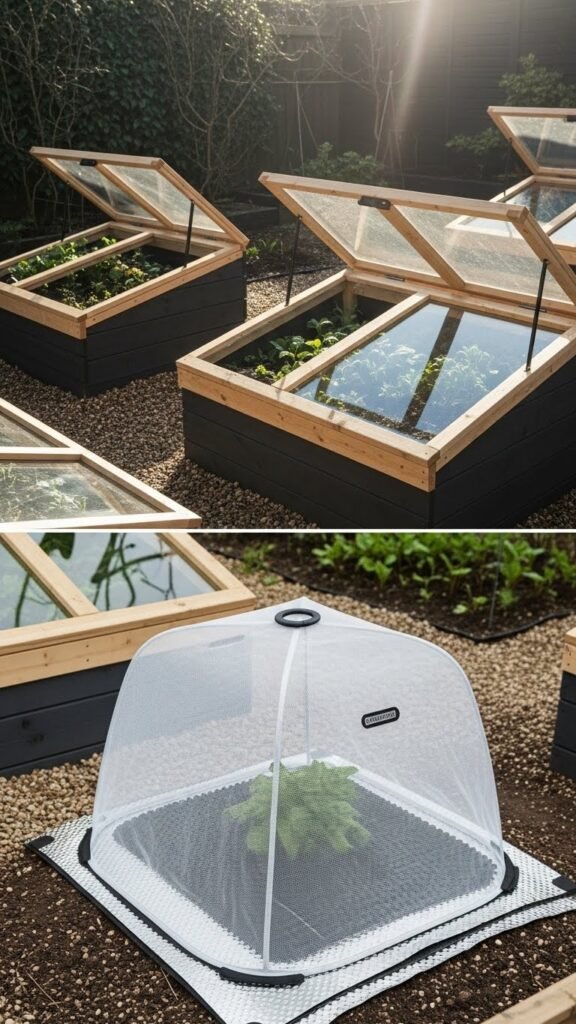
Build or inspect your cold frames and cloches now so they’re watertight, well-ventilated, and positioned to maximize winter sun. Check seals, replace cracked glass or plastic, and hinge lids for easy ventilation. Use a portable cloche for single plants and add black-painted stones or thermal mats for soil warming. Secure frames against wind and plan easy access for late-winter tending.
Start Fall Plantings for Winter Establishment

Although daylight’s shortening signals slowdown, fall is the best time to set up winter-hardy plants so they establish roots before cold tightens—plan sowings and transplants about 6–8 weeks before your average first hard freeze, accounting for microclimates and soil temperature.
You’ll choose varieties, firm soil around roots for reliable root establishment, and schedule mulch timing to protect crowns without trapping excess moisture.
Use Layered Protective Coverings and Tunnels
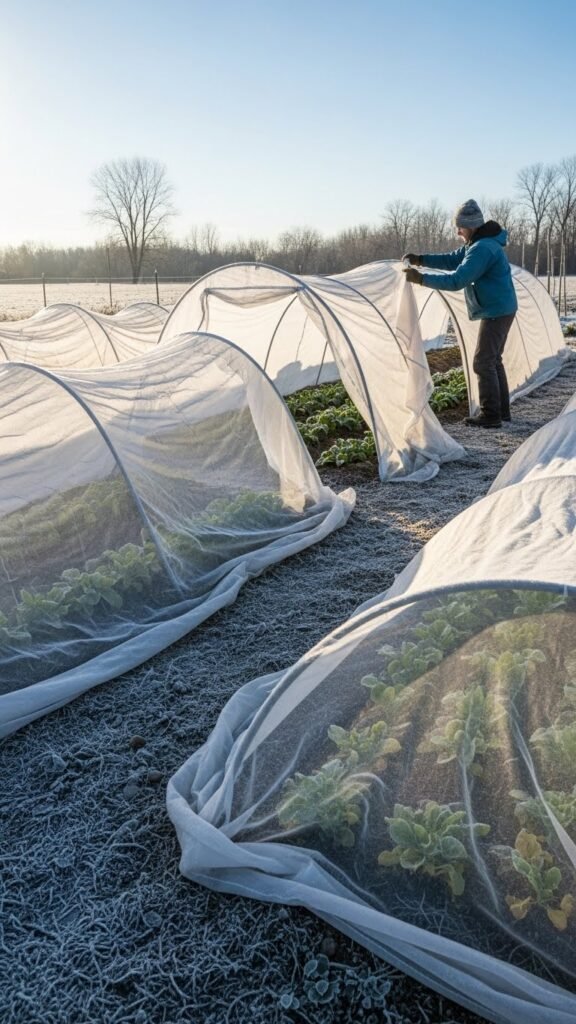
After you’ve firmed roots and applied mulch for winter establishment, protect those young plants from freezing nights and wind by layering coverings and using low tunnels—this extends the growing window and reduces frost damage.
You’ll combine breathable row covers with clear plastic hoop tunnels on colder nights, securing edges against gusts. Remove covers midday to regulate temperature and prevent damp disease.
Mulch Perennials, Trees, and Shrubs Properly
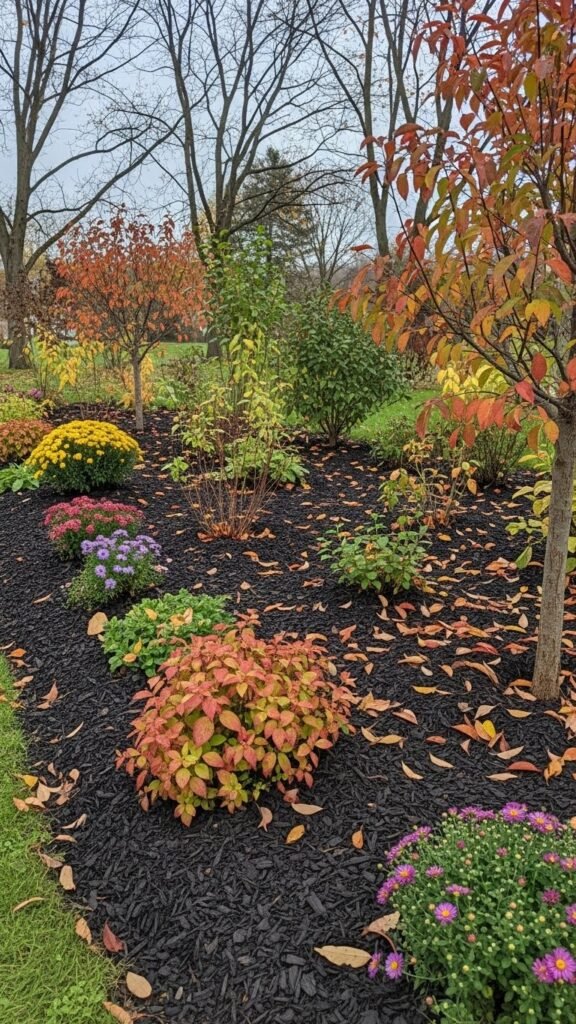
Spread a clean, even layer of mulch around your perennials, trees, and shrubs to conserve moisture, regulate soil temperature, and suppress weeds without smothering roots. Apply 2–4 inches, keeping mulch away from trunks to prevent rot.
Consider root insulation needs and mulch timing—late fall after soil cools reduces heaving, while avoiding early mulch that can trap warmth and delay dormancy.
Protect Rose Crowns With Deep Mulch
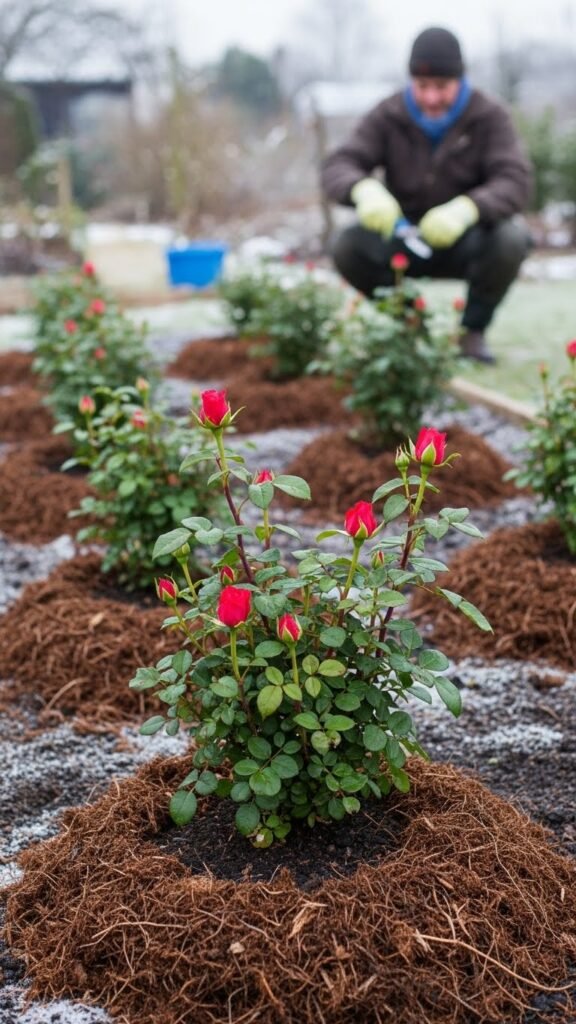
Insulating your rose crowns with a deep, protective mulch will shield buds and roots from freeze-thaw cycles and reduce winter heaving that can damage canes.
You’ll pile 3–6 inches of coarse compost or shredded bark around crowns, avoiding stems contact.
This winter sheltering technique provides reliable root insulation, conserves moisture and lets you prune later, preserving plant vigor and seasonal freedom in your garden.
Group and Insulate Container Plants
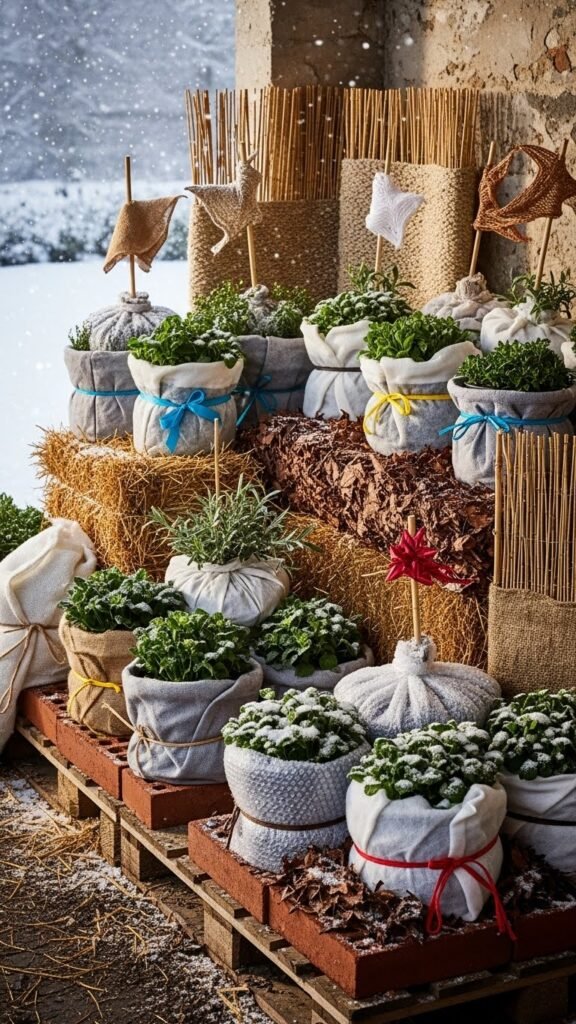
Cluster your container plants together and wrap or surround them to reduce exposure and retain heat — this simple strategy cuts heat loss and protects roots from freezing. You’ll create microclimate grouping benefits, using thermal wraps, insulating materials, and windbreaks.
Place sensitive pots against sheltered walls, elevate them off cold surfaces, and check moisture regularly so you can keep plants secure and ready for spring growth.
Prune Trees and Shrubs for Structure and Health
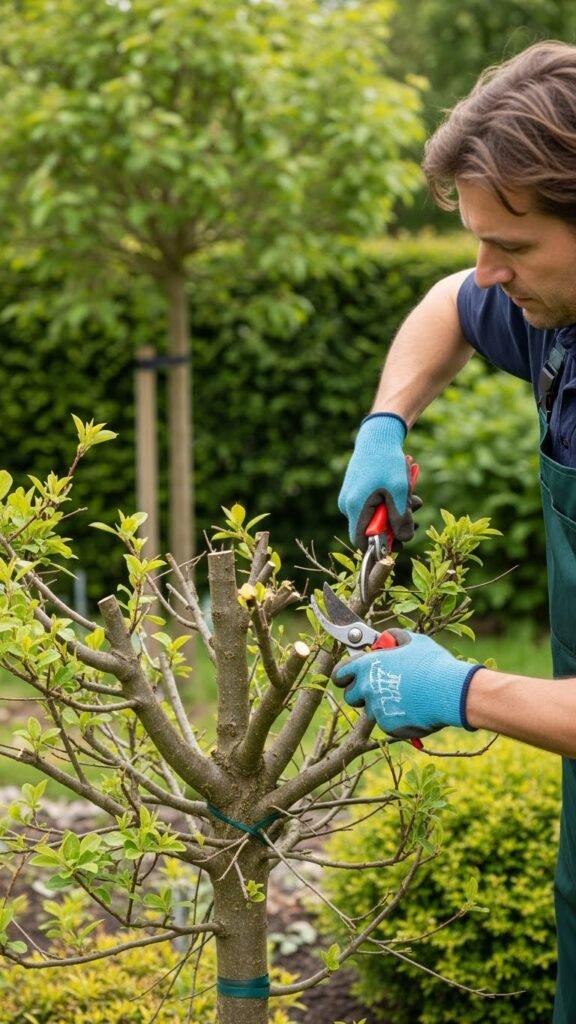
Now’s the time to prune trees and shrubs to preserve strong structure and long‑term health.
You’ll remove dead wood, thin congested branches, and favor scaffold training to build resilient frames.
Use clean cuts and deliberate spacing; respect species’ habit.
Practice coppice preservation where appropriate to renew multi-stemmed plants.
Prune confidently but sparingly, aiming for balance, airflow, and clear growth direction for spring.
Maintain a Winter Garden Journal
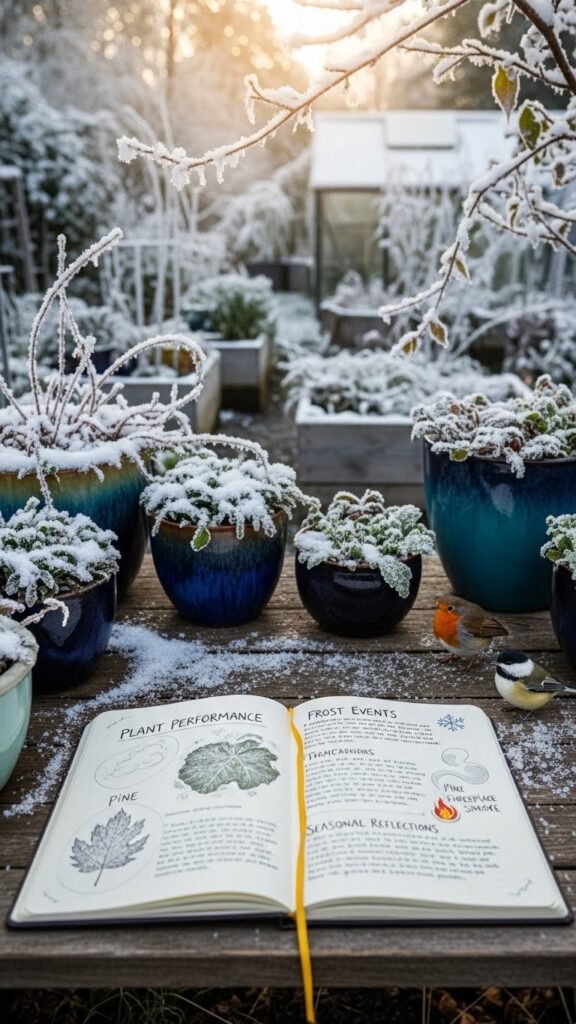
Regularly keeping a winter garden journal helps you track plant performance, microclimates, and seasonal tasks so you can make smarter decisions come spring. Note dates, frost events, feeding and pruning actions, and seasonal reflections.
Record sensory notes—smells, textures, bird activity—and map problem areas. You’ll create a clear, portable reference that frees you to experiment confidently and refine plans next season
Organize Crop Patterns for Harvest Efficiency

Plan your beds with harvest flow in mind so you spend less time walking and more time picking peak produce. You’ll design rows and blocks using succession mapping to stagger plantings, align harvest sequencing by crop maturity, and place quick-pick greens near paths.
That lets you move freely, harvest efficiently, and maximize yields without fuss, keeping labor low and enjoyment high.