
You should prepare a compact, waterproof first aid kit tailored for winter risks so you can act quickly when temperatures drop and accidents happen. Include basics like bandages, gauze, antiseptics, pain relief, and items for burns and hypothermia, plus device-specific extras and a clear emergency contact list. Store it insulated and check it monthly—there’s more to cover to make sure you won’t be caught off guard.
Adhesive Bandages for Minor Cuts and Scrapes
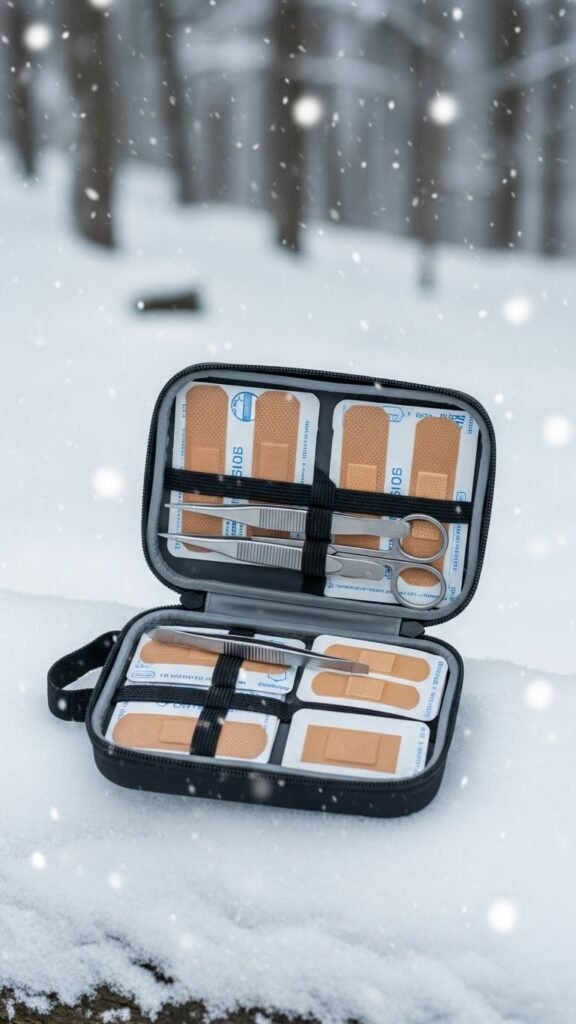
Keep a variety of adhesive bandages in your winter first aid kit so you can quickly cover minor cuts and scrapes before they get infected. You’ll choose sizes and waterproof types for wound prevention and mobility.
Apply cleanly, change them regularly, and learn gentle adhesive removal to avoid reopening skin. This simple readiness preserves independence and keeps you moving through winter confidently.
Sterile Gauze Pads and Rolls
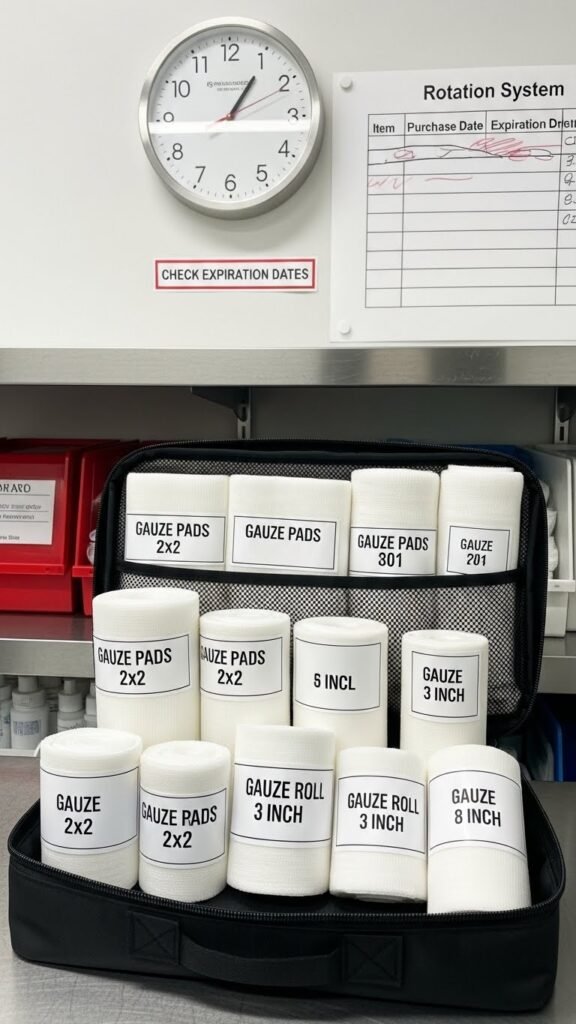
Pack sterile gauze pads and rolls in multiple sizes so you can dress wounds of varying depths and shapes quickly and cleanly. Keep a clear sterile dressing selection and labeled gauze inventory so you can act decisively during emergencies. Store them dry and accessible, rotating stock before expiration.
You’ll preserve freedom to treat cuts, control bleeding, and stabilize injuries until professional care arrives.
Antiseptic Wipes and Solutions
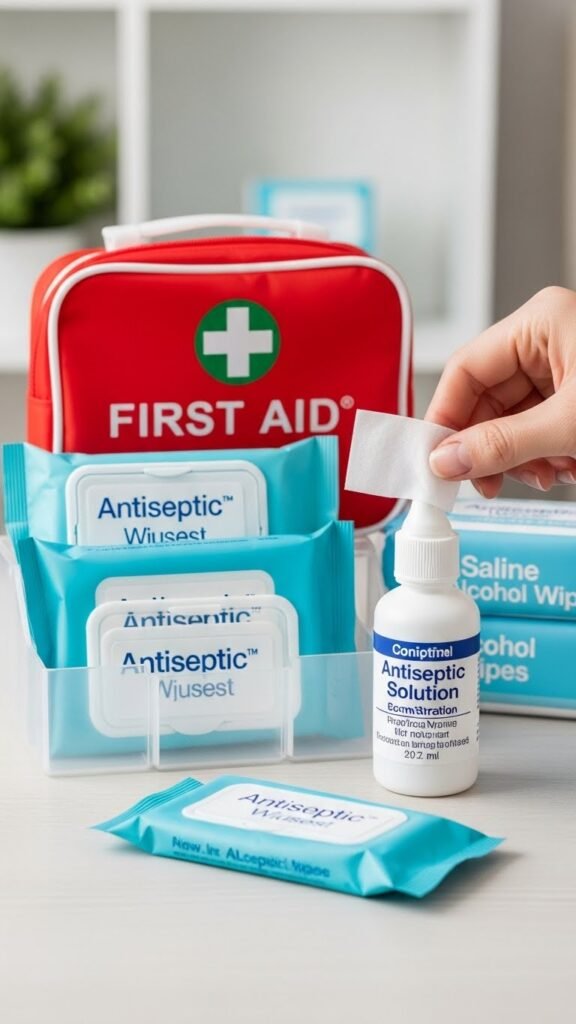
When you clean a wound, reach for antiseptic wipes or a small bottle of solution to reduce infection risk quickly and effectively.
You’ll want products with clear labeling so you can compare solution concentrations and choose what suits your needs.
Keep antiseptic alternatives like saline or alcohol wipes for backup.
Store them accessibly so you can act fast and maintain your independence in emergencies.
Nonstick Sterile Pads
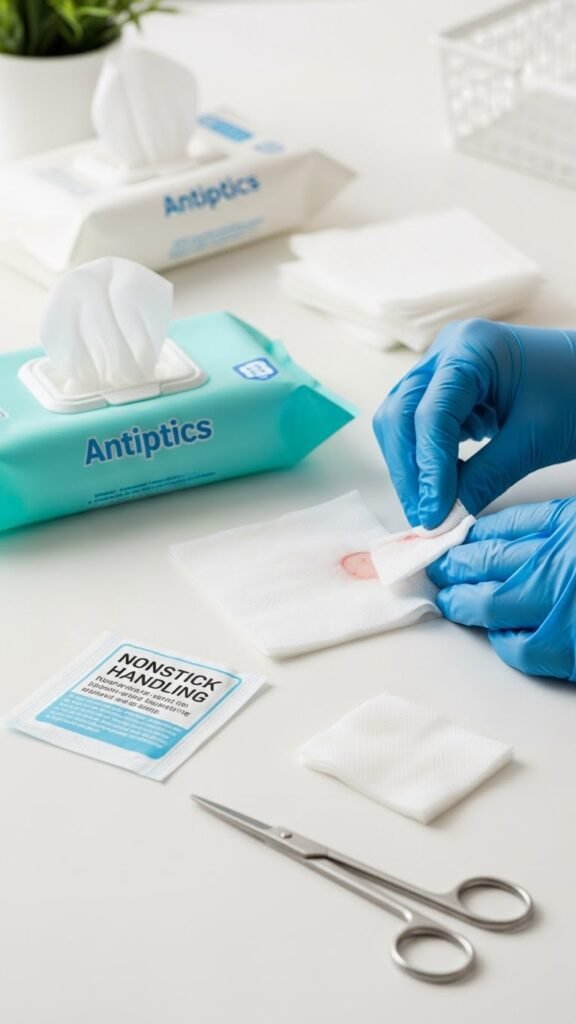
After you’ve cleaned a wound with antiseptic wipes or solution, cover it with a nonstick sterile pad to protect the area and minimize pain when dressing changes are needed.
You should choose nonstick pads sized to the injury, secure them without constricting, and practice sterile handling when changing dressings.
Keep extra sterile pads accessible so you can act quickly and maintain control during winter emergencies.
Pain Relievers: Acetaminophen and Ibuprofen
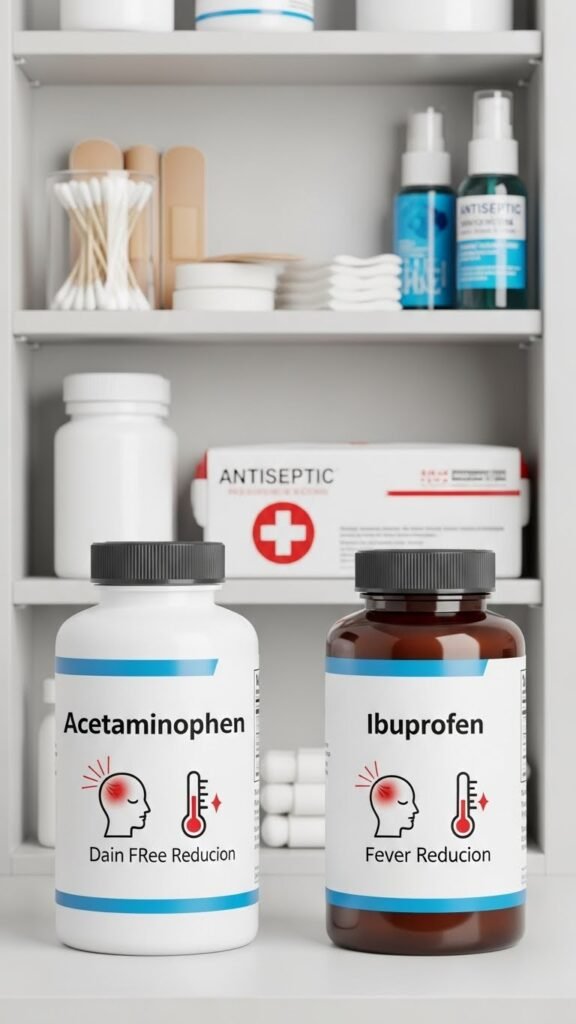
Reach for acetaminophen or ibuprofen to reduce pain and fever, but know how they differ and when each is safer to use. You’ll choose acetaminophen for fewer stomach issues; pick ibuprofen for inflammation. Check dosage differences on labels, avoid doubling up, and watch for pain interactions with other meds. Store both clearly labeled, and use them responsibly to keep your household independent and prepared.
Antihistamines for Allergic Reactions
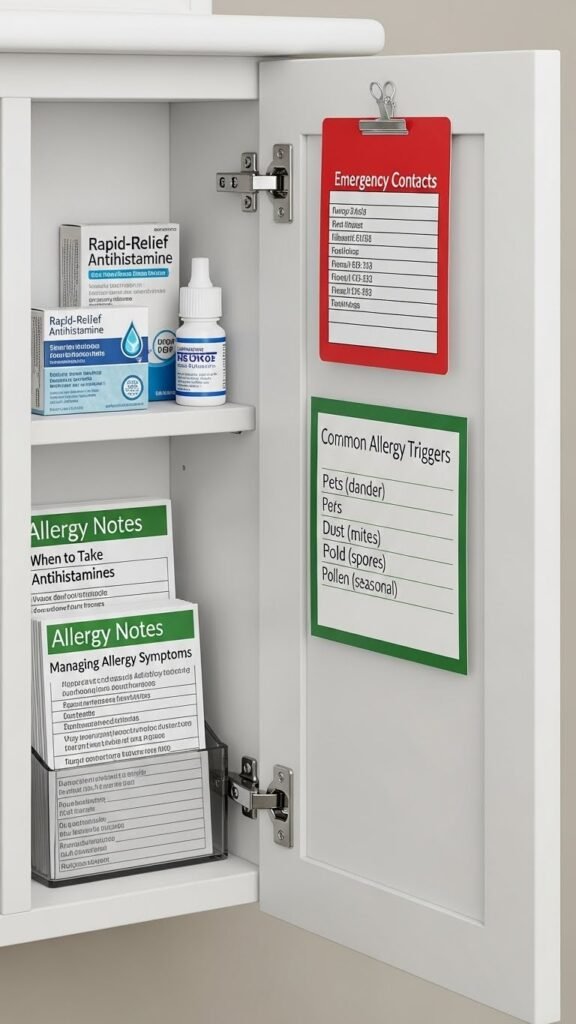
If someone in your household gets hives, sneezing, or itchy eyes, keep a fast-acting antihistamine on hand to reduce symptoms quickly and prevent escalation.
You’ll want clear instructions for Antihistamine dosing and timing, plus alternatives for children.
Note common Allergy triggers—pets, dust, mold—and store medication with allergy notes and emergency contacts so you can act decisively and maintain independence during winter.
Burn Cream and Gel for Heating-Related Burns
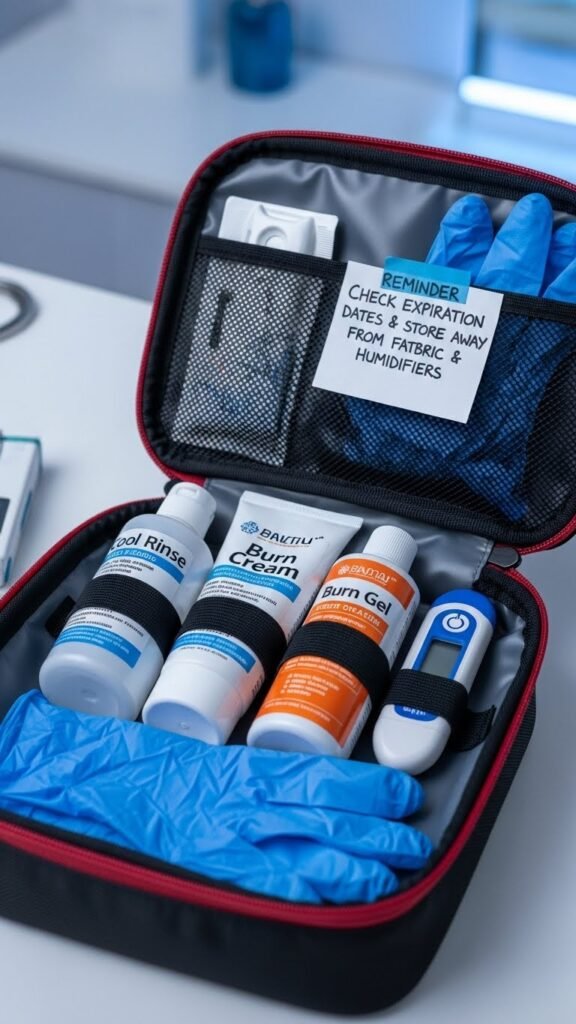
Treat heating-related burns promptly with a sterile cool rinse and an appropriate burn cream or gel to reduce pain, limit tissue damage, and lower infection risk.
Keep aloe-based or silver sulfadiazine options in your kit, check expiration dates, and store away from fabric burnables and home humidifiers that could worsen risks.
Follow product directions and seek care for deep or spreading burns.
Blunt-Tip Scissors for Safe Cutting
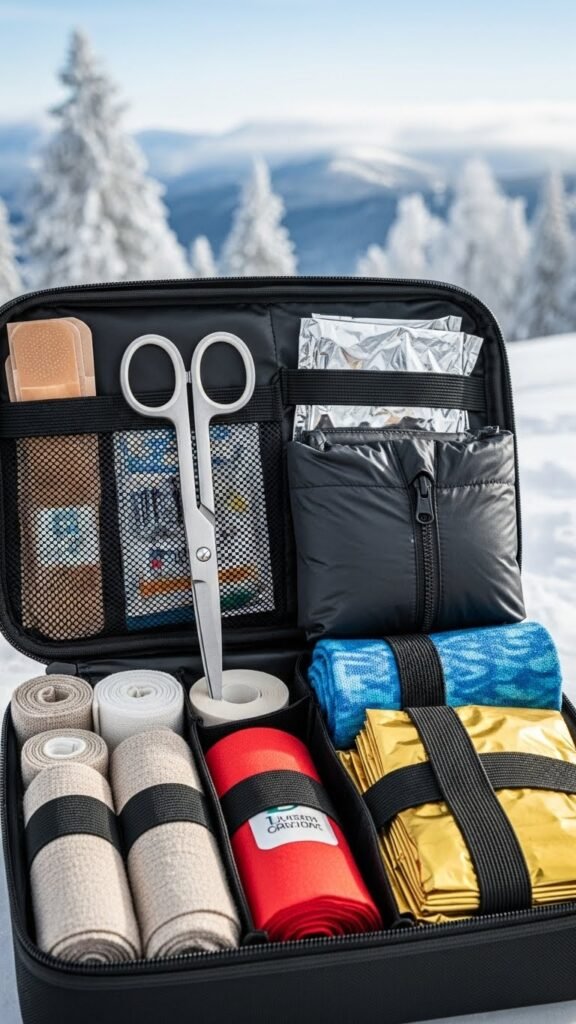
Often overlooked, blunt-tip scissors are a must-have in a winter first aid kit because they let you cut clothing, bandages, and tape safely without snagging skin or stitches.
You’ll prefer rounded scissors for emergency trimming and clothing removal, preserving movement and independence.
Follow safety schools’ basic training: keep blades clean, store securely, and practice quick, confident cuts to stay prepared.
Fine-Point Tweezers for Debris Removal
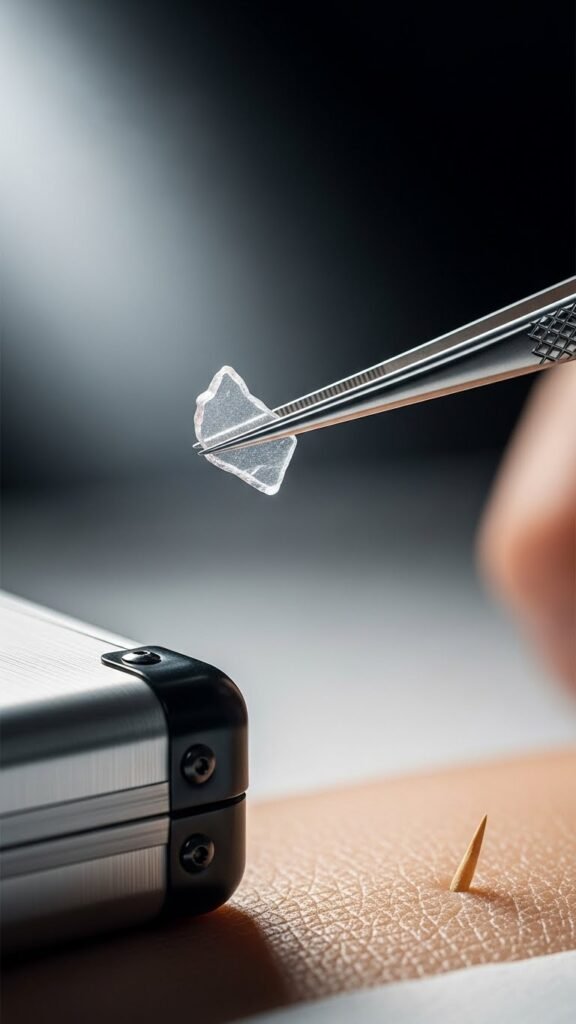
Reach for fine-point tweezers when you need to remove splinters, glass shards, or packed snow and grit from skin—these precise tools let you grasp tiny debris without further injury.
You’ll choose models with textured precision grips and optional magnified lighting to steady aim and improve visibility.
Keep them clean, store in a protective case, and use steady, confident motions to free skin safely.
Disposable Non-Latex Gloves
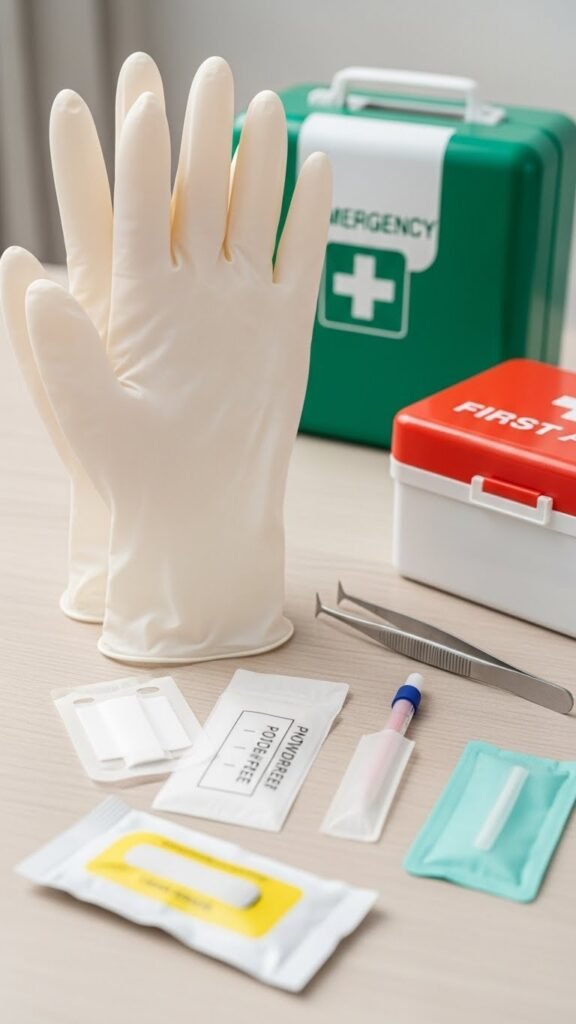
After you’ve used tweezers to remove debris, don disposable non-latex gloves before touching the wound or applying dressings to prevent infection and protect anyone with latex allergies.
Choose powder free alternatives to avoid residue and skin irritation.
Pick gloves that preserve tactile sensitivity so you can handle dressings and medications confidently.
Store spare pairs where they’re easy to grab during emergencies.
Digital Oral Thermometer
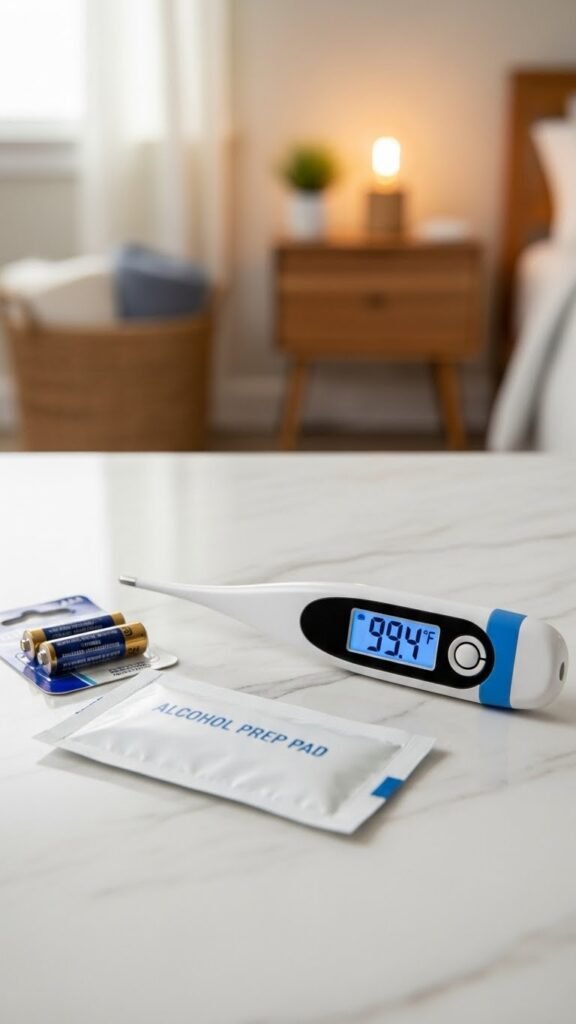
A digital oral thermometer gives you a fast, accurate reading of body temperature so you can spot fever early and decide on next steps.
Keep one in your kit for reliable fever monitoring at home, and store spare batteries.
Check battery maintenance regularly so it’s ready when you need it.
Choose a model with quick readout, clear display, and easy sanitizing.
Safety Pins and Elastic Roller Bandages
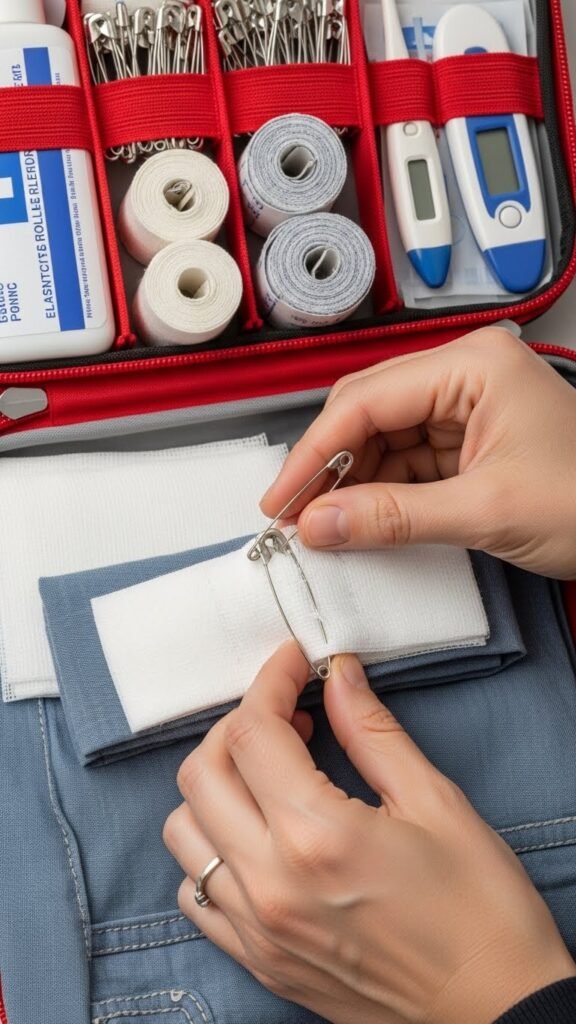
You’ll want safety pins and elastic roller bandages alongside your thermometer so you can both secure dressings and support strains without improvising.
Learn basic safety pinning techniques to fasten gauze reliably and avoid snagging clothing.
Practice elastic bandage care: clean skin, moderate tension, check circulation regularly.
Keep varied sizes and spare pins so you’re ready, confident, and self-reliant in winter incidents.
Instant Cold Packs for Sprains and Swelling
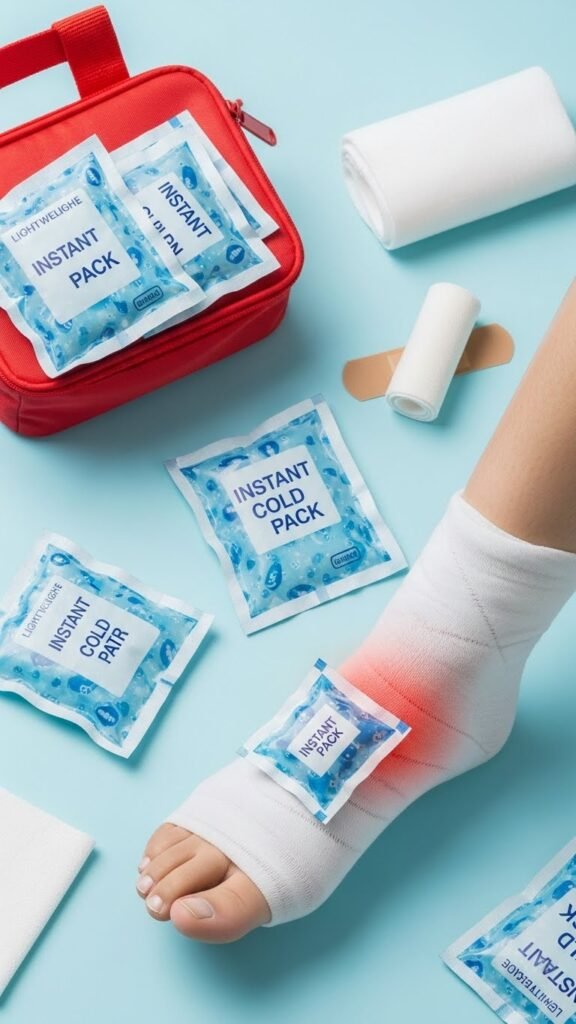
Often overlooked, instant cold packs give fast, reliable relief for sprains and swelling when refrigeration isn’t available. You keep several in your kit to apply immediate cold therapy, reduce inflammation, and support swelling management on the spot.
They’re lightweight, single-use, and let you act decisively after twists or falls. Use a barrier cloth, limit application to 20 minutes, and seek care if pain persists.
Hand Sanitizer and Alcohol Wipes
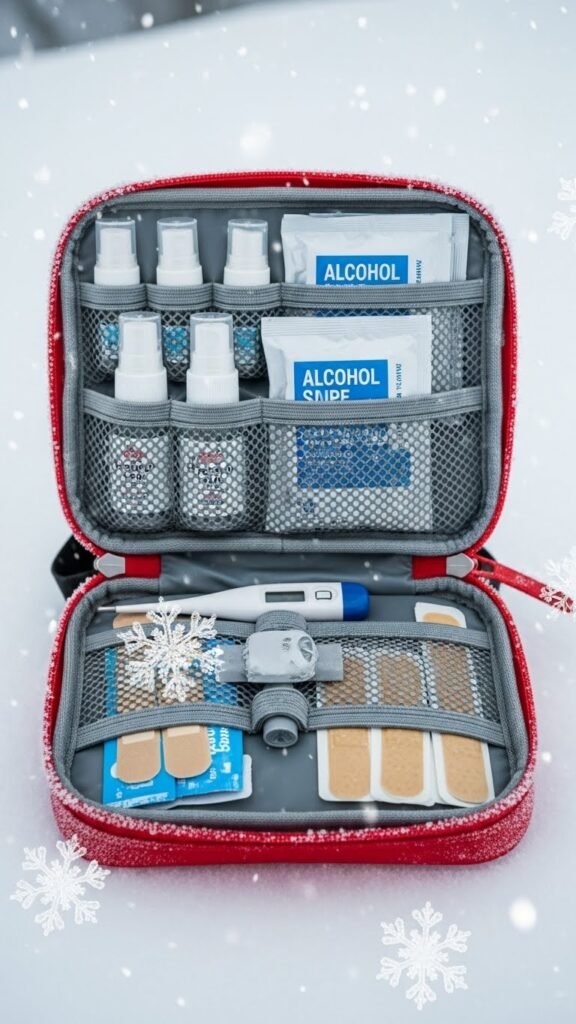
Regularly include hand sanitizer and alcohol wipes in your winter first aid kit so you can quickly disinfect hands and surfaces when water and soap aren’t available. Keep a travel pack for pockets or glovebox use and larger bottles at home. Choose pump alternatives like flip-top or squeeze bottles for reliable dispensing in cold. Rotate supplies and check alcohol content to guarantee effectiveness.
Emergency Thermal Blanket for Hypothermia Prevention
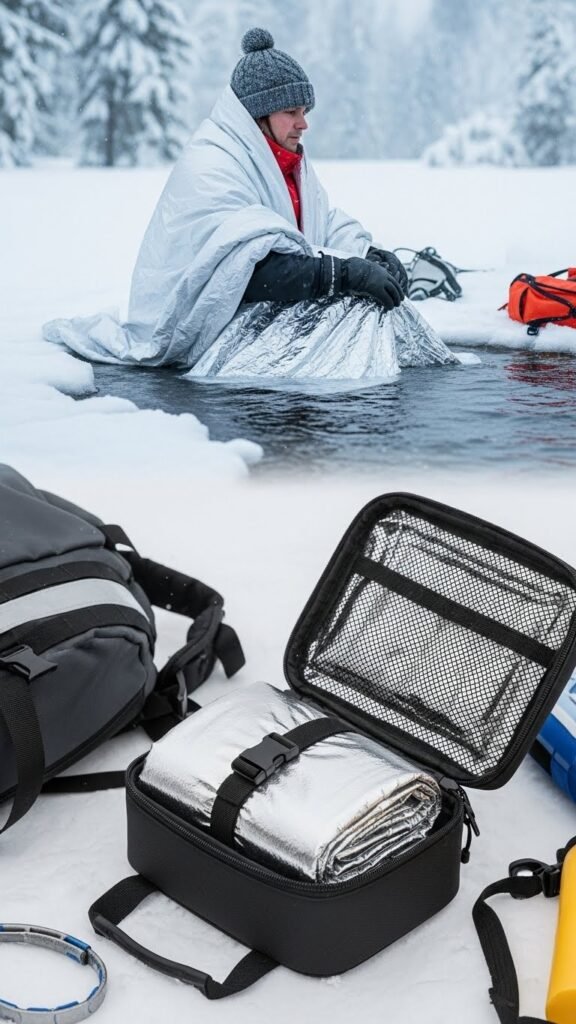
Keeping an emergency thermal blanket in your winter first aid kit can make the difference between mild chill and dangerous hypothermia.
You’ll use it to retain body heat after cold water immersion or when shelter’s sparse.
It’s compact, lightweight and acts like sleeping bag insulation in emergencies.
Pack one with other essentials so you stay mobile, protected, and free to act decisively.
Seven-Day Supply of Essential Prescriptions
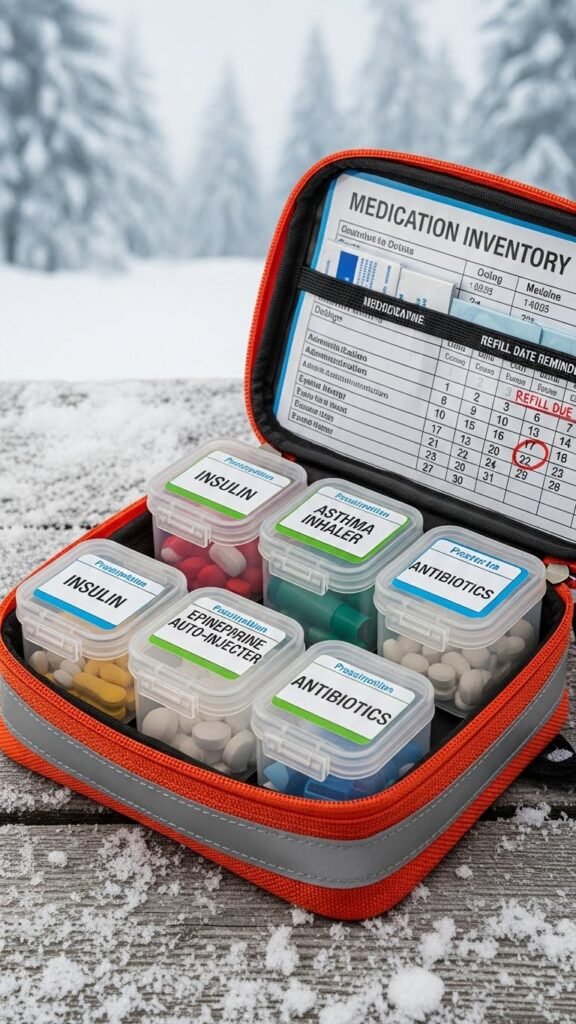
Pack a seven-day supply of any essential prescription medicines in your winter first aid kit so you can manage chronic conditions or acute flare-ups without scrambling for a pharmacy in bad weather.
Keep a medication inventory with dosages and expiration dates, and set refill reminders to avoid gaps.
Store prescriptions in labeled, waterproof containers and update your list after any changes.
Temperature-Safe Storage for Insulin and Inhalers
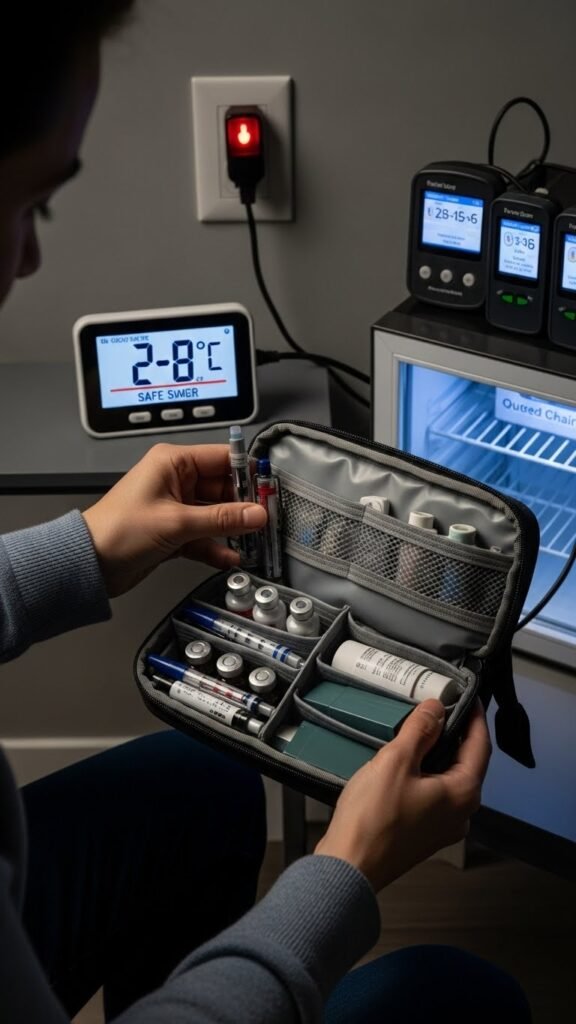
Insulin and many metered-dose inhalers are temperature-sensitive, so you’ll need to protect them from freezing cold and high heat to preserve potency and function. Store meds in insulated pouches during outages, avoid trunk or exterior storage, and rotate supplies.
Use cold chain monitoring when traveling or during power loss, set clear temperature alerts, and keep backup fridge power to maintain freedom and control over your health.
Extra Supplies for Medical Devices and PPE
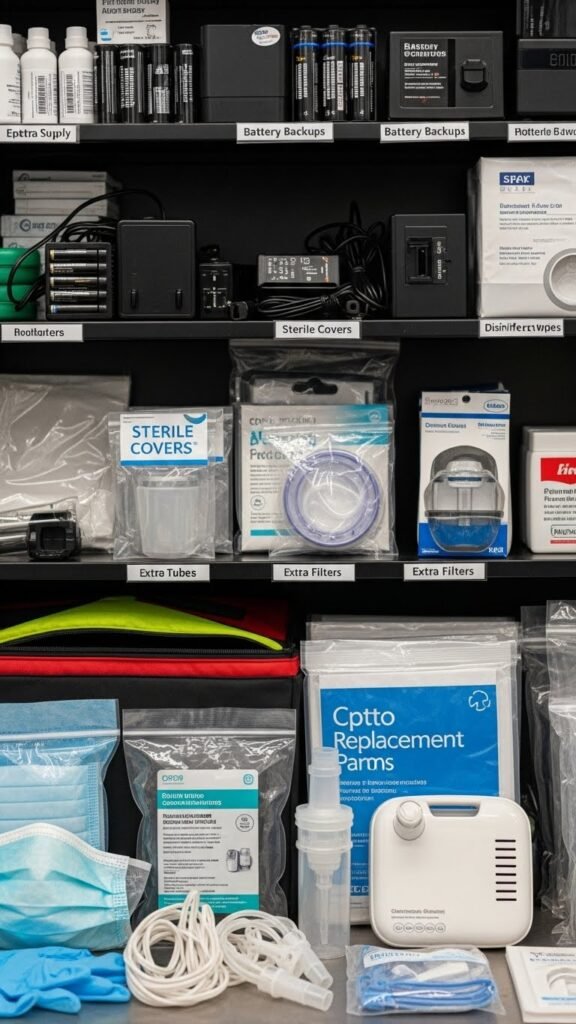
Gather extra batteries, chargers, and compatible spare parts for any medical devices you rely on—CPAP machines, glucometers, nebulizers, portable oxygen concentrators, and continuous glucose sensors—and keep personal protective equipment like gloves, masks, and disinfectant wipes on hand.
Pack battery backups, sterile covers, extra tubing and filters, and sealed replacement parts. Label items, rotate supplies, and store them where they’re accessible during outages or storms.
Waterproof, Insulated Container and Kit Maintenance Checklist
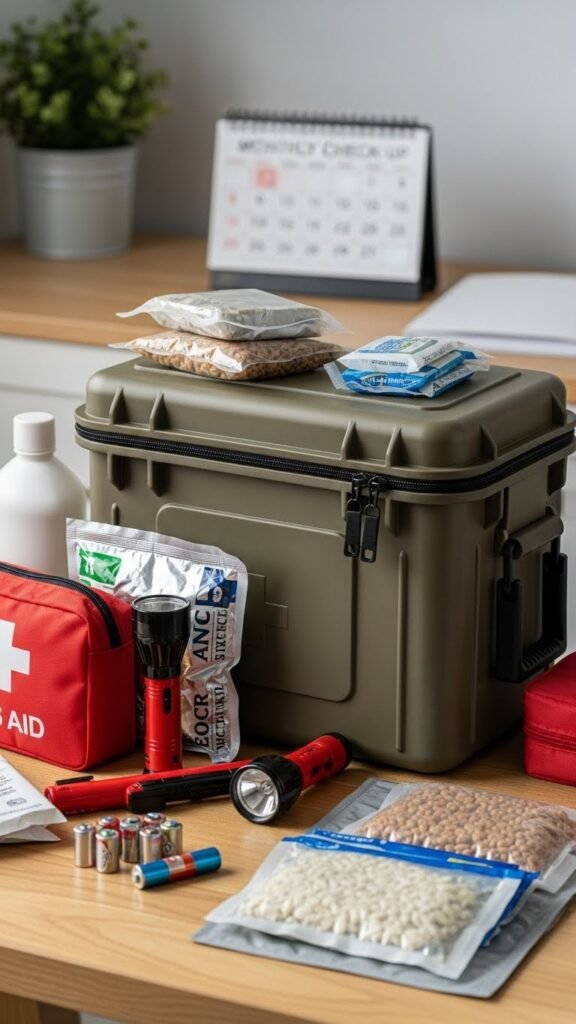
Keeping your kit dry and at a safe temperature starts with a sturdy, waterproof, insulated container that you check regularly for integrity and function. Choose a waterproof case or insulated pack rated for cold; seal, hinges, and zippers must work.
Inspect supplies monthly, replace expired meds, recharge batteries, and note missing items. Store where you can grab freedom quickly in an emergency.