
You can cut winter energy bills markedly with small, low-cost fixes that add up fast. Start by sealing drafts, insulating key gaps, and tuning your heating system, then layer in behavioral changes and targeted upgrades like a smart thermostat or thermal curtains. Each step has measurable savings, and most pay back within a season—keep going to see which mix works best for your home.
Seal Drafts Around Doors and Windows
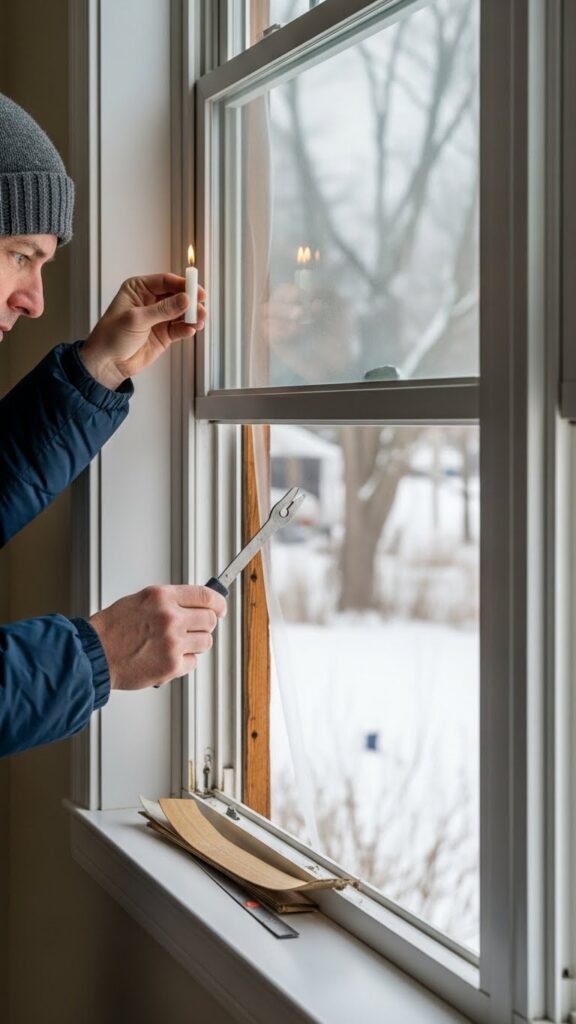
Start by walking the perimeter of your doors and windows on a cold, windy day—you’ll feel or hear most drafts immediately—and note gaps, worn weatherstripping, and loose frames. Use simple draft detection: a lit candle, smoke pen, or infrared thermometer. Inspect each window sash for movement and seal failures. Prioritize fixes by heat loss estimates, replace weatherstripping, and caulk gaps for measurable savings.
Install Door Sweeps on Exterior Doors
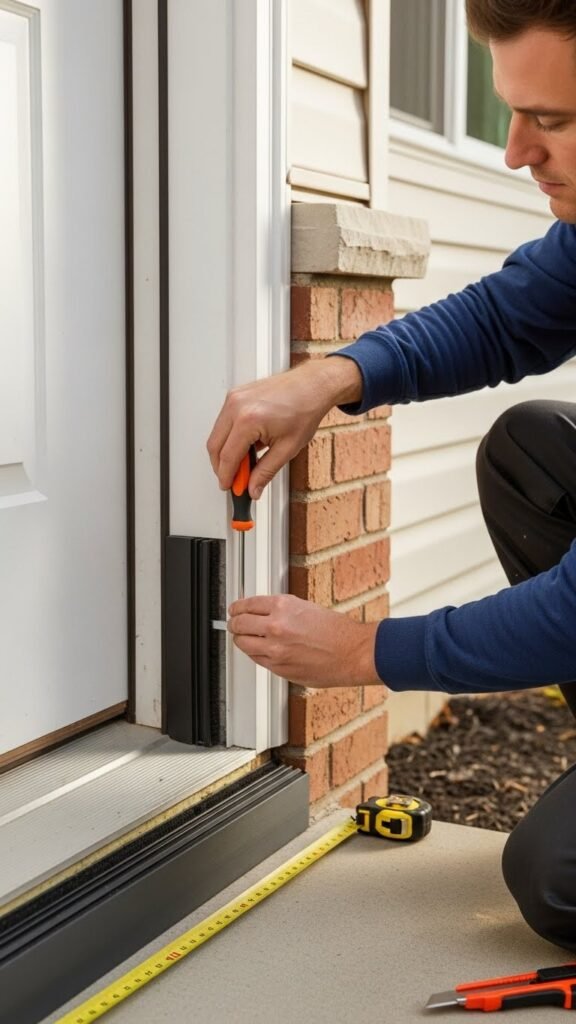
After you’ve sealed visible gaps around frames and sashes, focus on the space under exterior doors—small openings there can account for significant heat loss. Install adjustable door sweeps to cut drafts, quantify savings, and improve threshold insulation.
Choose durable materials during routine exterior maintenance, measure clearance precisely, and tighten mounting screws. You’ll reduce energy waste, lower bills, and retain freedom from constant thermostat fiddling.
Caulk Cracks Around Frames and Baseboards
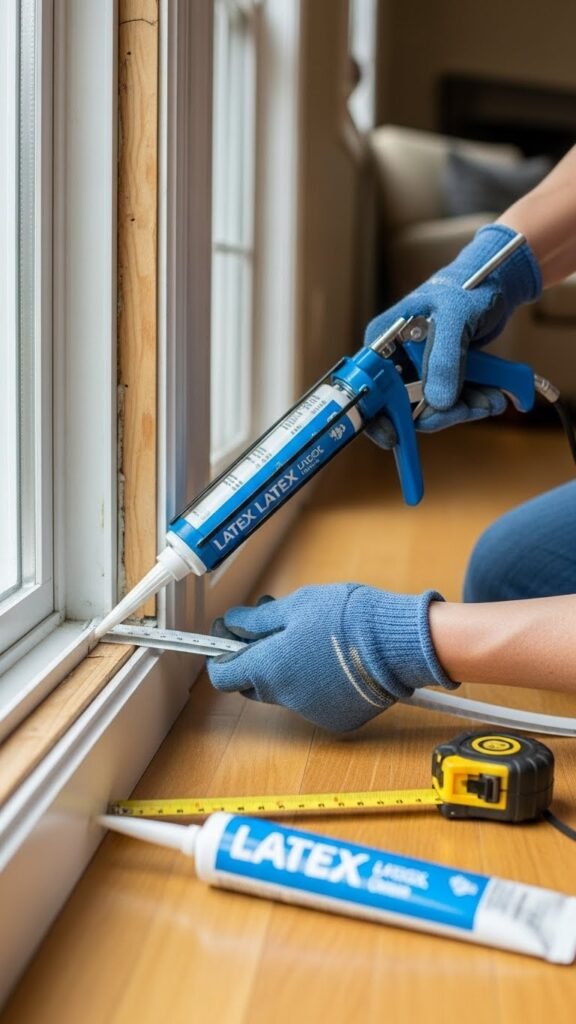
Sealing gaps with weatherstripping cuts drafts, and caulking the remaining cracks around window and door frames and along baseboards picks up where that work leaves off.
You’ll use latex caulk for flexibility and solvent-based for paint adhesion where needed. Measure gap widths, prep surfaces, and choose seasonal timing—late spring/fall for stable temps. A few tubes save energy and preserve comfort.
Insulate Attic Access and Chimney Penetrations
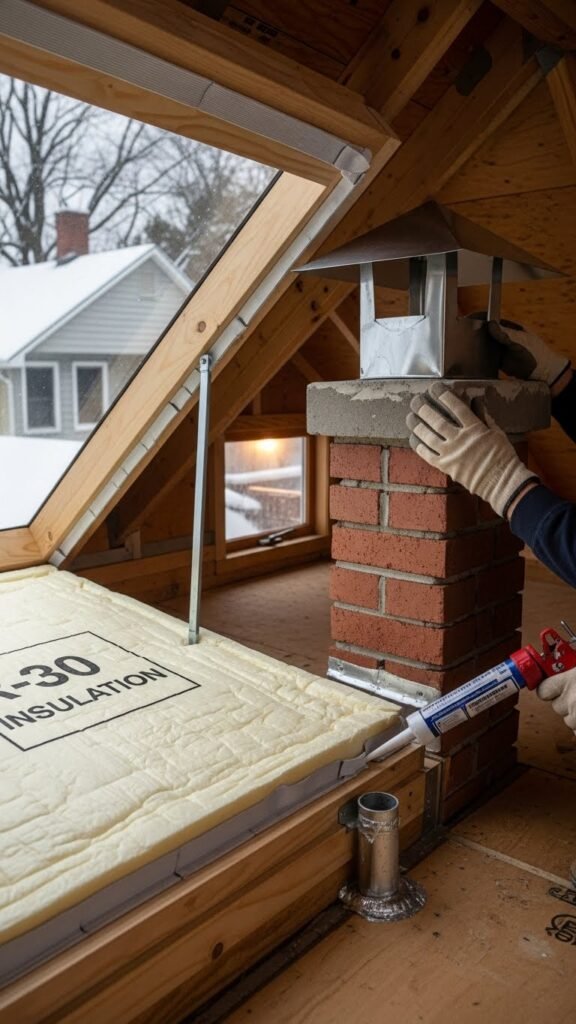
Because heat rises, insulating attic access points and any chimney or pipe penetrations can cut significant winter heat loss and lower energy bills quickly.
Seal and insulate the attic hatch with weatherstripping and an insulated cover rated R-30 or higher. Install a properly fitted chimney cap and use high-temperature sealant around penetrations. These measures typically reduce heat loss measurable in reduced furnace runtime and lower bills.
Use Thermal Curtains and Close Them at Night
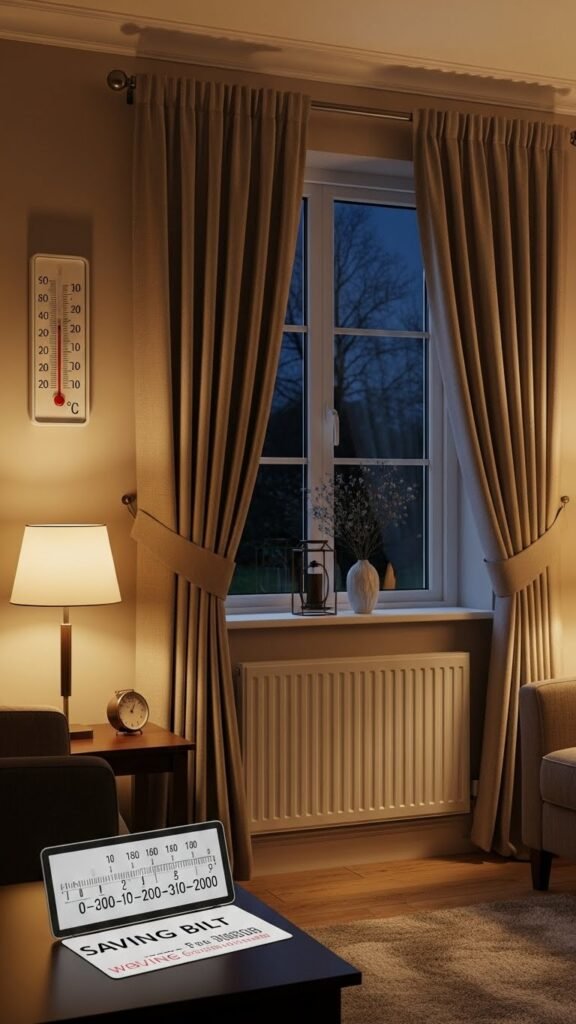
Once you’ve tightened up rim joists and basement walls, cut another major source of heat loss by using thermal curtains and closing them at night. You’ll gain measurable savings: quality insulated panels reduce window heat transfer by up to 25%.
Opt for thermal elegance—heavy, fitted drapes—and practice nocturnal closing consistently. That simple habit trims heating demand, lowers bills, and preserves your freedom to choose comfort.
Open South-Facing Curtains During Daylight

Frequently, simply opening south-facing curtains during daylight captures free solar heat that cuts your heating needs. You’ll increase solar gain, lowering thermostat runtime and energy costs.
Track temperature changes and sun angles to optimize timing. Keep curtains clean and functional—regular curtain maintenance guarantees smooth operation and maximum light.
This low-cost habit boosts comfort and independence without major upgrades or ongoing expenses.
Replace Old Windows With ENERGY STAR Options
Program a Smart Thermostat for Savings
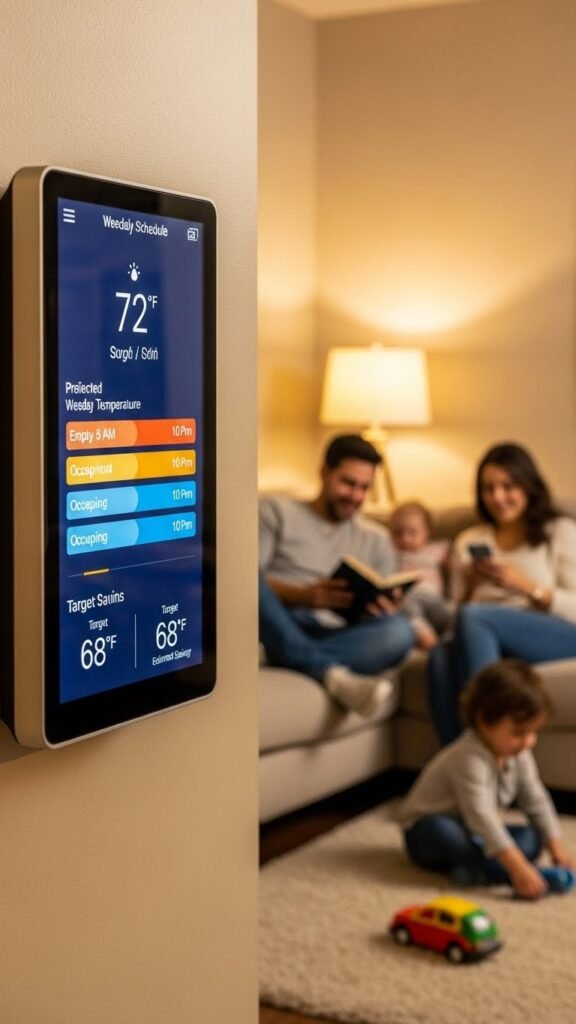
Start by setting a clear schedule: program your smart thermostat to lower temperatures when you’re out or asleep and raise them only when you need comfort. Use schedule setbacks to cut heating demand by up to 10% per degree-hour saved.
Let adaptive learning optimize timing, reducing manual tweaks. Review weekly data, adjust for habits, and lock settings to protect your autonomy and banked savings.
Lower Thermostat When Asleep or Away
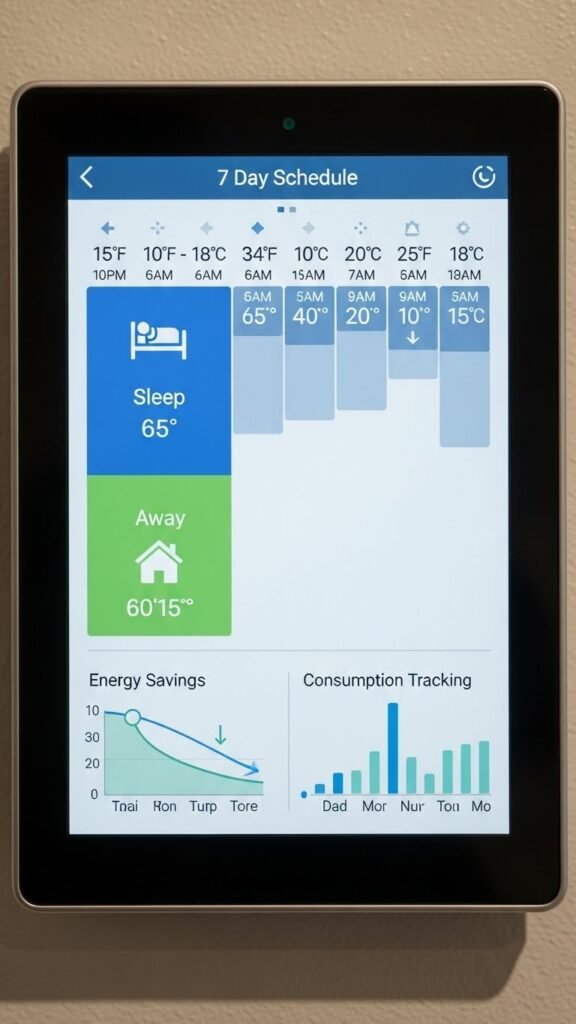
Now that your thermostat’s schedule and adaptive learning are doing the heavy lifting, lower settings for sleep and away periods to lock in savings without sacrificing comfort.
Use a modest sleep setback overnight and an away setback while you’re gone; small, consistent drops cut usage markedly.
Automate setbacks, track hourly consumption, and adjust setbacks based on real-world savings to maximize freedom and control.
Change or Clean Furnace and HVAC Filters Regularly
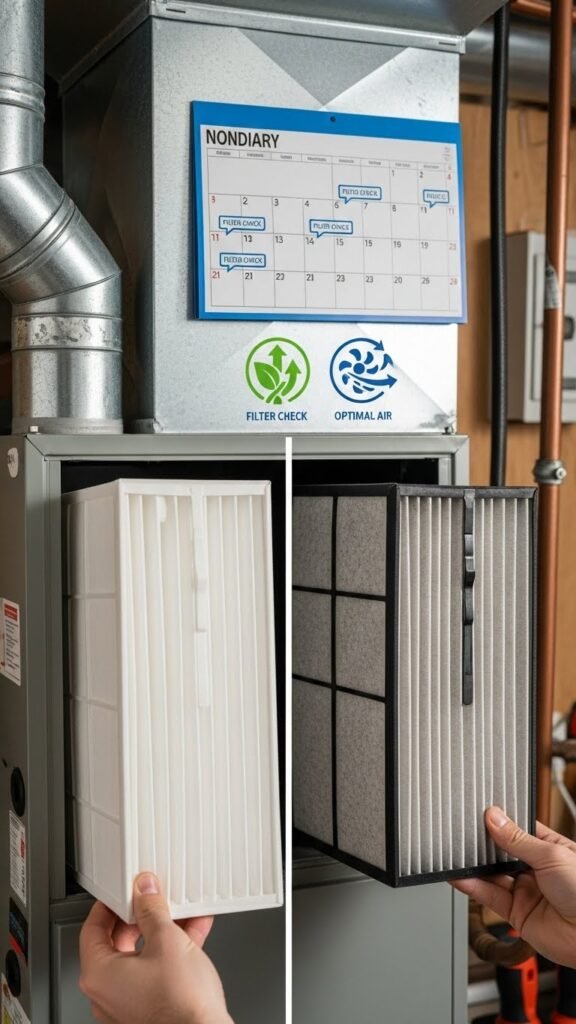
Regularly change or clean your furnace and HVAC filters to keep systems running efficiently and cut energy use—clogged filters can increase blower energy consumption by up to 15% and reduce airflow, forcing your furnace or heat pump to work harder.
Check manufacturer filter lifespan, set reminders, and perform basic airflow testing after replacement.
Clean or replace filters monthly during heavy use to maintain comfort and lower bills.
Add a Blanket to the Hot Water Heater
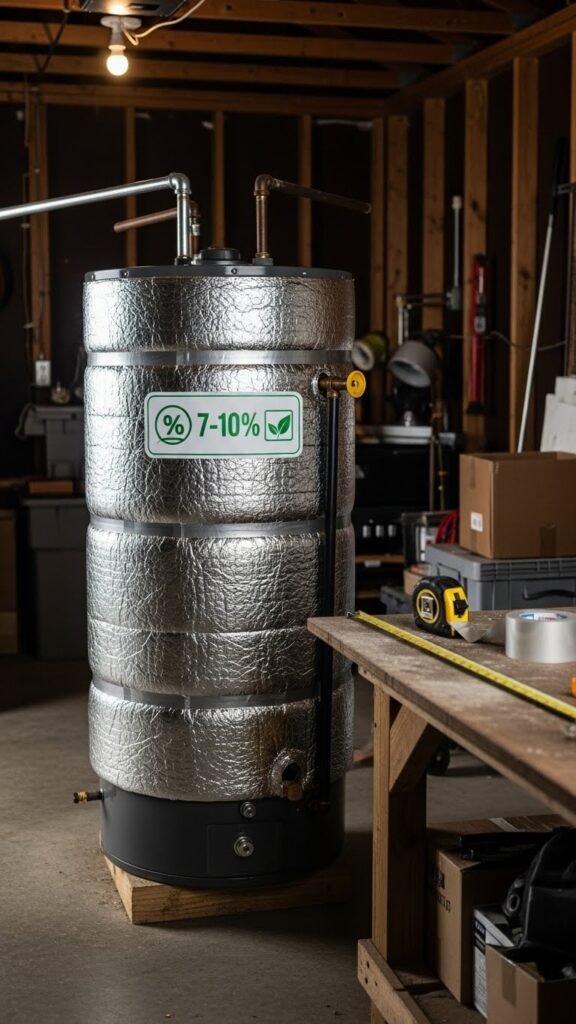
Wrap your water heater with an insulating blanket to cut standby heat loss and lower your energy bill—especially if the tank sits in an unheated garage, attic, or crawlspace.
You’ll pick a tank wrap sized to your model, follow insulation blanket care instructions, and seal edges with foil tape.
Expect 7–10% energy savings for gas units, more for electric, and quick payback on materials.
Maximize Passive Solar Gain With Furniture Placement

When you orient furniture to catch low winter sun, you can raise indoor temperatures by several degrees without turning up the heat—studies show well-designed passive solar gain can cut heating use by 10–30%.
Use sun facing layouts: place seating and thermal-mass surfaces where sun hits. Prioritize furniture thermalization—solid wood or stone near windows stores heat, freeing you from thermostat dependence and lowering bills.
Wear Layers Indoors Instead of Raising Heat

Bundle up inside instead of cranking the thermostat — wearing layers is the simplest, cheapest way to cut heating use.
You’ll reduce furnace runtime by a measurable amount when you rely on layered clothing and indoor sweaters instead of raising setpoints.
Combine base layers, mid-layers, and a warm sweater to stay comfortable, lower bills, and keep control over your home energy choices.
Install Insulated Window Film or Plastic for Temporary Drafts
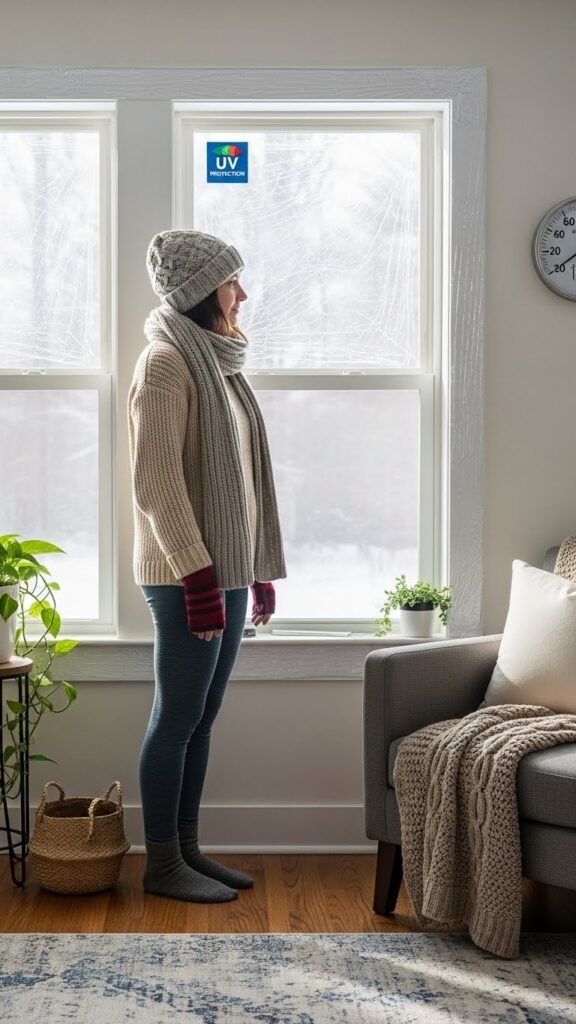
If you’re cutting back on thermostat use by wearing layers, you’ll also want to seal common heat leaks — windows are often the biggest culprits.
Install static-cling insulated film or shrink-wrap plastic to reduce drafts and lower heat loss by up to 30% on single-pane units. Choose films with UV protection to prevent fading. It’s cheap, temporary, DIY-friendly, and preserves ventilation options.
Use Rugs to Insulate Hard Floor Surfaces
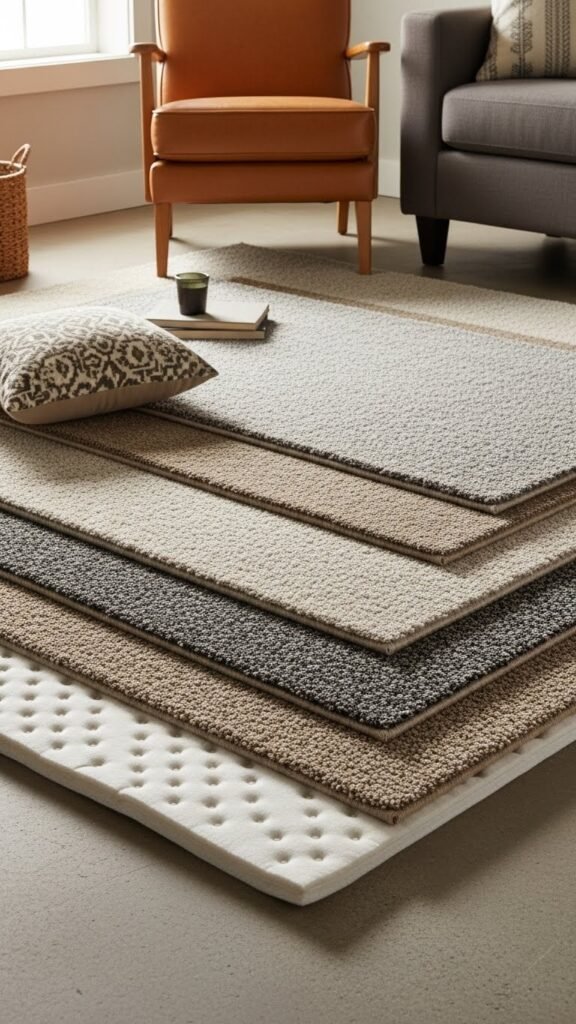
Lay down thick rugs or layered carpets to cut heat loss through hard floors—up to 10–15% of a room’s heat can escape through uninsulated floors, especially over unheated basements or slab foundations. For efficient rugs placement, cover high-traffic and perimeter zones, add rug padding to increase R-value, and prioritize low-cost wool or synthetic options to conserve energy and maintain mobility in your space.
Monitor and Seal Penetrations for Cables and Vents
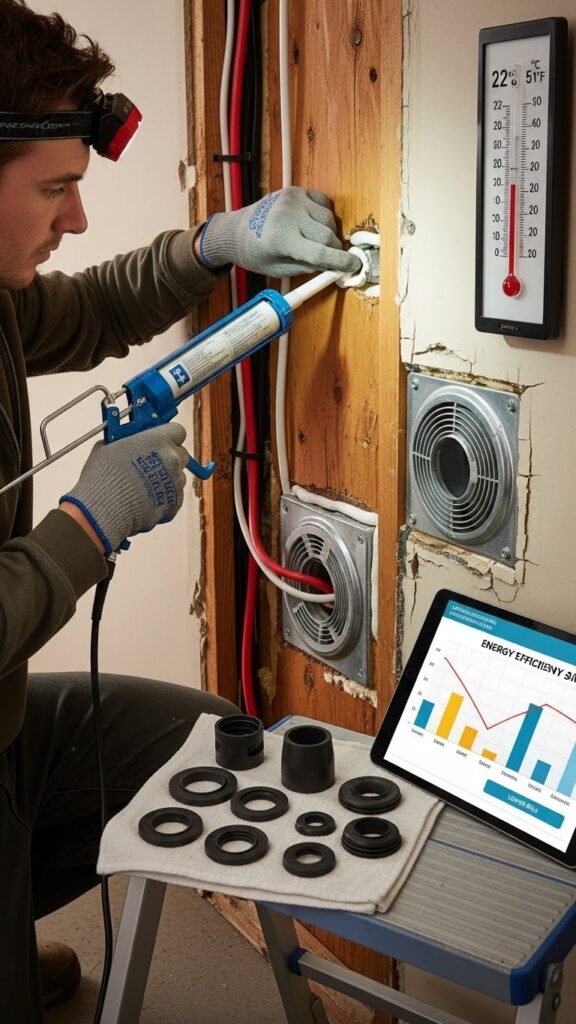
Sealing vents and closing doors helps, but leaks around cables, dryer vents, and other penetrations can still let warm air escape and cold drafts in—accounting for a surprising share of heat loss in many homes.
Inspect every cable penetration, install foam backer and sealant, and fit vent grommets where wires or ducts pass.
Small fixes often cut measurable heat loss and lower bills quickly.