
If you’re heading into winter backcountry, you need gear that keeps you warm, dry, and mobile in snow and wind. This checklist lays out the 24 essentials—from a four-season tent and layered sleep system to stoves, navigation, repairs, and emergency signaling—so you can plan smart, cut weight, and avoid common cold-weather mistakes. Keep going to make sure nothing critical gets left behind.
4-Season Tent With Full Fly and Snow Flaps
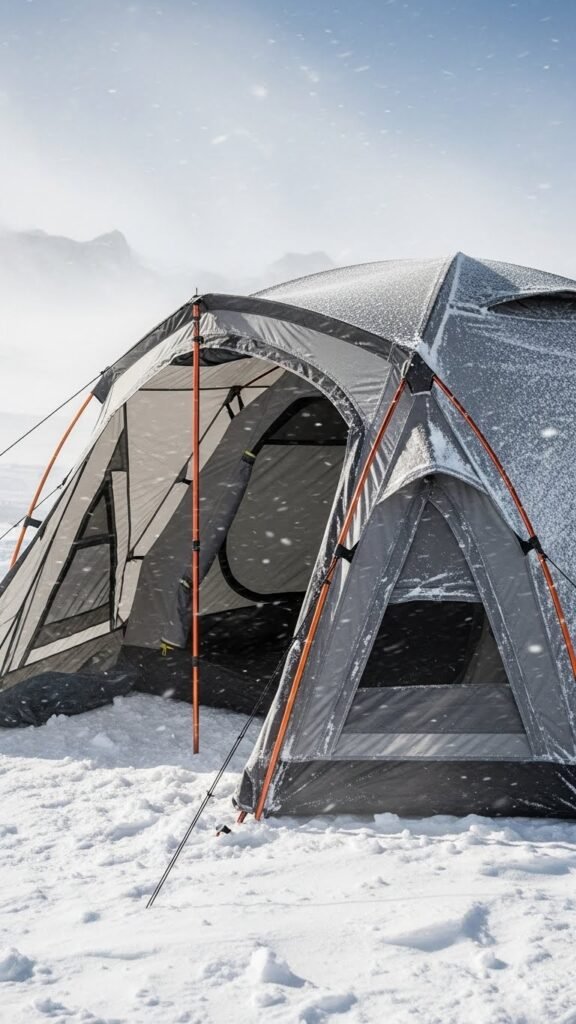
When you’re choosing a winter tent, pick a true 4-season model with a full-coverage fly and integrated snow flaps—these features keep wind, drifting snow, and moisture out while maintaining structural integrity in heavy weather.
You’ll want reliable pole tensioning to resist gusts and crisp vestibule ventilation to prevent condensation. Pick sturdy zippers, simple setup, and freedom to move without compromise.
Tent Poles, Snow/Sand Stakes, and Footprint
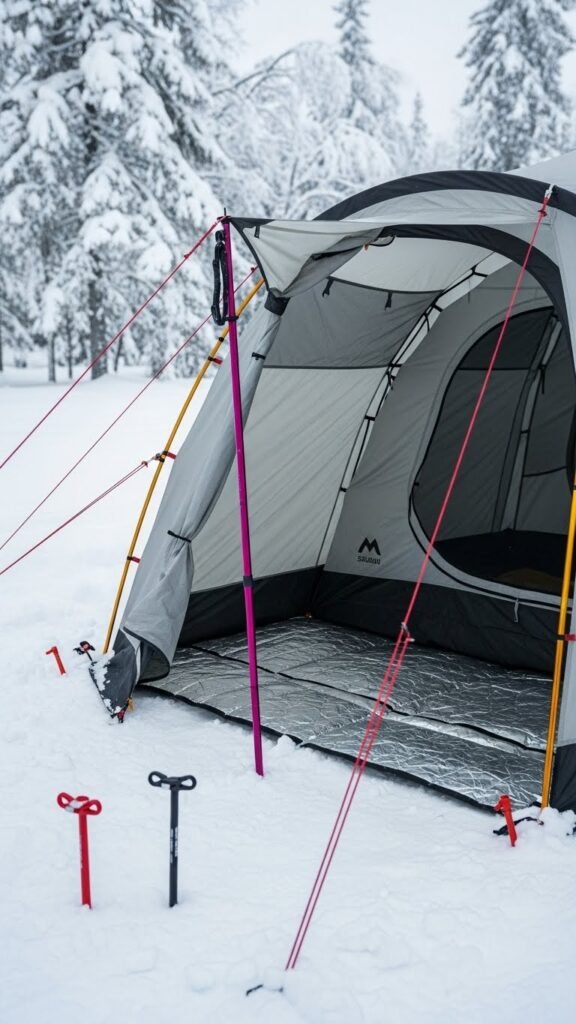
Because a tent’s performance in winter starts from the ground up, you’ll want poles, stakes, and a footprint that work together to keep the shelter standing, anchored, and insulated.
Choose sturdy poles that allow precise pole tensioning for shed snow and wind load. Use snow/sand stake alternatives like buried anchors or deadman rigs. Match footprint sizing to tent floor for insulation and protection.
Tarp for Cooking and Sleeping Area Protection
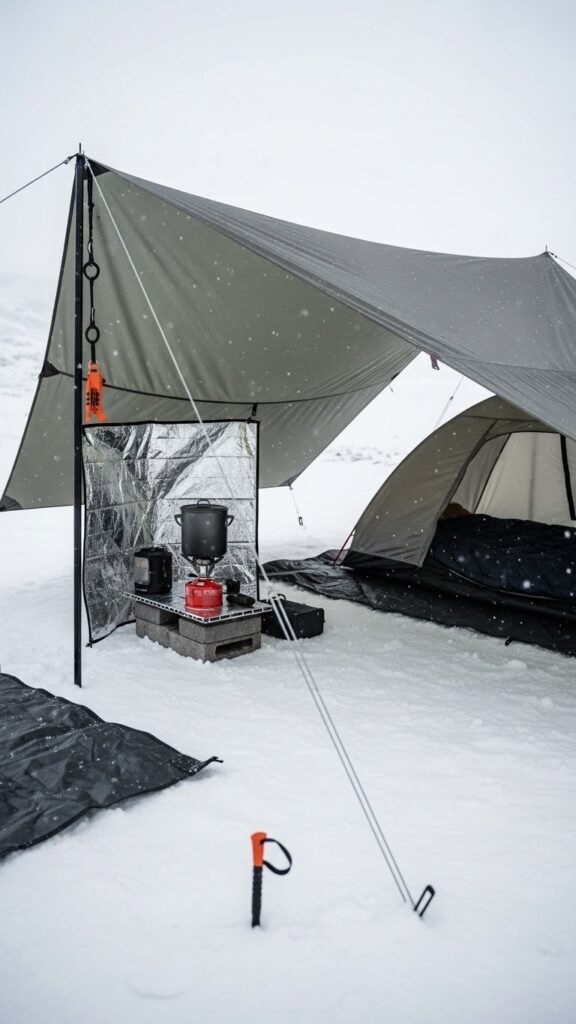
After you’ve squared away poles, anchors, and a footprint, add a tarp to protect your cooking zone and sleeping area from wind-driven snow, falling ice, and moisture.
You’ll rig a DIY tarp as a lightweight wind shelter and snow curtain, tensioned for drainage.
Use a reflective layer as a heat shield near stoves, place stakes low, and keep a clear cooking perimeter for safety and freedom.
Camp Lantern and Headlamp With Extra Batteries
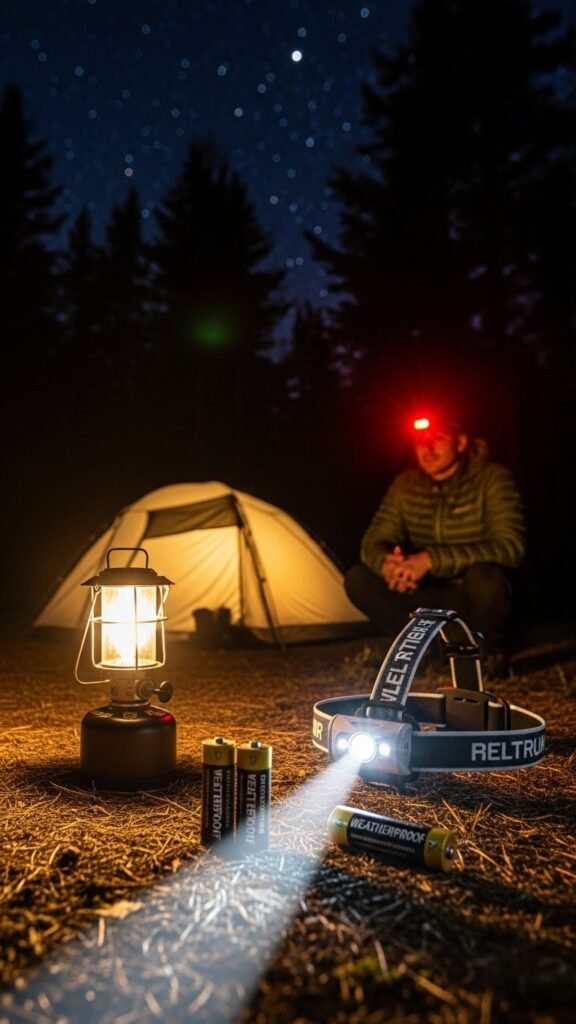
Always carry both a camp lantern and a reliable headlamp, plus extra batteries, so you’ve got hands-free task lighting and ambient light for the whole site. You’ll manage battery management by rotating spares, using red light for night vision, and choosing a headlamp with adjustable beam distance. Practice headlamp hygiene—keep straps clean and dry—and pack weatherproof batteries for freedom on cold trips.
Tent Repair Kit and Multi-Tool
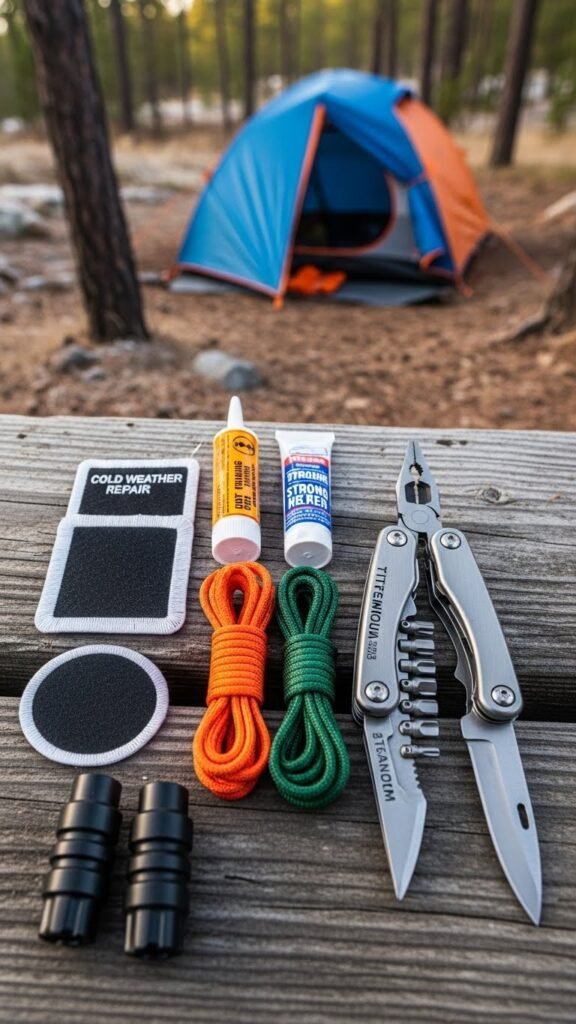
Repair-ready gear keeps a blown seam or broken pole from wrecking a trip, so pack a compact tent repair kit and a sturdy multi-tool.
Include cold weather patches, strong adhesive, spare poles or splints, and cordage.
A multi-tool with a titanium bit driver, pliers, and knife lets you improvise fixes fast.
You’ll stay mobile, safe, and free to keep going.
Two Sleeping Pads for Insulation (Closed-Cell + Inflatable)
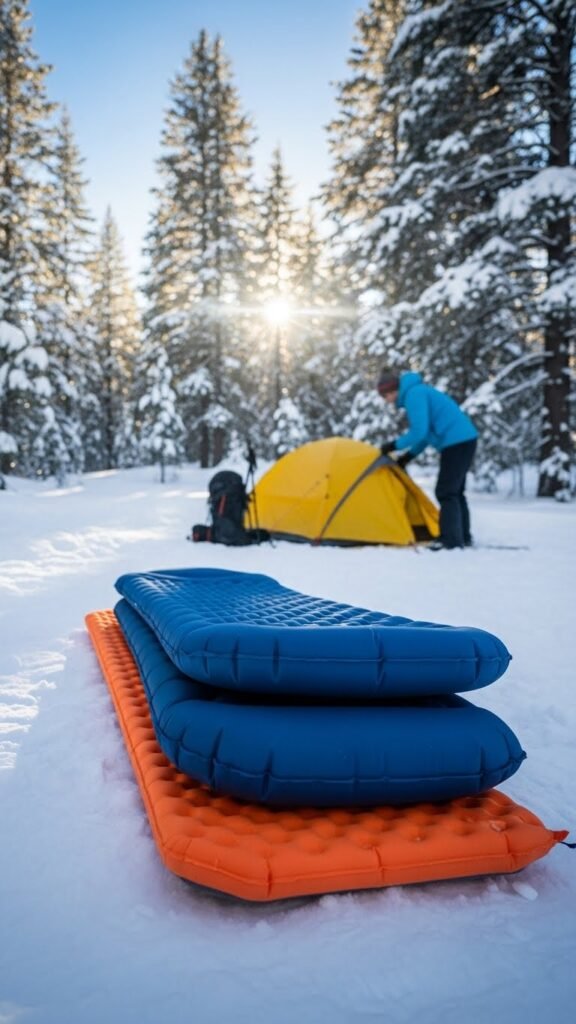
If you want reliable insulation under winter gear, bring two sleeping pads: a closed-cell foam pad under an inflatable one. You’ll gain durability and puncture resistance from foam, and higher warmth-to-weight from an inflatable.
Do an R value comparison before you choose models, then practice pad layering to maximize thermal protection. This combo keeps you freer to travel farther with safer sleep.
Sleeping Bag Liner for Extra Warmth
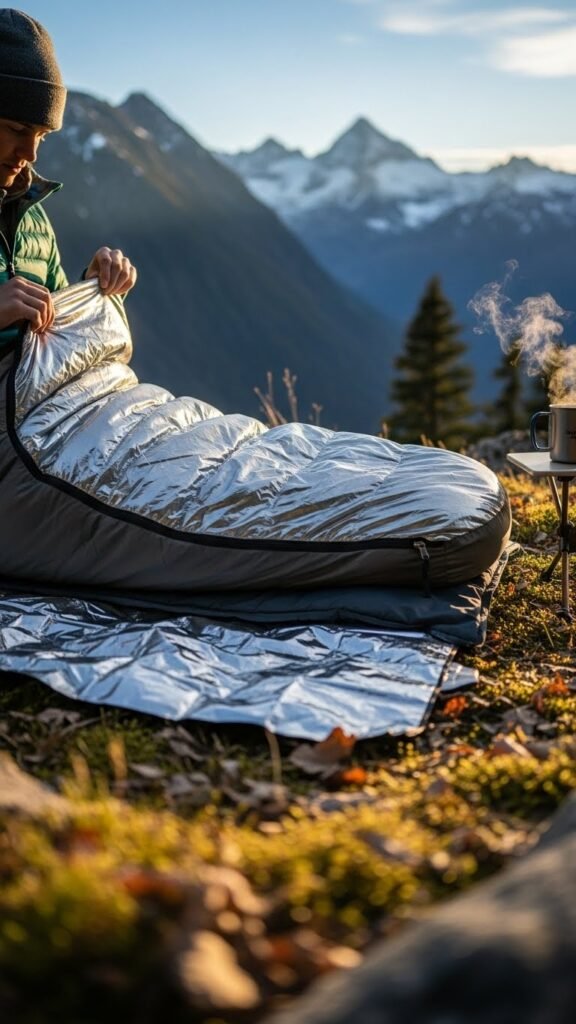
Add a sleeping bag liner to boost warmth without bulk: liners can raise your bag’s effective temperature rating by several degrees, add a hygienic barrier that’s easy to wash, and let you change insulation quickly between trips.
Choose a silk liner for lightweight comfort or a reflective emergency liner to trap heat. You’ll stay cleaner, warmer, and freer to travel light.
Dry Bag or Waterproof Compression Sack
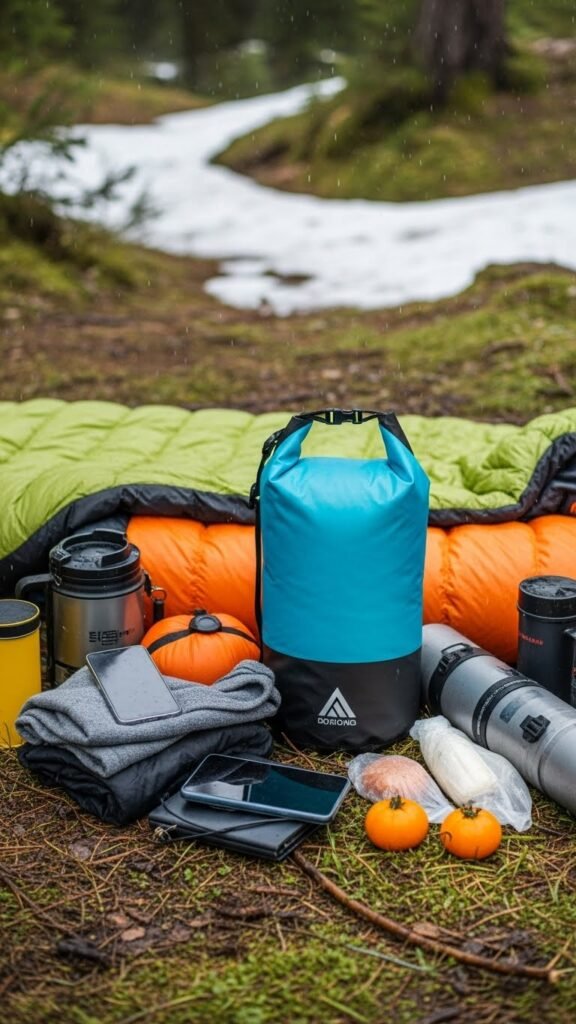
A liner will keep your sleeping bag cleaner and warmer, but it won’t protect the rest of your gear from melting snow or sudden rain, so you need a dry bag or waterproof compression sack next.
Choose tough, seam-taped fabric that doubles as emergency flotation if you hit water. It compresses bulk, enforces gear organization, and keeps clothing, electronics, and food dry for confident, free travel.
Layered Clothing System: Base, Mid, and Outer Layers
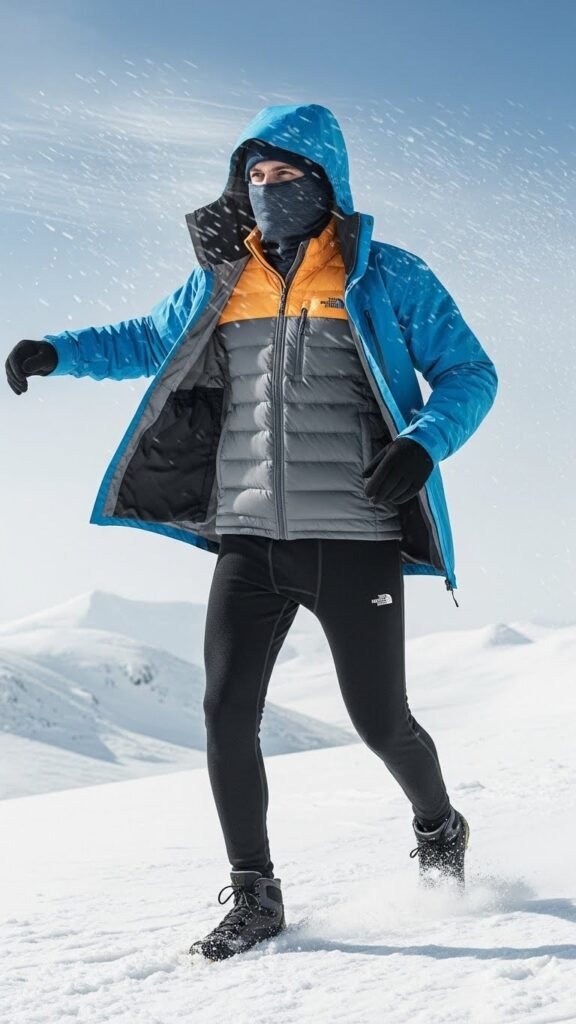
When temperatures drop, you’ll rely on a three-layer system—base, mid, and outer—to manage moisture, trap heat, and block wind or precipitation.
Start with snug thermal underwear for moisture management and quick drying. Add an insulating mid layer—fleece or down—for warmth. Finish with a waterproof, breathable outer shell to shed snow and wind.
Layering gives mobility and freedom on cold trips.
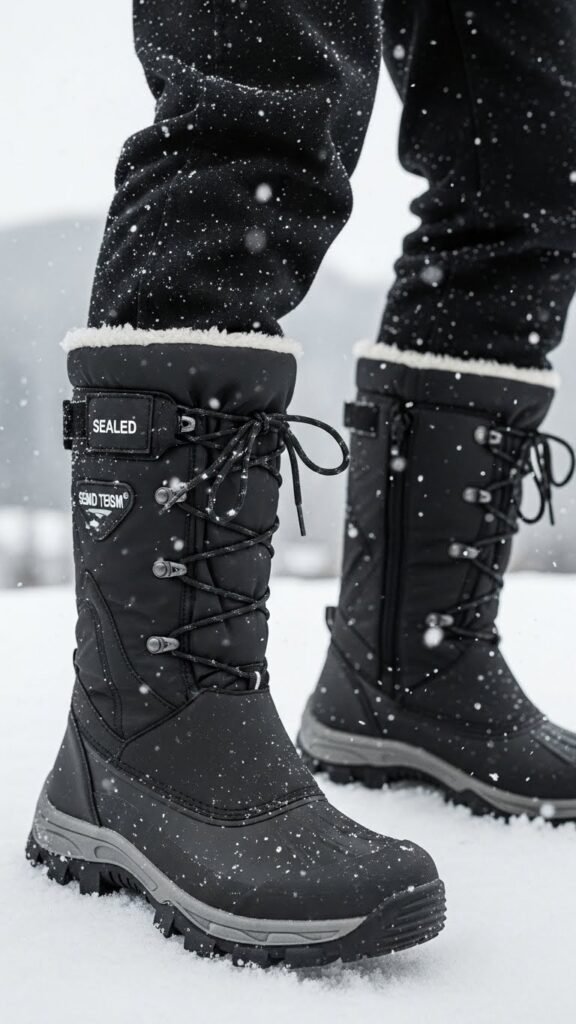
Warm Waterproof Winter Boots With Gaiters
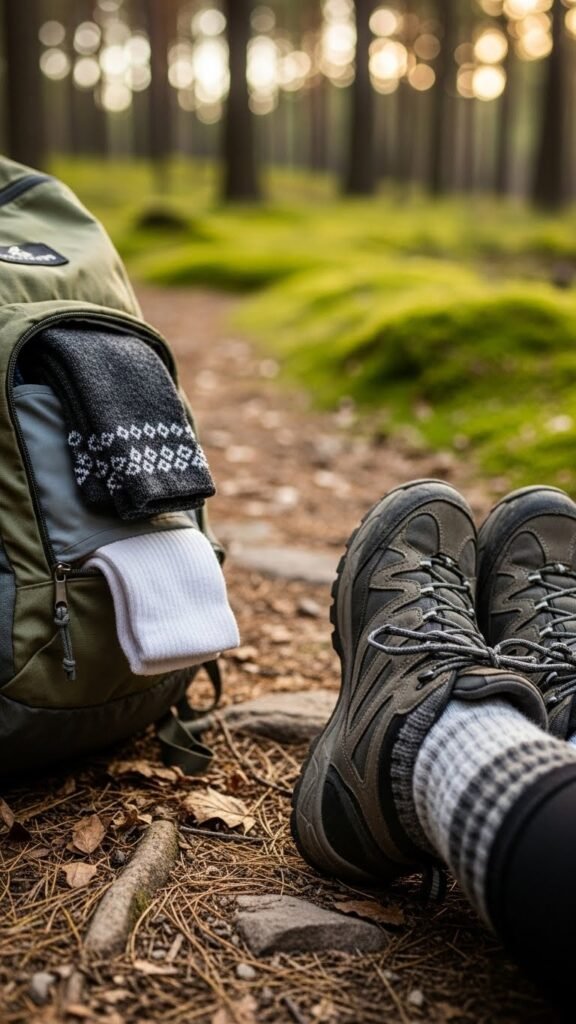
Extra Wool Socks and Sock Liners
Gloves, Mitts, and Spare Liners
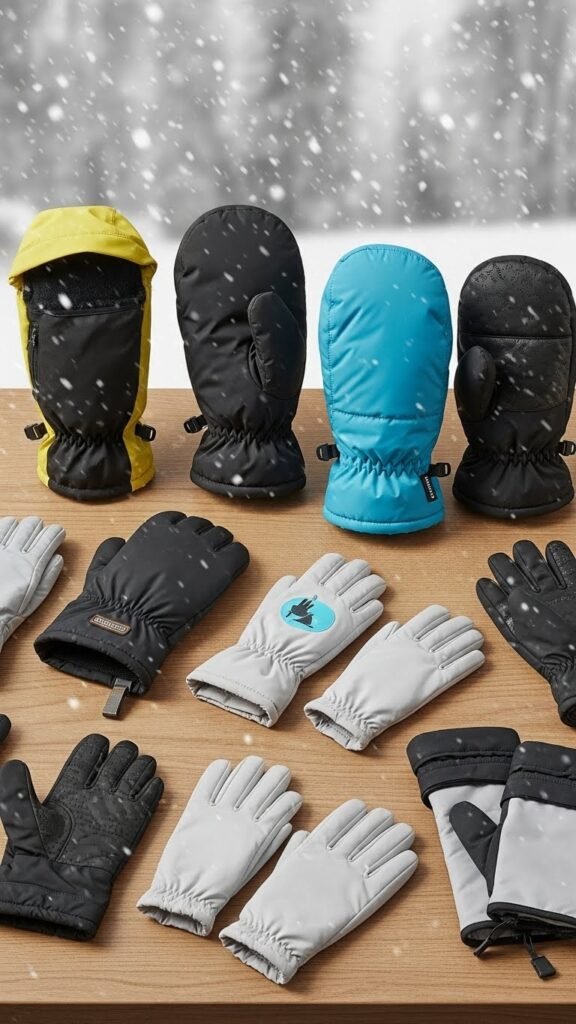
Just as dry feet keep you moving, dry hands keep you safe and in control—so pack multiple pairs and liners.
Bring a waterproof shell, insulated mitts for stillness, and light gloves for chores—prioritize thermal dexterity so you can work without fumbling.
Stash touchscreen compatible liners as primary liners and a spare set for rotation; replace wet pairs immediately to prevent numbness and frostbite.
Toque, Balaclava, Neck Gaiter, and Ski Goggles
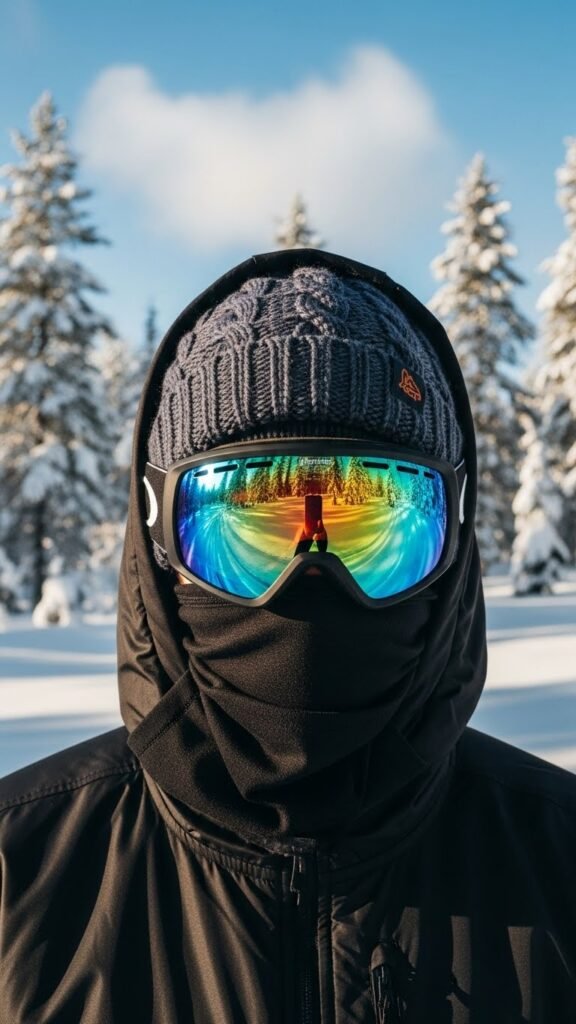
When temperatures drop and wind picks up, keep your core exposed head surfaces covered with a toque for warmth, a balaclava for full-face protection, and a neck gaiter for quick coverage—swap layers as conditions change.
Choose toque materials for insulation and breathability, make sure balaclava fit blocks drafts without restricting breathing, exploit neck gaiter versatility for vents, and practice ski goggles lens care to prevent fogging.
Insulated Camp Shoes or Booties
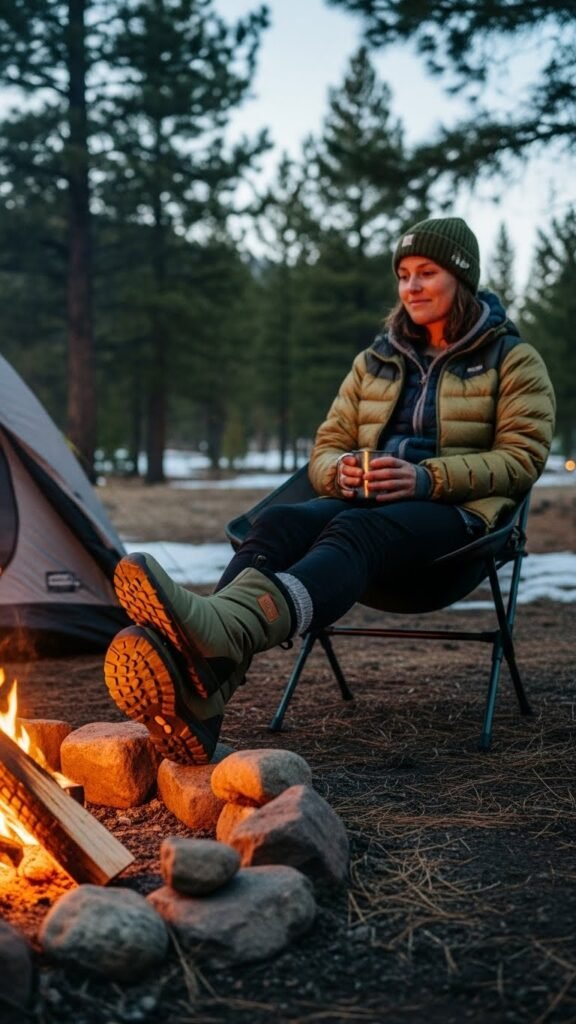
Often you’ll ditch your stiff winter boots once you get to camp and slip into insulated camp shoes or booties that keep your feet warm, dry, and comfortable without overheating.
Choose lightweight insulated moccasins or rugged campfire slippers with a durable sole, breathable lining, and secure fit.
They’ll save energy, prevent chill, and let you move around camp freely and confidently.
Cold-Weather Portable Cooking Stove
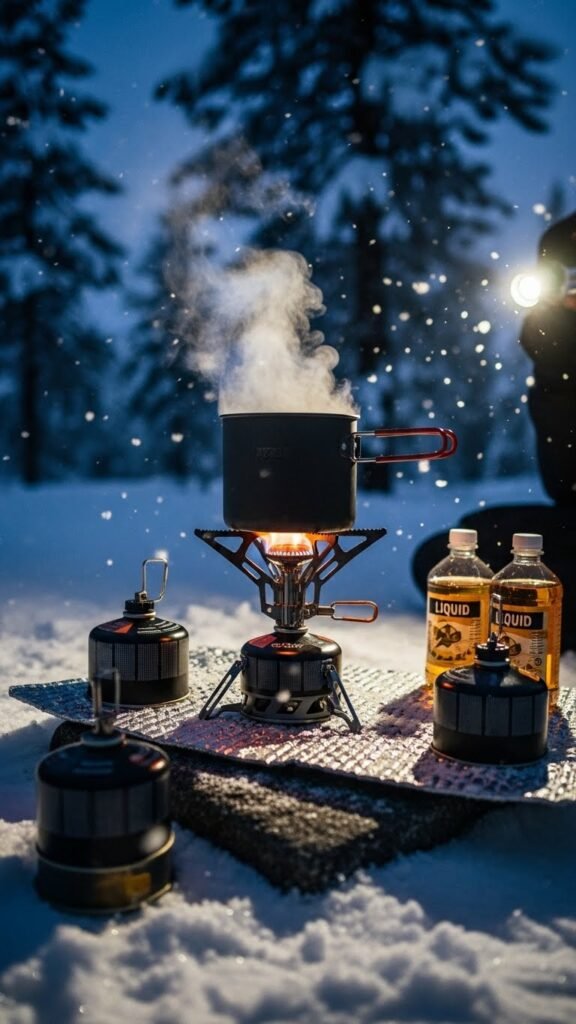
Pick a stove rated for cold-weather performance so you can melt snow, boil water, and cook reliably without fuss. Choose one with proven fuel compatibility for cold temps—liquid fuel or canister adapters—and sturdy wind protection.
You want reliable ignition, good simmer control for delicate meals, compact packing, and durable materials. Test it before you go so you won’t be stranded.
Large Pot, Cooking Utensils, and Biodegradable Soap
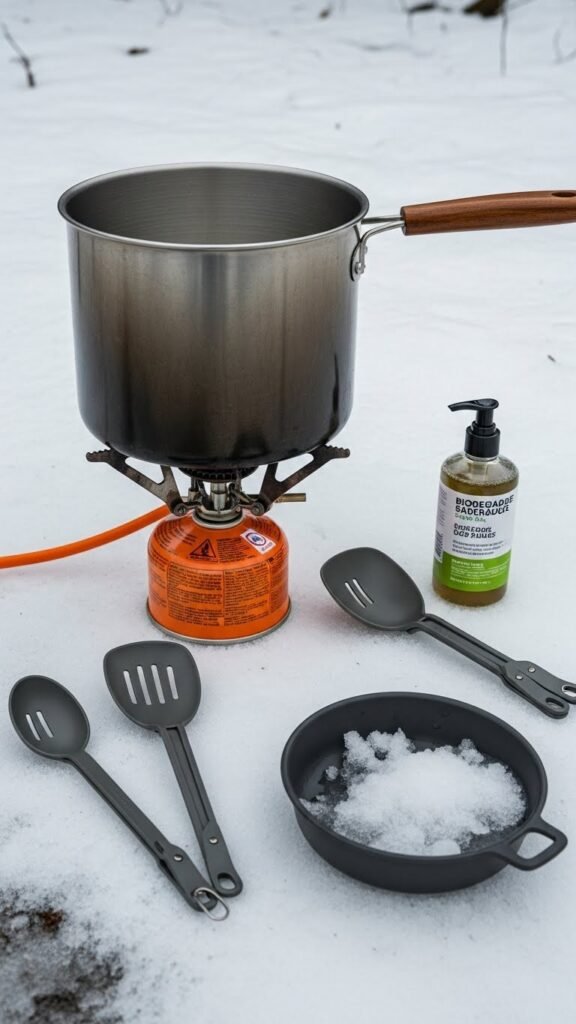
Bring a large, sturdy pot plus a small set of durable utensils and a bottle of biodegradable soap so you can melt snow, cook one-pot meals, and clean efficiently without harming the environment. You’ll use your camp stove for reliable water boiling, choose utensils that fold or nest, and practice simple dishwashing techniques (scatter rinse water, use minimal soap). Pack light, stay self-reliant.
Insulated Flasks and Water Bottles
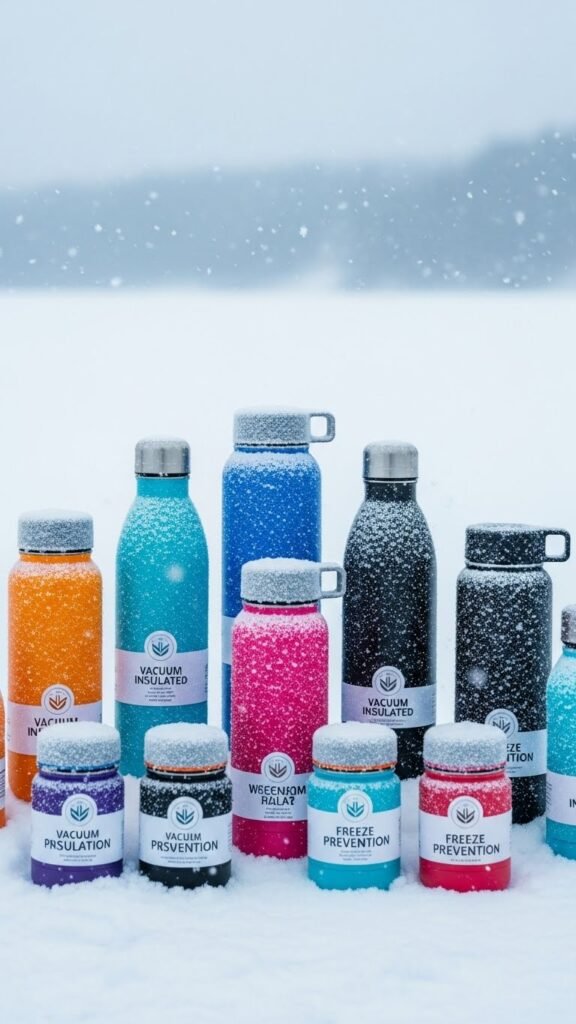
Keep hot drinks hot and frozen ones from freezing with well-chosen insulated flasks and bottles that you can rely on in cold conditions. Choose vacuum insulation for maximum heat retention and durability.
Look for freeze prevention coatings on caps and exterior surfaces to stop ice buildup. Pick sizes that suit your range, easy-grip finishes, and leakproof lids so you stay mobile and self-reliant.
Map, Compass, and Waterproof GPS Case
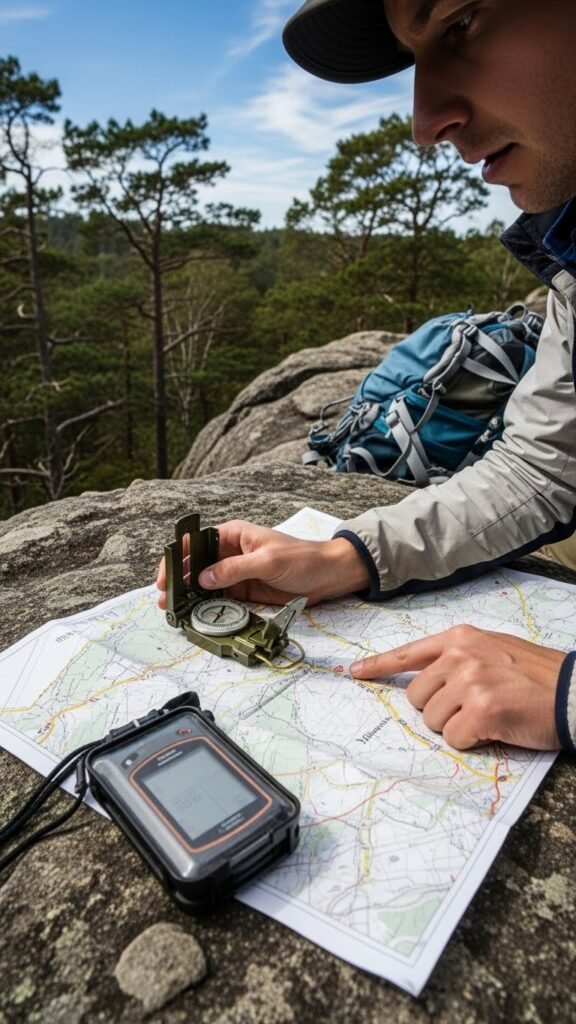
After sorting your water treatment, you’ll want reliable navigation gear that won’t fail when batteries or visibility do. Carry a paper map and quality compass, set magnetic declination, and practice route planning before you go.
Use a waterproof GPS case for waypoint logging and device protection, and make certain your unit supports emergency signaling. Know both tech and dead-reckoning for true freedom.
First Aid Kit, Multi-Tool, and Whistle
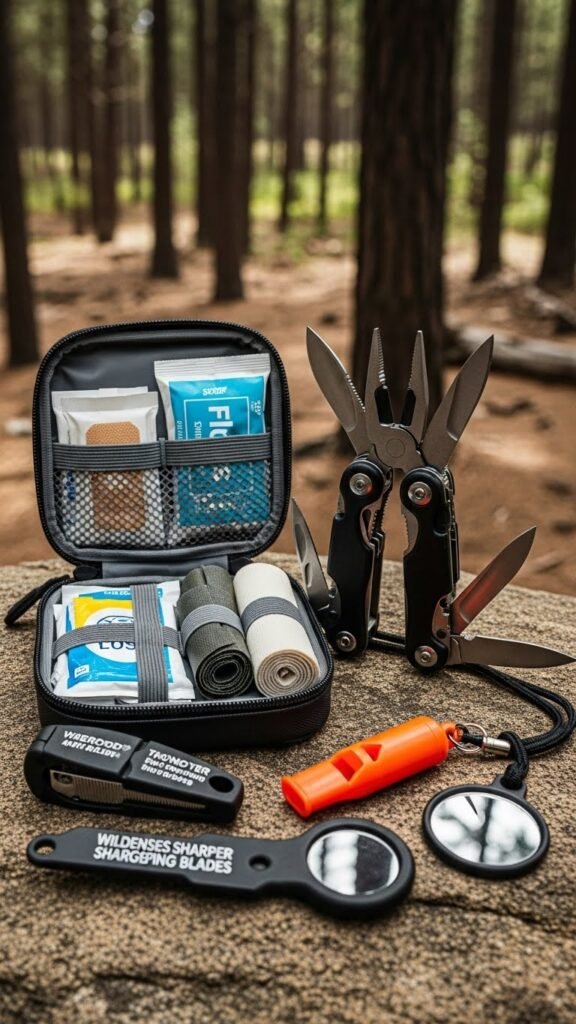
While a solid shelter and reliable navigation get you there, your kit’s true resilience is proven by how you handle injury and small emergencies, so pack a compact, prioritized first aid kit, a sturdy multi-tool, and a loud whistle.
Include an ermined medpack with bandages, splint material, and blister care, a wilderness sharpener for blades, and clear emergency signaling gear for quick rescues.
Matches, Lighters, Fire Starters, and Waterproof Container
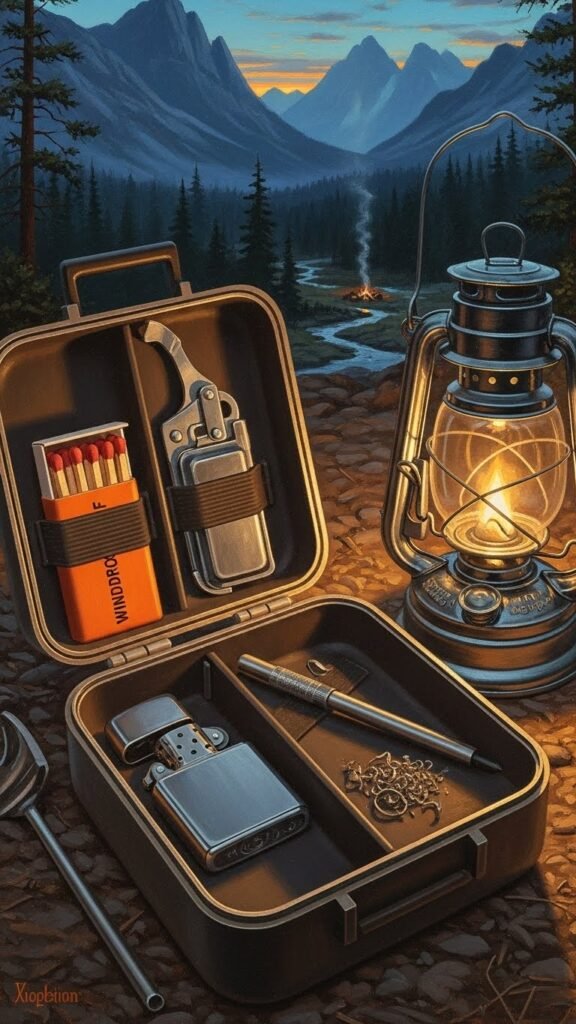
A reliable way to make fire is as important as a good first aid kit when you’re managing emergencies in the backcountry, so include multiple ignition options and a waterproof container to keep them usable.
Carry windproof matches, a lighter, and a ferrocerium rod plus magnesium shavings for stubborn starts.
Store all in a sealed waterproof container; consider an oil lamp for extended light and heat.
Snowshoes/Skis, Sled or Toboggan, and Extra Repair Supplies
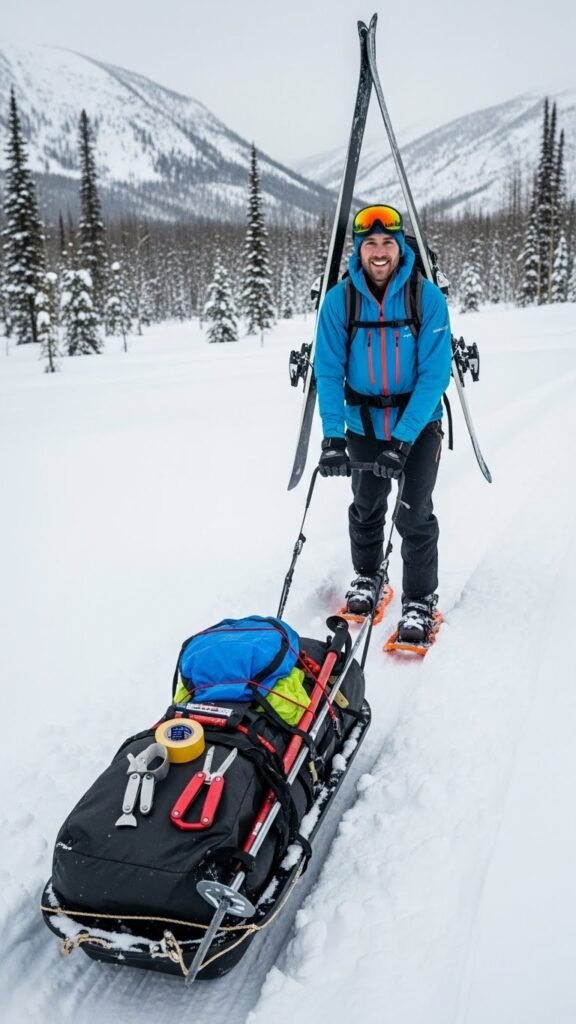
If you’re traveling on deep snow or variable terrain, bring snowshoes or backcountry skis to stay efficient and reduce fatigue, and pack a sled or toboggan to haul bulky gear and emergency supplies.
Choose durable Nordic bindings, reinforced sled lines, and waterproof lash points. Carry repair kit: duct tape, multi-tool, spare skins, binding parts, cordage, and compact avalanche probes for safety and quick fixes.