
You’ll want an entryway that handles snow, salt, and boots without turning chaotic. These 29 budget-friendly hacks show practical ways to store tall and short boots, keep liners and accessories organized, and protect floors with trays and mats. Each idea uses simple materials and fits tight spaces, so you can pick a few easy fixes now and scale up later—start with the option that matches your space and season.
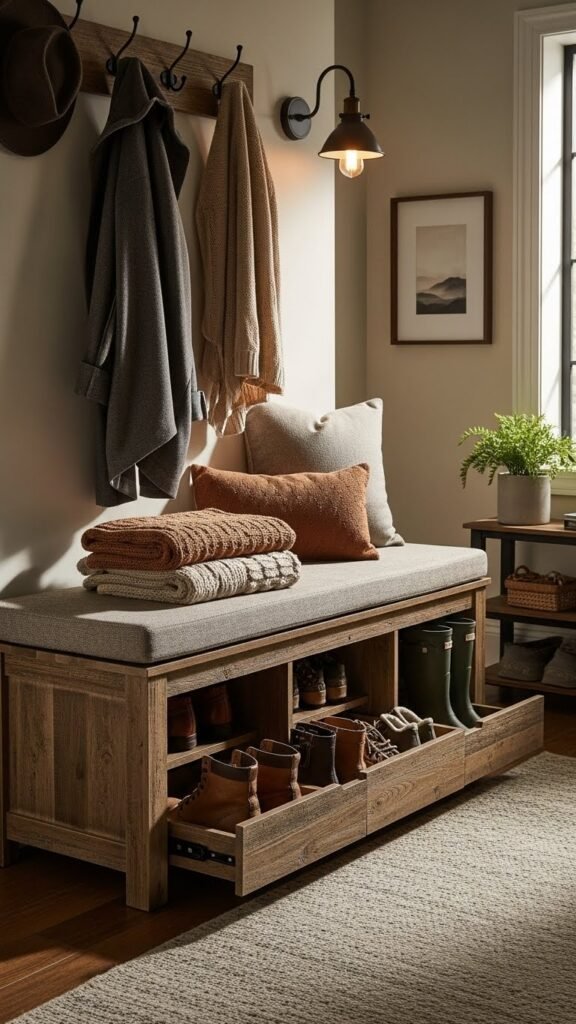
Create a Cozy Boot Bench With Hidden Storage
Use Under-Bed Rolling Containers for Off-Season Boots
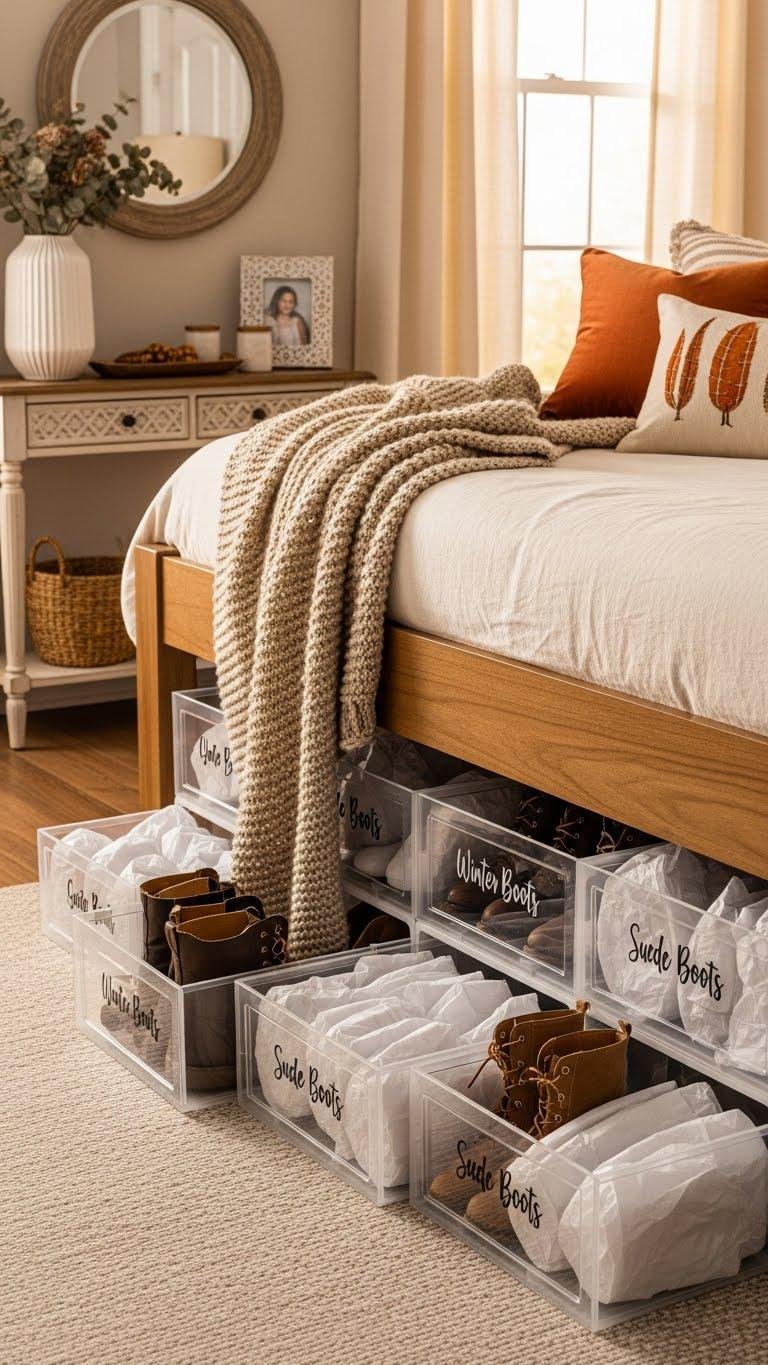
Slide your off-season boots into low-profile rolling containers to free up closet space and keep them dust-free.
You’ll slide boxes under the bed for easy access, label each for quick boot rotation, and protect leather or suede with tissue.
This underbed storage system lets you reclaim entryway freedom, simplifies seasonal swaps, and keeps footwear organized without cluttering daily living areas.
Build a Rustic Wine Crate Boot Shelf
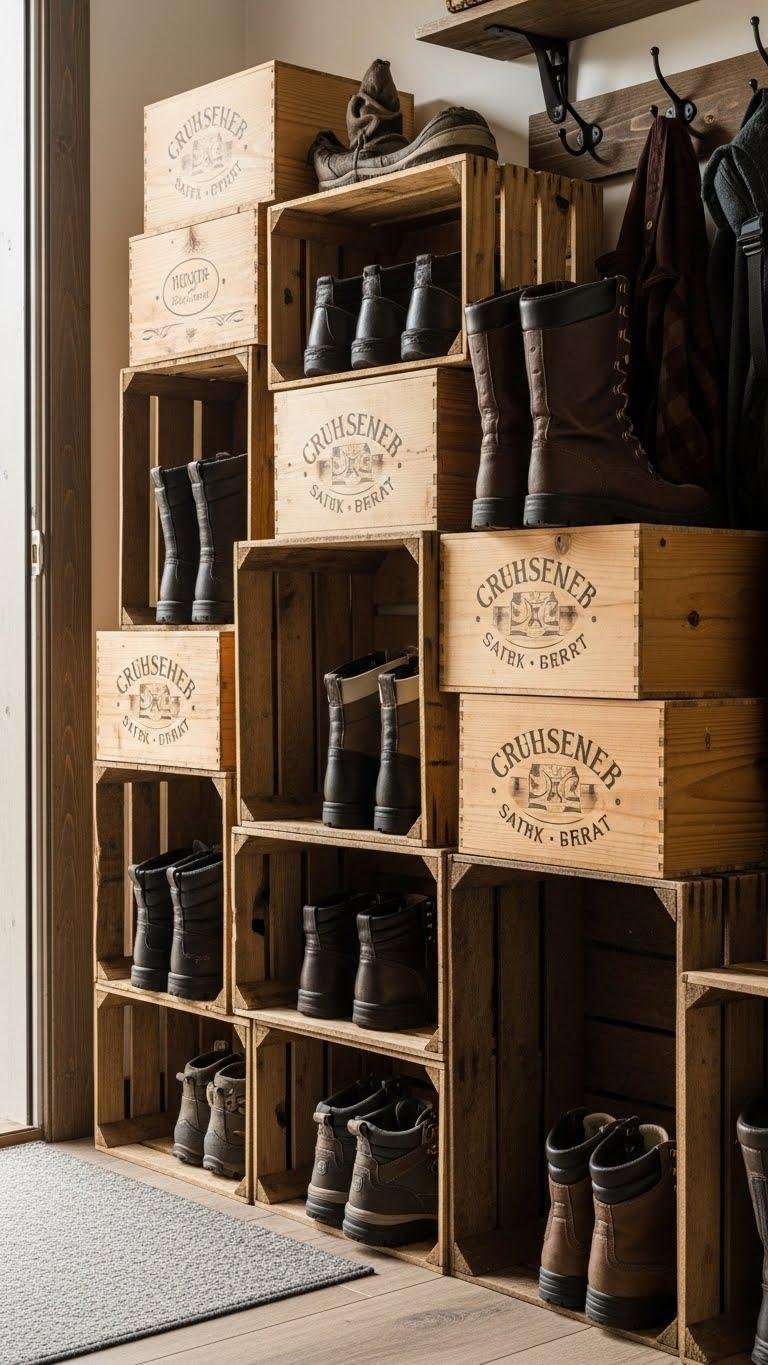
Give your entryway a warm, organized upgrade by stacking reclaimed wine crates into a rustic boot shelf that keeps pairs visible and off the floor. You’ll arrange crates horizontally or staggered, secure them with screws or brackets, and sand or stain for a cohesive look. The rustic crate wine shelf saves space, showcases boots, and lets you grab gear fast when you’re ready to go.
Repurpose Shoe Boxes With Clear Labels
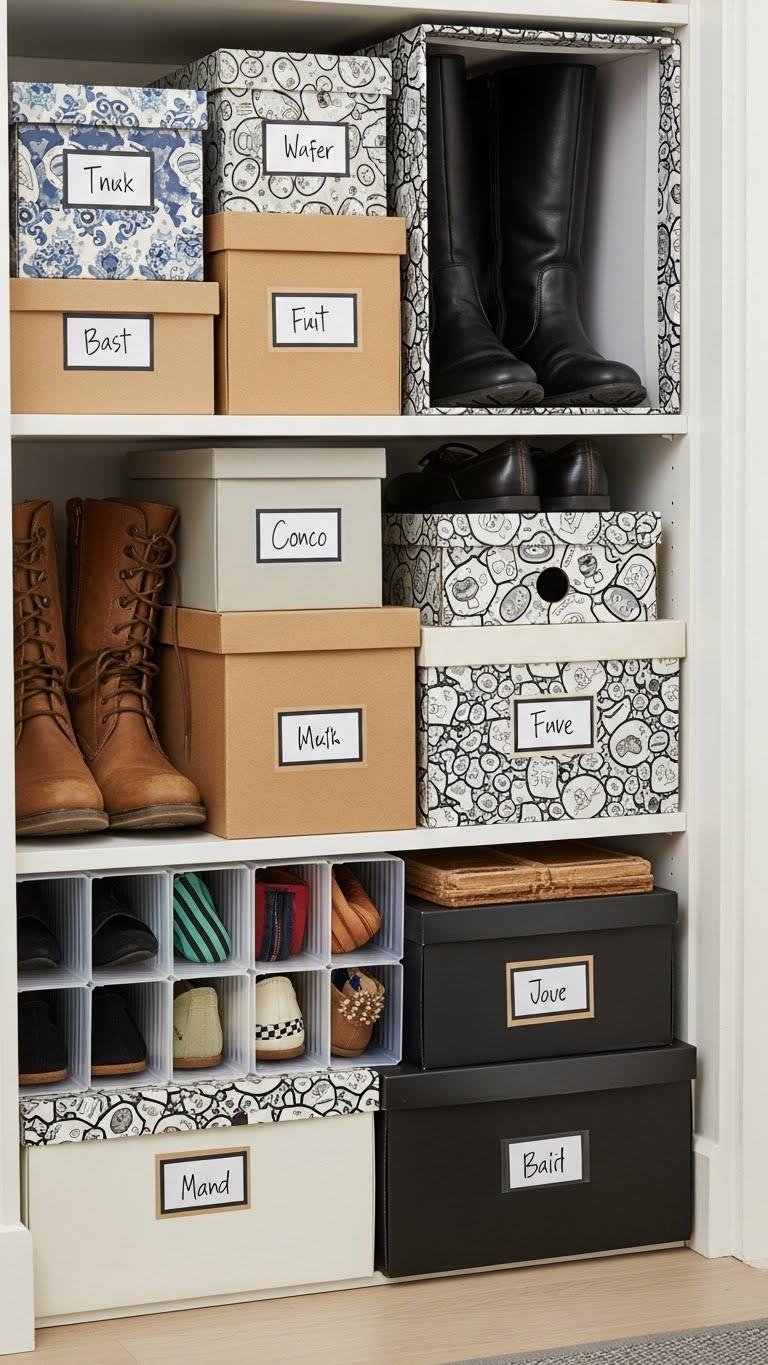
Turn old shoe boxes into neat, functional storage by labeling each one clearly and stacking them where you can reach them. You’ll use clear labels and recycled lids to identify boots fast. Add plastic dividers for pairs or accessories, and choose stackable lids so boxes stay tidy. This system frees space, keeps entryways orderly, and lets you grab what you want quickly.
Add Boot Trays to Catch Snow and Slush
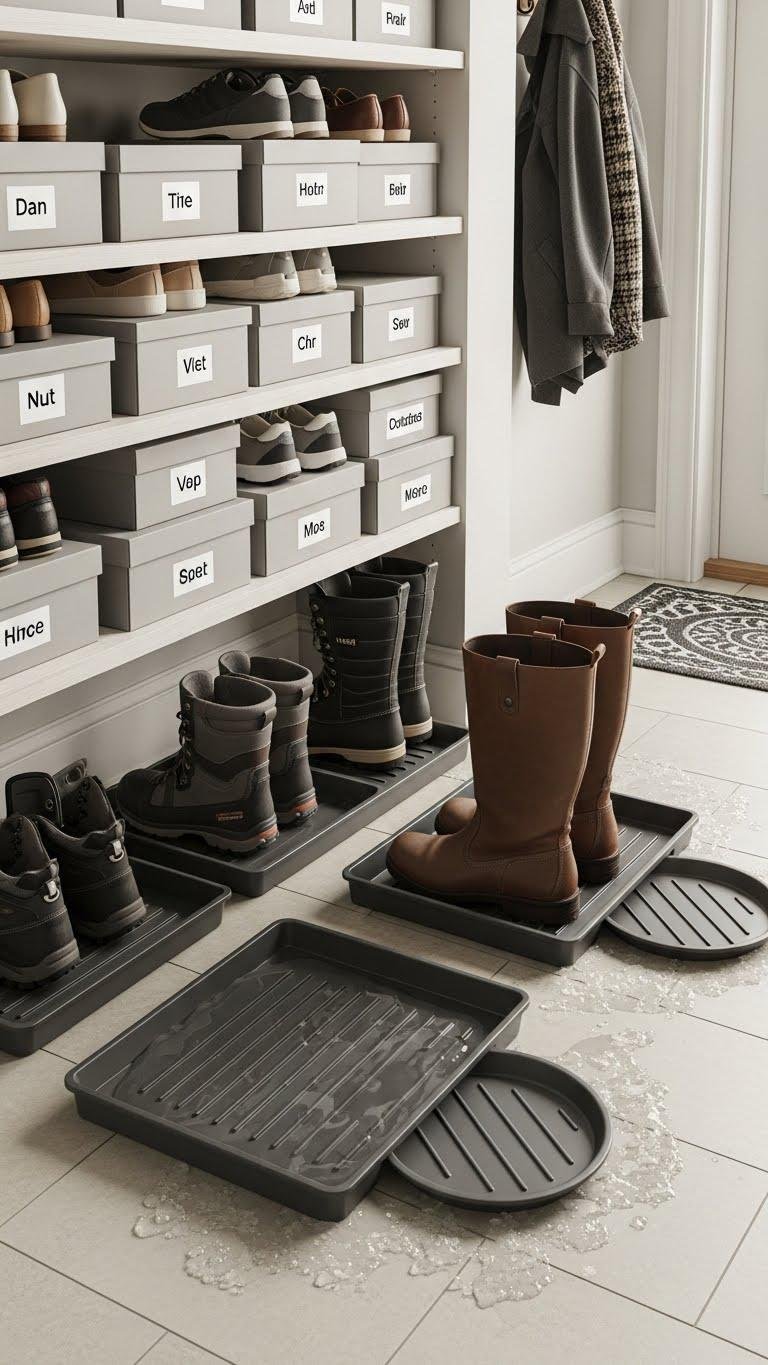
If you like the order that labeled shoe boxes bring to your entryway, complement them with boot trays to keep wet winter footwear from undoing that neatness. You’ll place durable snow catchers under each pair, channeling melt into removable pans.
Slush trays with raised ridges prevent soggy soles from touching floors, making cleanup fast and preserving your freed, uncluttered entryway.
DIY Boot Shapers From Pool Noodles
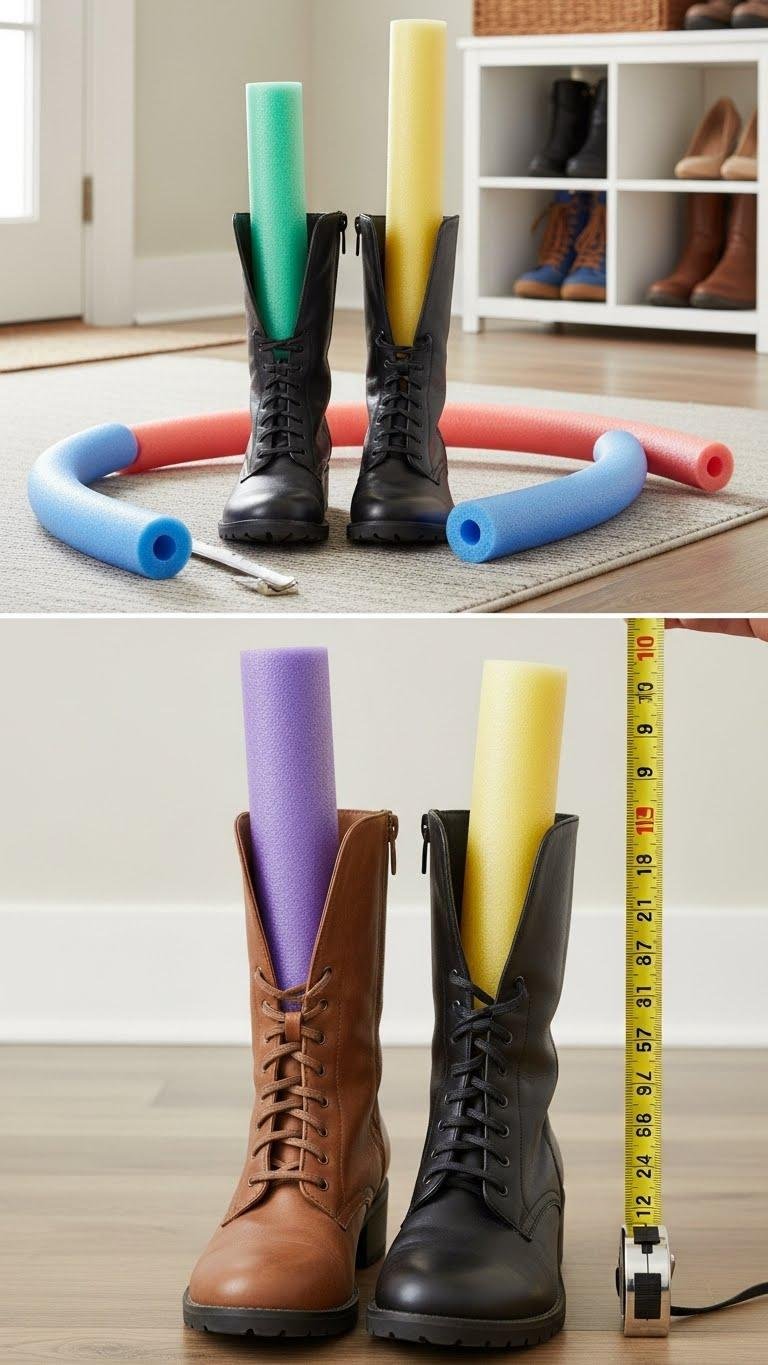
Give your boots a simple, inexpensive support by cutting pool noodles into boot shapers you can slide inside to keep shafts upright. Measure length, slice a foam cylinder to fit, and add a vertical slit for easy insertion. Follow a quick insertion guide: compress, slip into the boot, release. You’ll free floor space, prevent creases, and keep entryways tidy and flexible.
Stackable Plastic Containers With Ventilation Holes
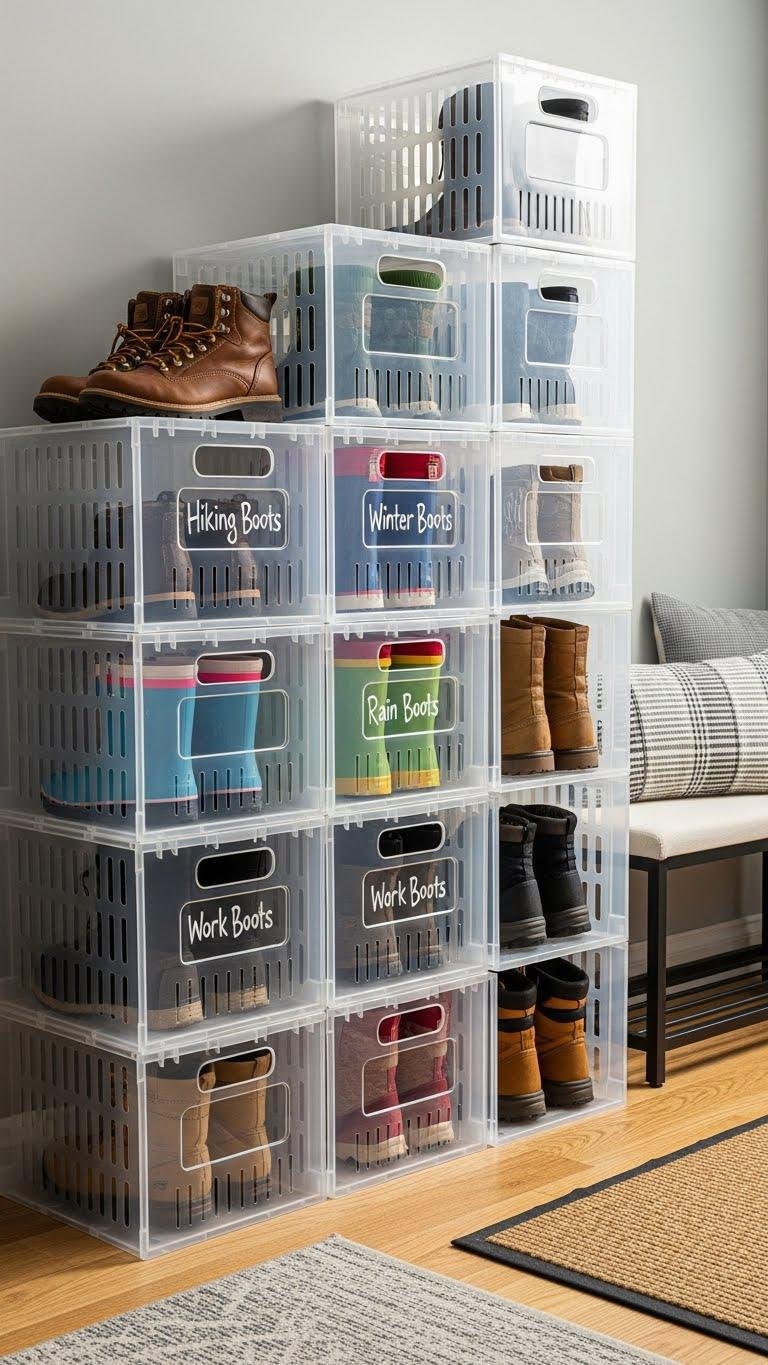
Stacking breathable plastic bins saves space while keeping boots aired out and ready to wear. You can use ventilated stacking bins with punched holes to prevent odors and moisture.
Label each breathable container for quick access, slide them under benches or stack to ceiling height, and grab pairs without fumbling. This keeps your entryway tidy, functional, and free for movement.
Hang Boots From Tension Rods in a Closet Nook
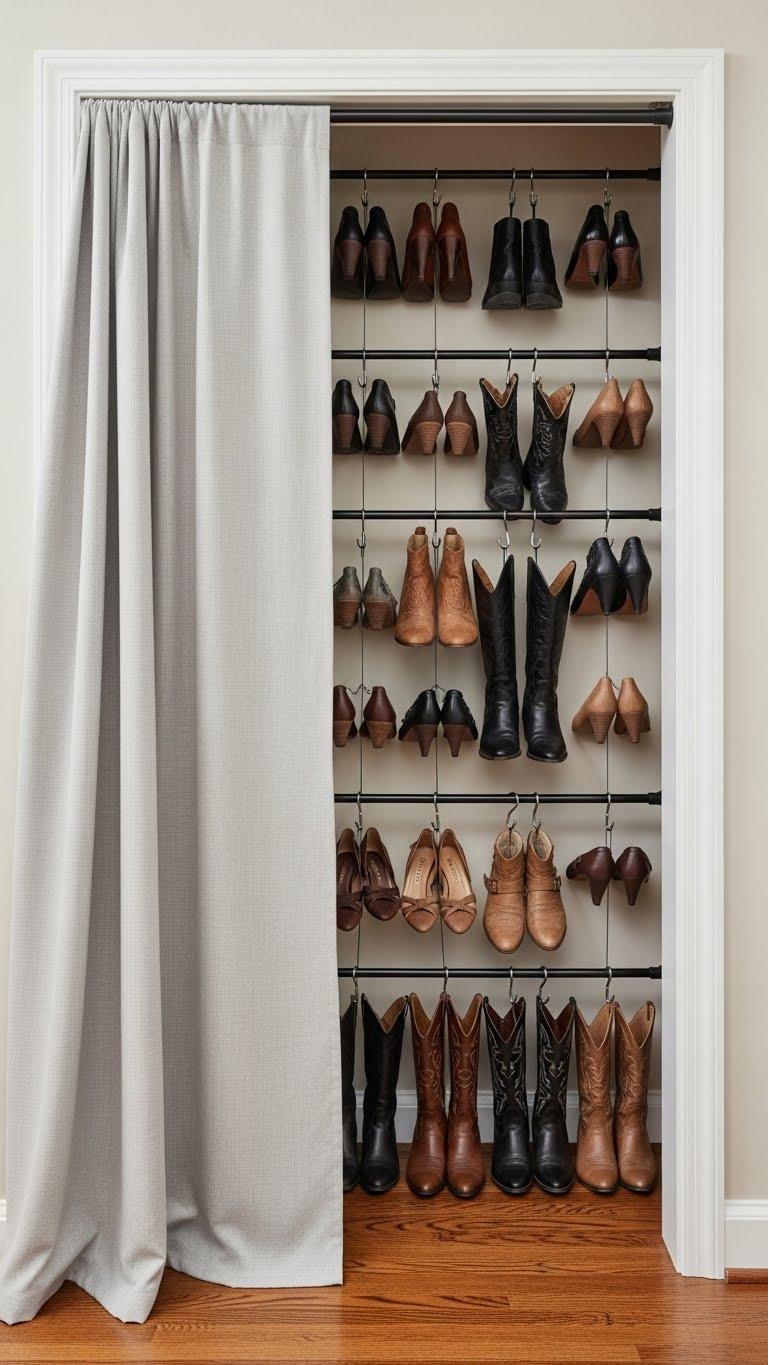
In a closet nook, tension rods turn wasted vertical space into an easy boot-storage system you can install without tools.
You’ll mount rods at staggered heights, slip boot hanging hooks over the bar, and hang pairs by heels to free the floor.
Add a closet curtain for a tidy look.
This simple, flexible solution keeps entryways clear and gives you freedom to rearrange.
Use Three-Tier Adjustable Fabric Shoe Racks
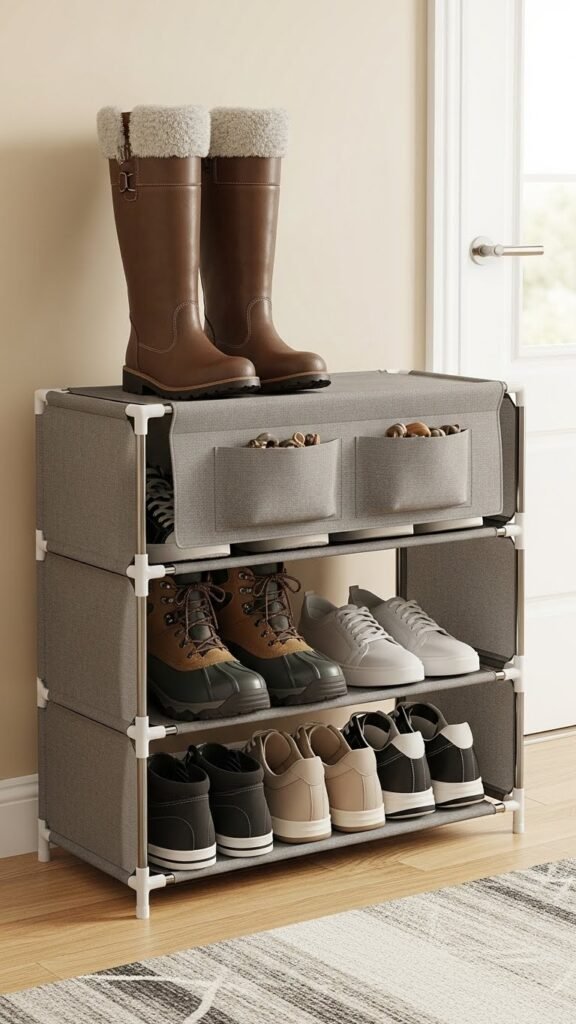
Try a three-tier adjustable fabric shoe rack when you need compact, flexible storage for winter boots and shoes. You’ll adjust tiers to fit tall boots or swap levels for sneakers, keeping entryways clear.
The lightweight frame and fabric durability mean easy moving and long use. You’ll gain orderly, accessible storage without sacrificing freedom to reconfigure as seasons change.
Convert an Old Bookshelf Into Boot Storage
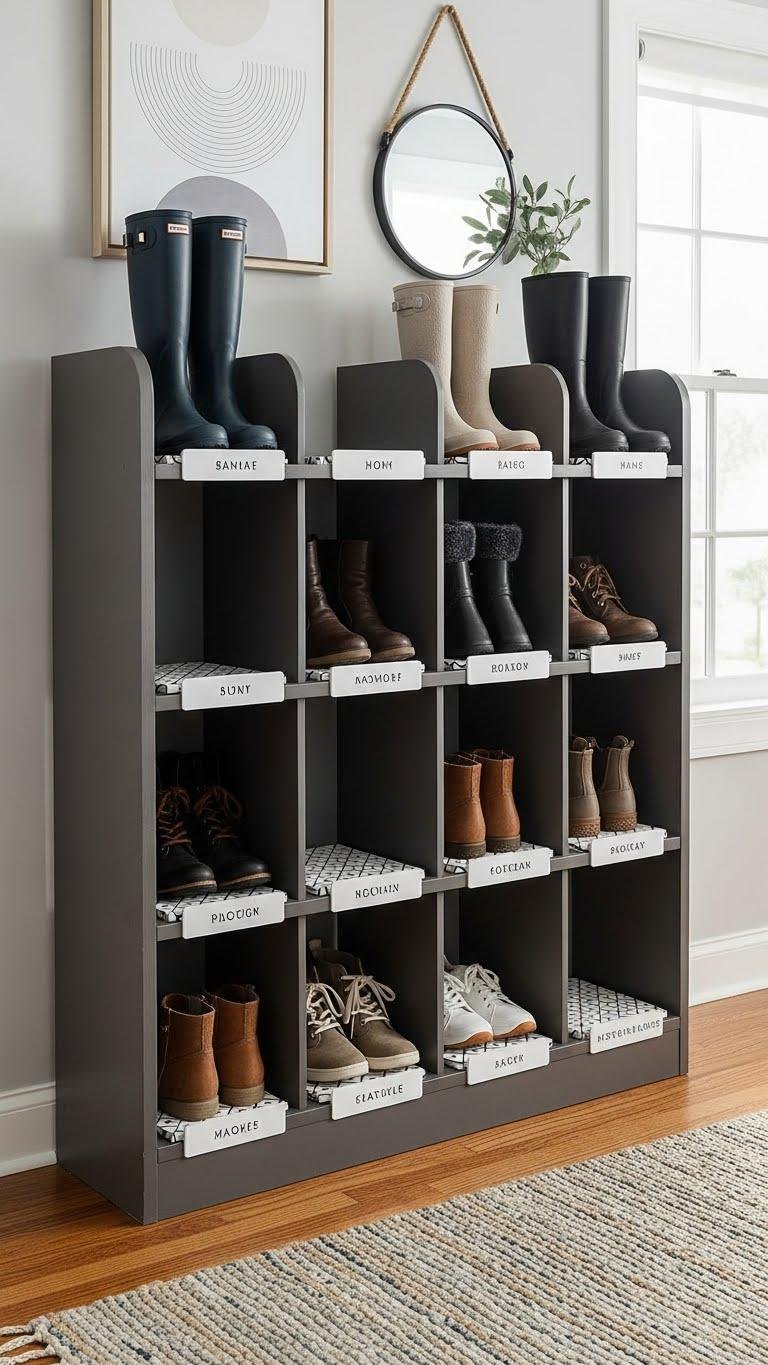
Give an old bookshelf new life as boot storage by removing some shelves, adding a fresh coat of paint, and arranging boots upright to save space and stay organized.
You’ll create tidy boot cubbies that free your entryway and mind.
Secure shelf edges, add non-slip liners, and label sections for family members.
This bookshelf makeover is simple, affordable, and liberating.
Group Daily Boots Near a Seating Area
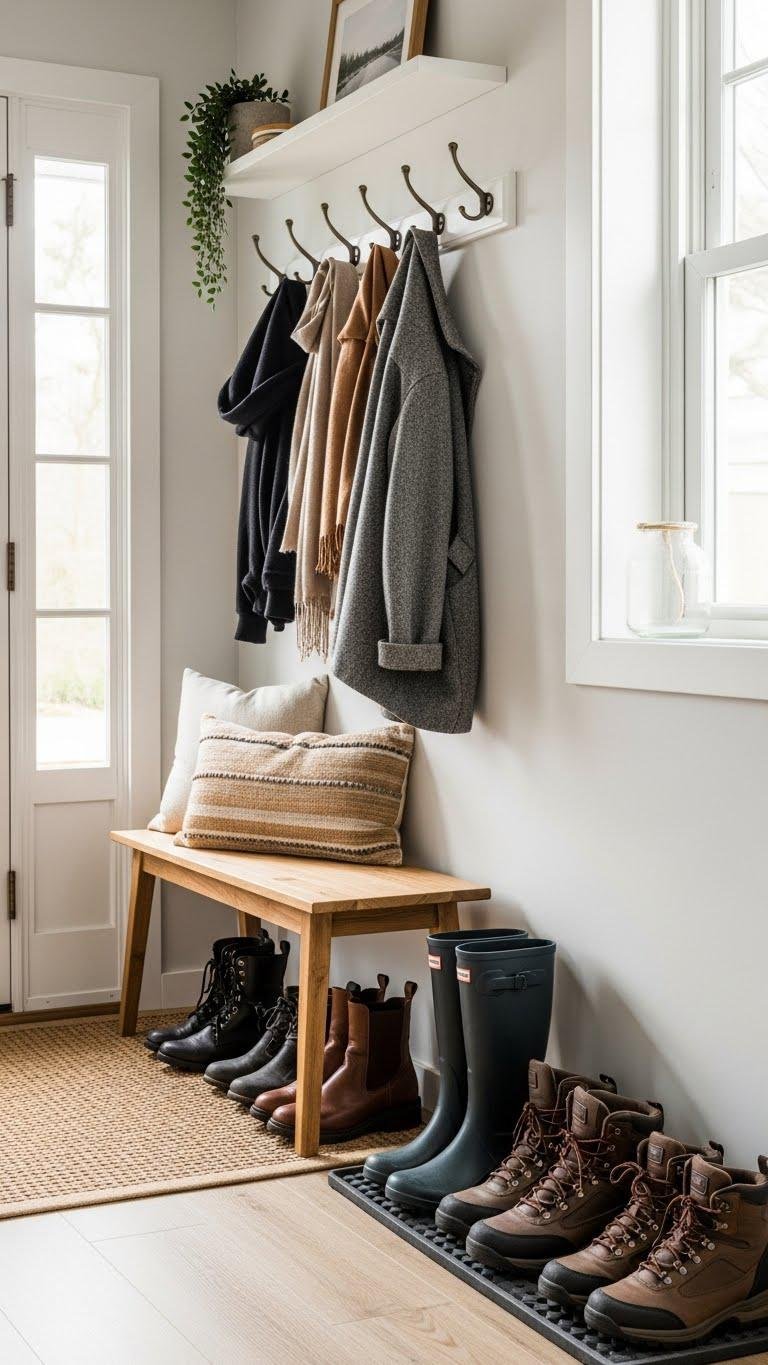
Often you’ll find it easiest to keep your everyday boots together near a seating area so you can slip them on and off without tracking dirt through the house.
Arrange a small seat cluster by the door and use bench adjacency to define the spot.
You’ll create a tidy, habitual launch point — clear, accessible, and freeing — that keeps pathways uncluttered.
Keep Kids’ Boots in a Designated Basket
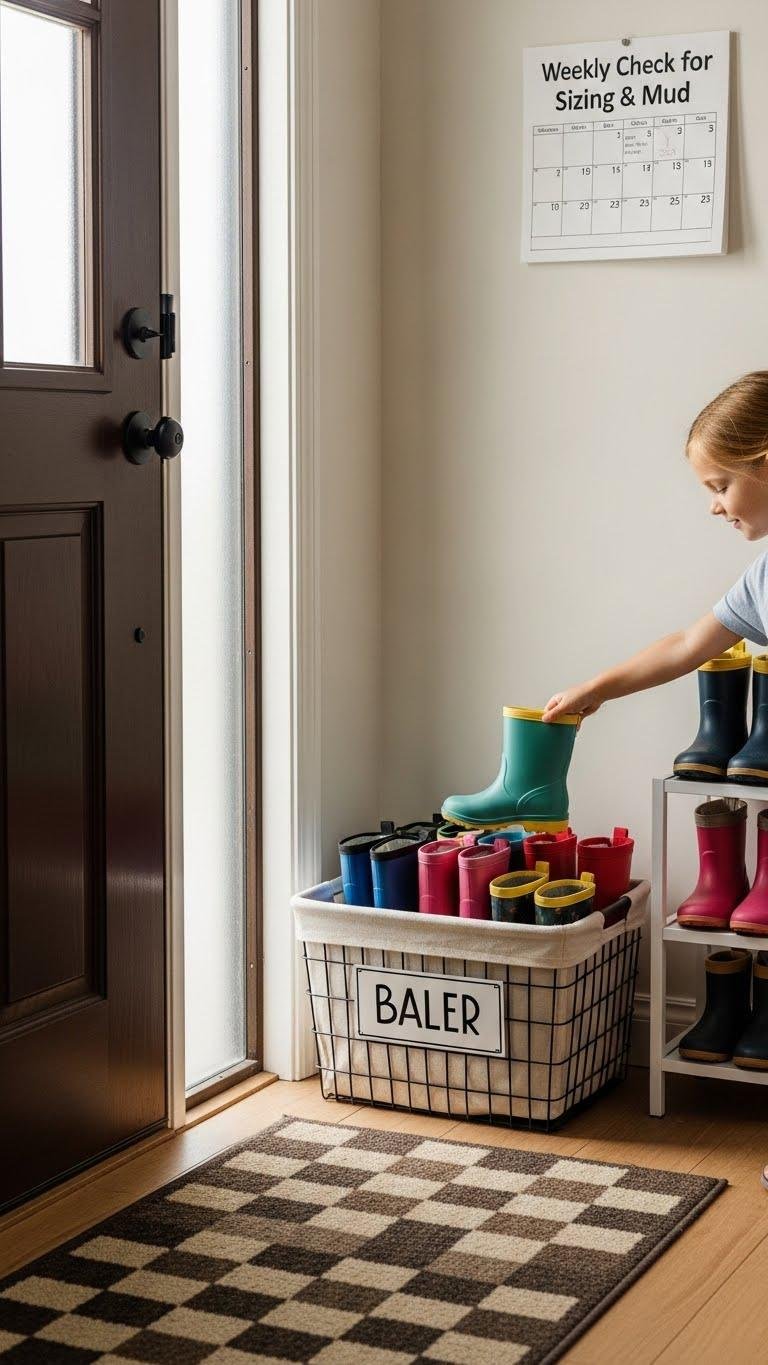
Corral your kids’ boots in a single, labeled basket so shoes stay together and you’re not hunting for pairs at the last minute. Place the kids’ basket near the door, teach kids to drop boots inside, and check weekly for sizing or mud.
Rotate sets as needed for boot rotation, keeping older pairs stored elsewhere so entryways stay simple and free.
Use Flip Drawer Organizers for Compact Collections
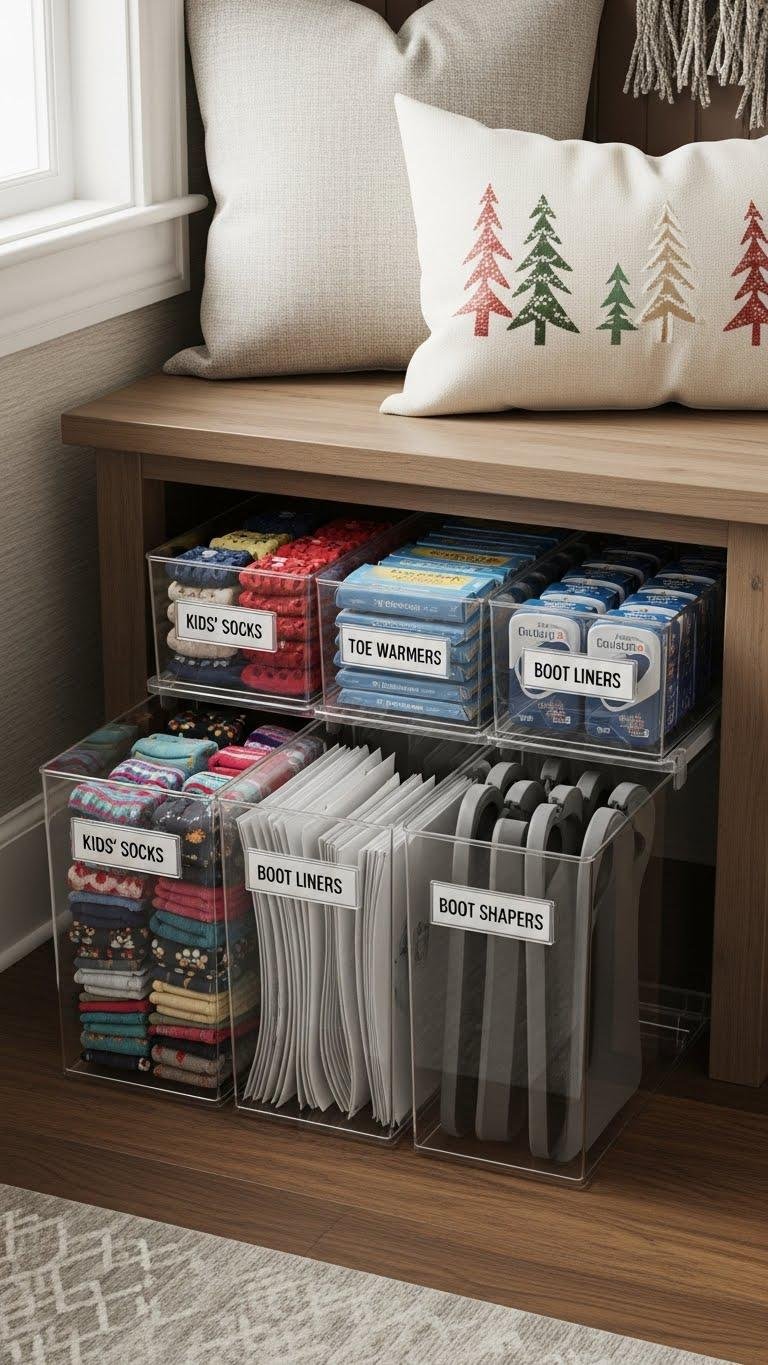
Tuck compact winter items into flip drawer organizers to keep small collections—like kids’ extra socks, toe warmers, liners, and boot shapers—neat and easy to find. You’ll label sections, use drawer dividers for tidy separation, and choose stackable trays to save floor space.
Slide units under benches or into closets so you can grab supplies fast and stay uncluttered.
Make a Simple Wooden Post Boot Stand
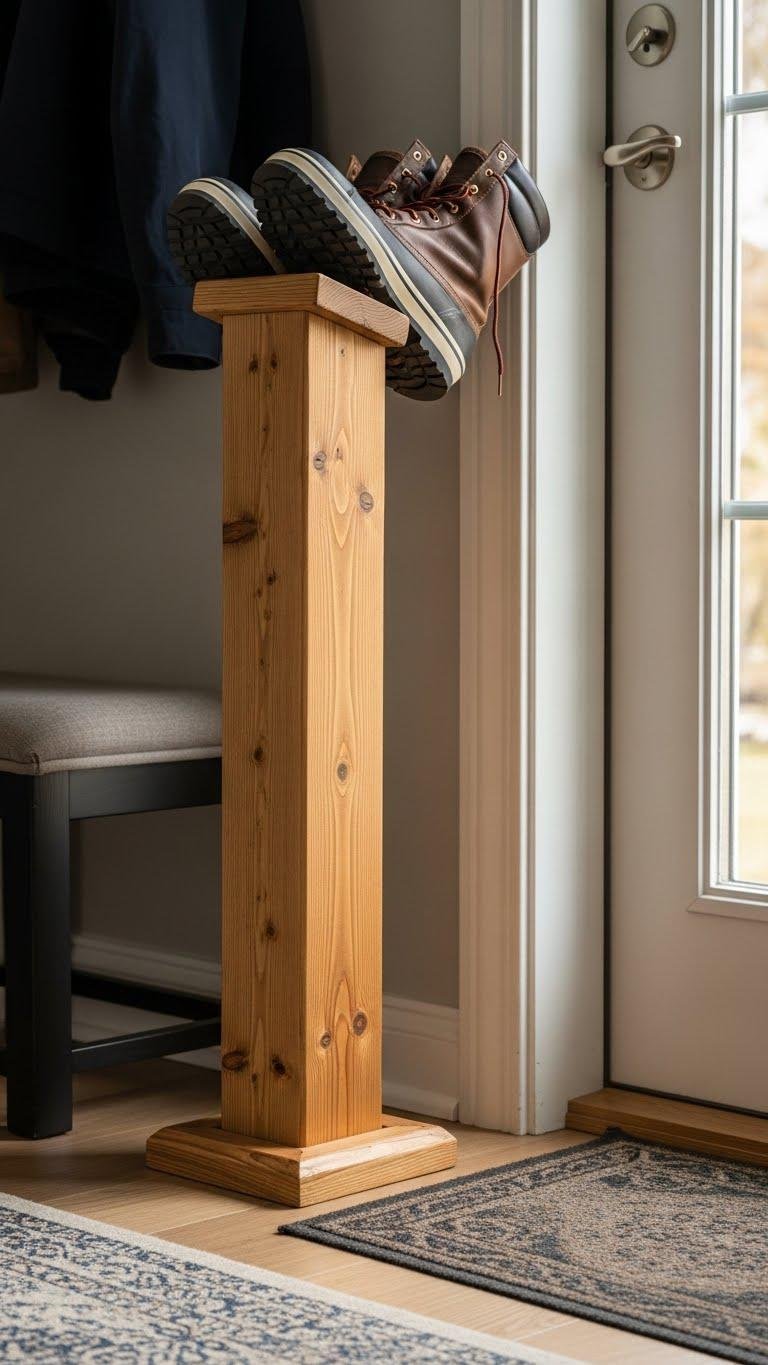
If you want a sturdy, low-cost way to keep boots upright and dry, build a simple wooden post boot stand you can tuck by the door or in a mudroom.
Cut a sturdy wood post to height, sand and seal it, then mount to a small base. Slide boot shafts over the post to air and maintain shape.
It’s compact, rugged, and freeing.
Label Transparent Bins for Quick Identification
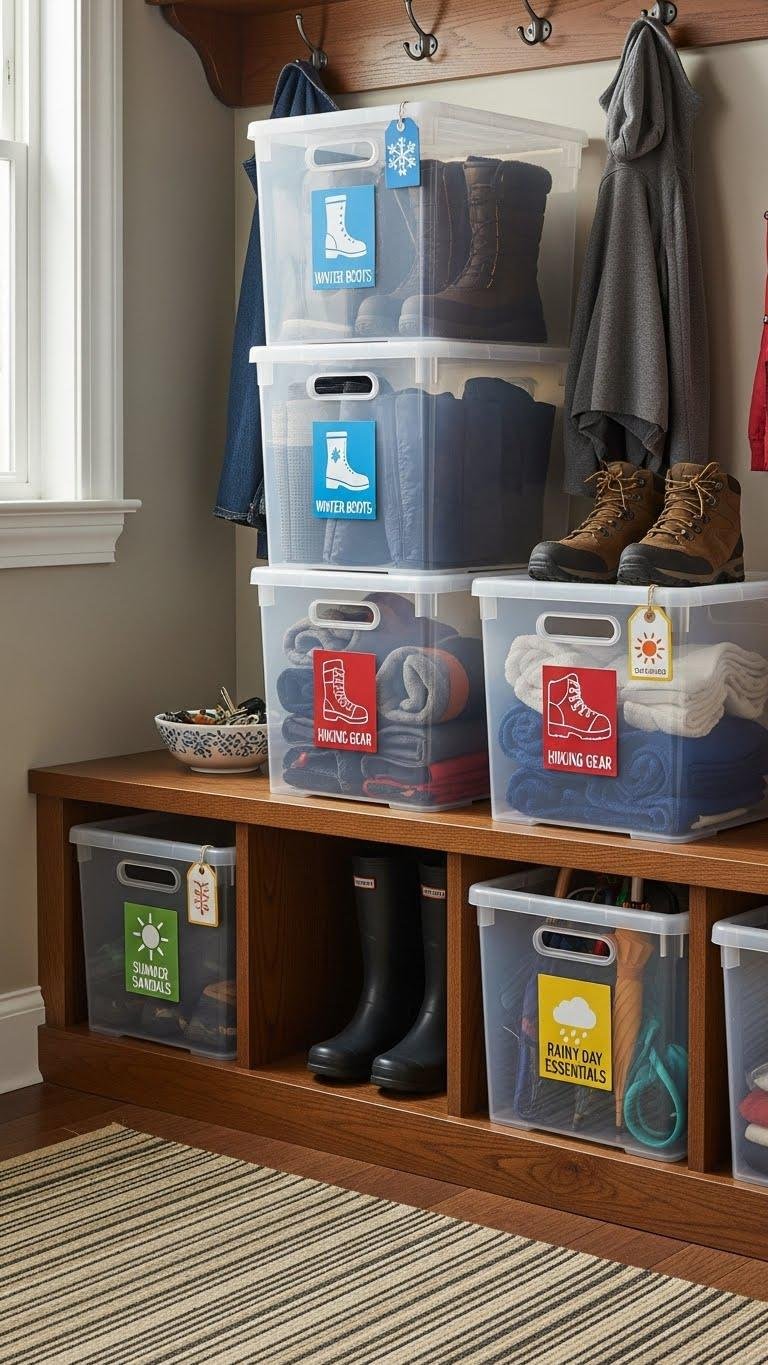
Often you’ll reach for the clear bin you need instead of rummaging through a stack of unlabeled containers.
You’ll add color coded labels and quick identification tags to each bin so boots, liners, and accessories are obvious at a glance. Stick labels to lids or fronts, use simple icons or names, and rotate tags seasonally so your entryway stays tidy and frees up time for what matters.
Create a Rotating Boot Swap System for Seasons
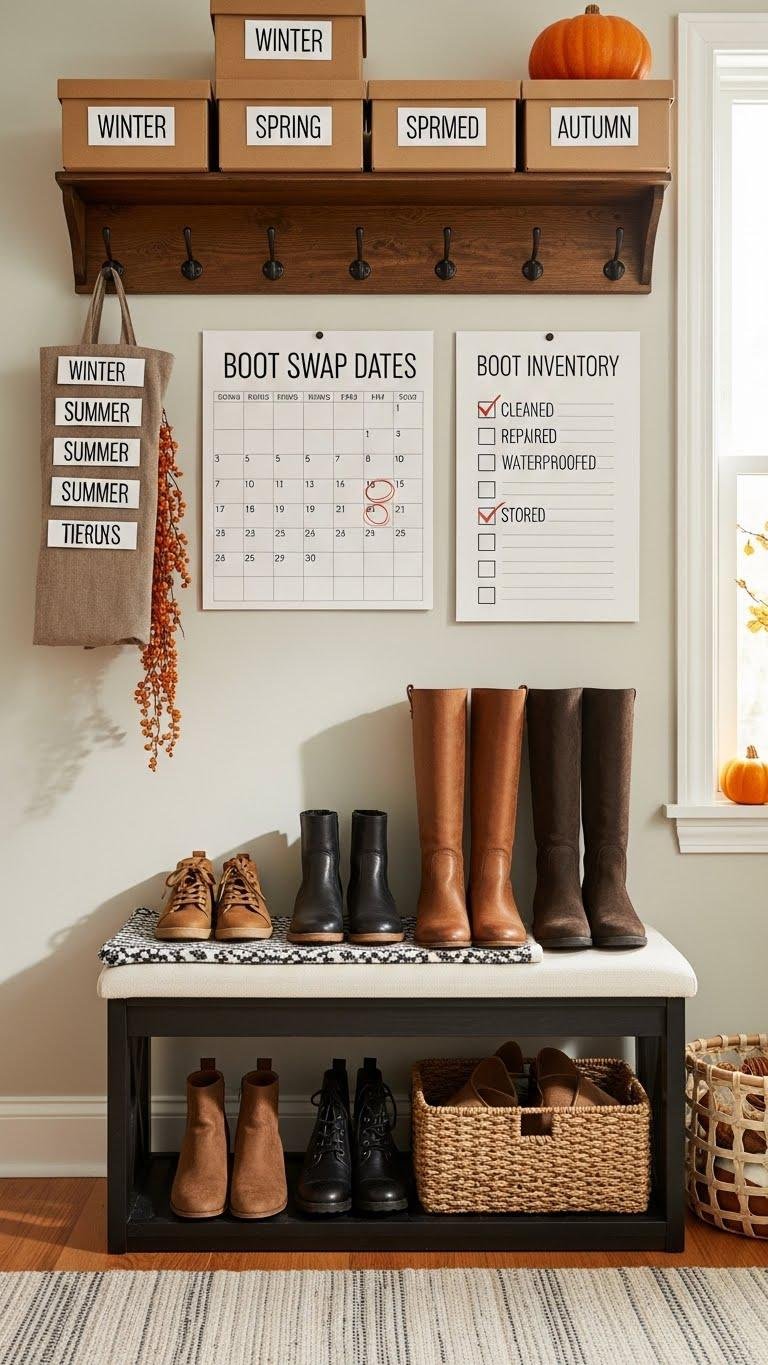
Regularly rotate your boots each season to keep entries uncluttered and extend footwear life: choose a fixed swap date (like the first day of each season), store off-season pairs in labeled boxes or breathable bins, and place the current season’s boots front-and-center on a bench or mat for easy access.
Log a simple boot inventory, plan seasonal rotation reminders, and swap confidently to free space.
Store Leather Boots With Conditioners Applied
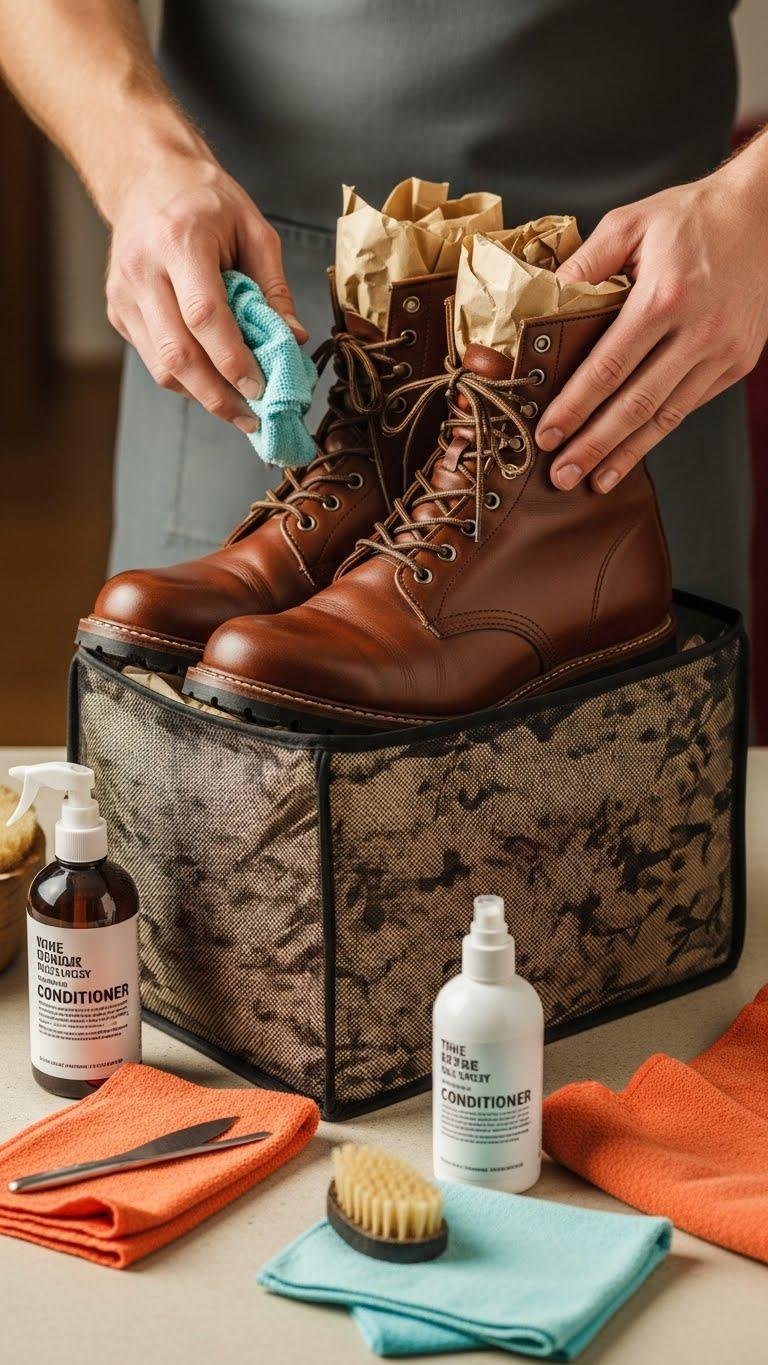
Applying a quality conditioner before storage preserves leather’s suppleness and prevents cracking, so make it part of your seasonal routine.
You’ll clean boots, apply leather conditioning evenly, let them dry away from heat, then stuff with paper to hold shape.
For long term storage, place boots in breathable containers and check them periodically — that simple care keeps your footwear ready and frees up mental space.
Reuse Fabric Bins to Conceal and Segment Boots
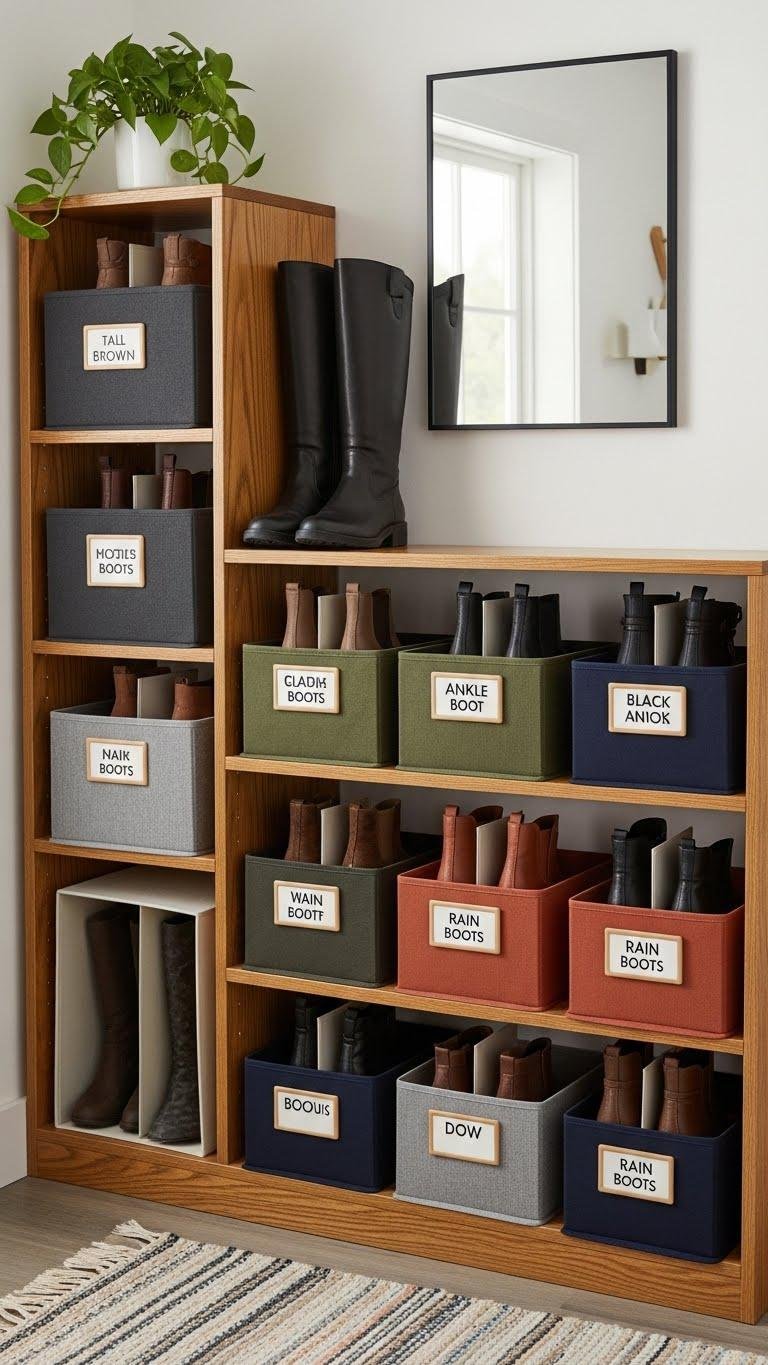
Slide fabric bins onto shelves to both conceal your boots and keep pairs separated — they’re perfect for turning a messy pile into an orderly system.
Use fabric dividers to create snug compartments for tall and short boots.
Add clear bin labels for quick retrieval, and rotate seasonal pairs easily.
This keeps your entryway tidy, accessible, and ready for spontaneous adventure.
Install Slim Over-the-Door Organizers for Accessories
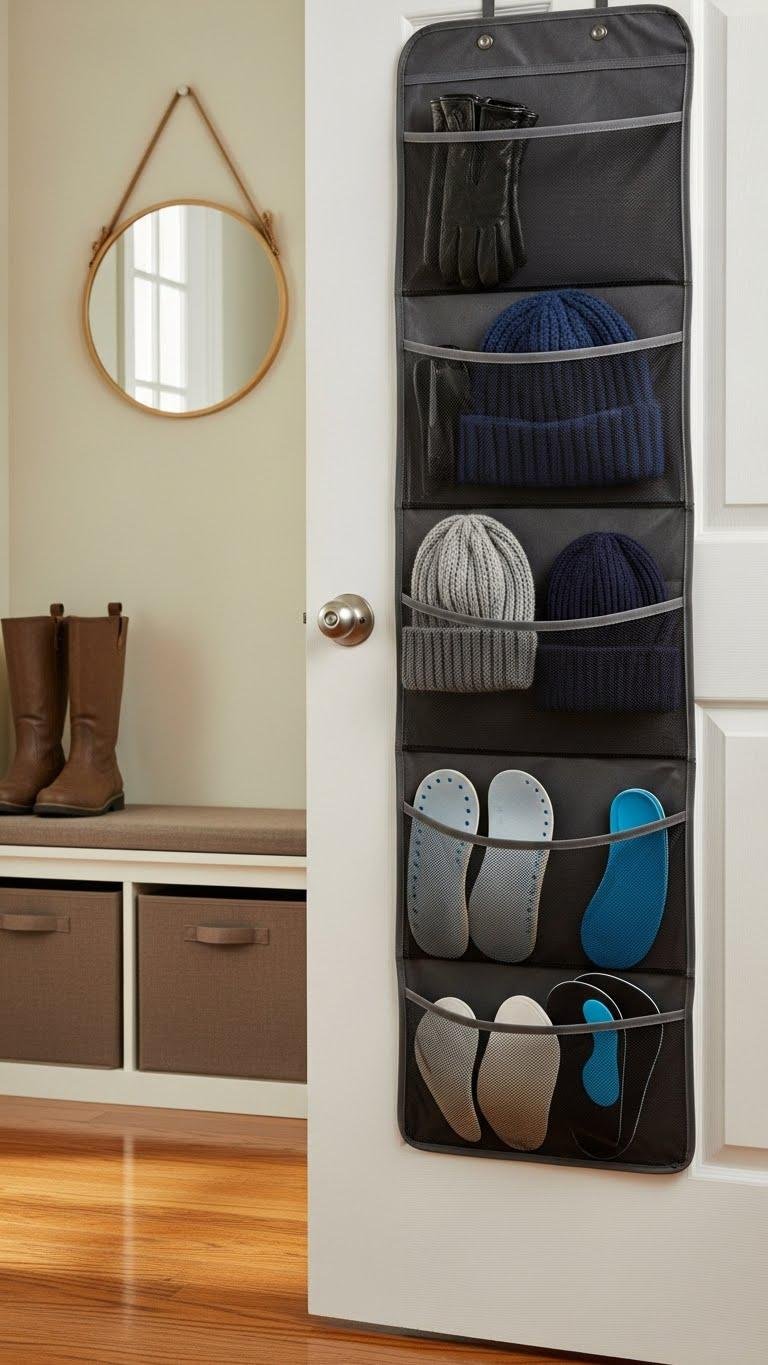
Once your boots are neatly tucked away in fabric bins, make use of otherwise wasted vertical space by hanging a slim over-the-door organizer for accessories. You’ll free floor space with a door mounted solution featuring accessories pockets and shallow hanging trays for gloves, hats, and inserts.
Install it high or low, adjust pockets for size, and keep entryways streamlined and ready for spontaneous outings.
Arrange Boots by Frequency of Use for Easy Access
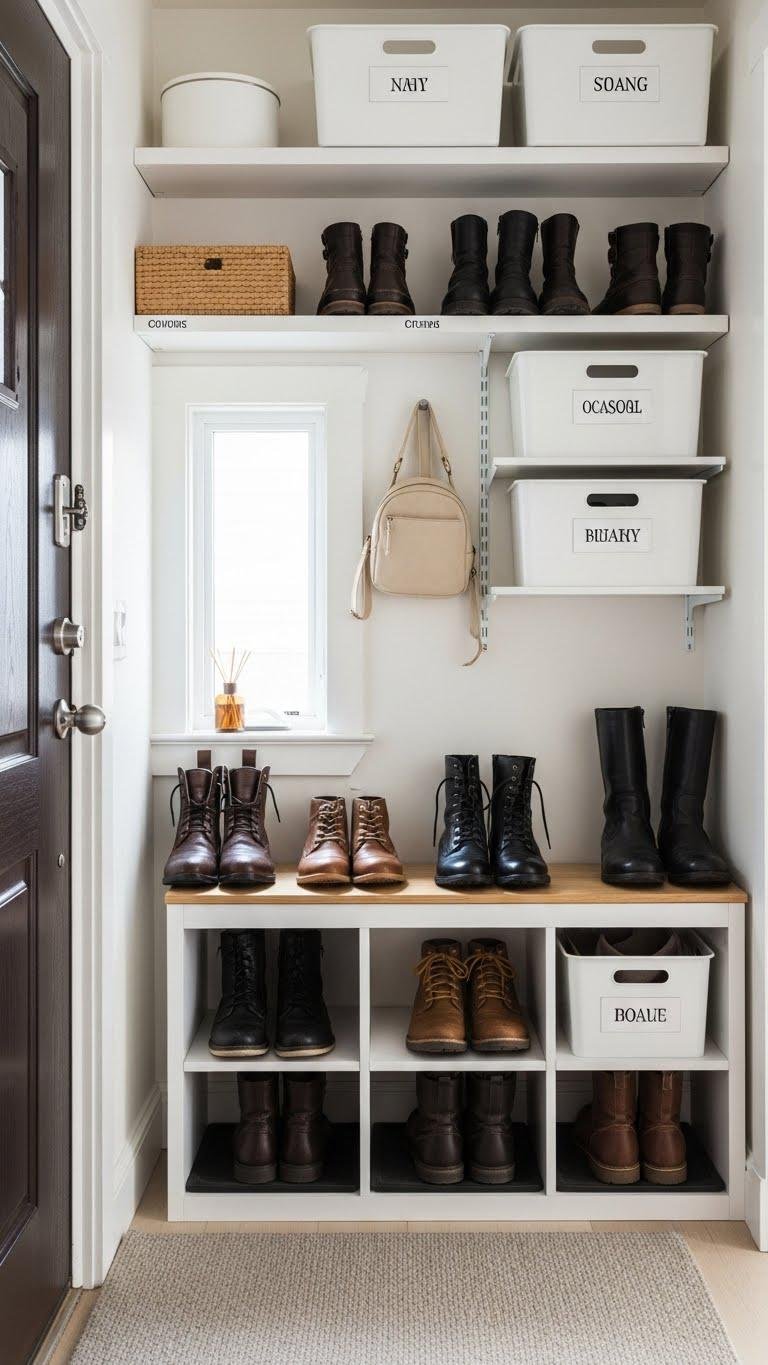
Regularly organizing your boots by how often you wear them makes mornings faster and keeps your entryway clutter-free. Group daily rotation pairs nearest the door so you grab what you need without hesitation.
Store occasional or dress boots higher or farther back in designated reach zones. Label shelves or use simple bins to maintain the system, so you reclaim time and feel freer each day.
Add Ventilated Lids to Prevent Moisture Build-Up
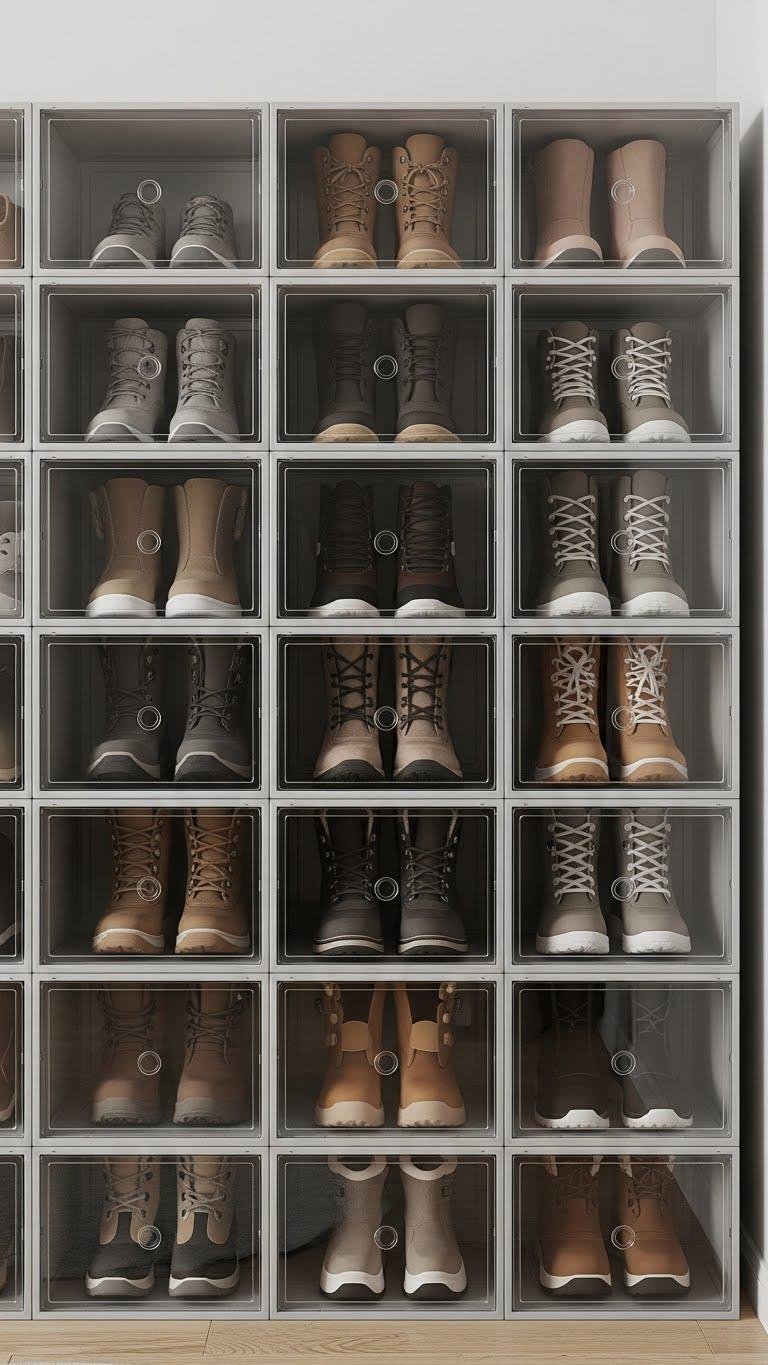
Keep an Empty Shelf for Drying Wet Boots
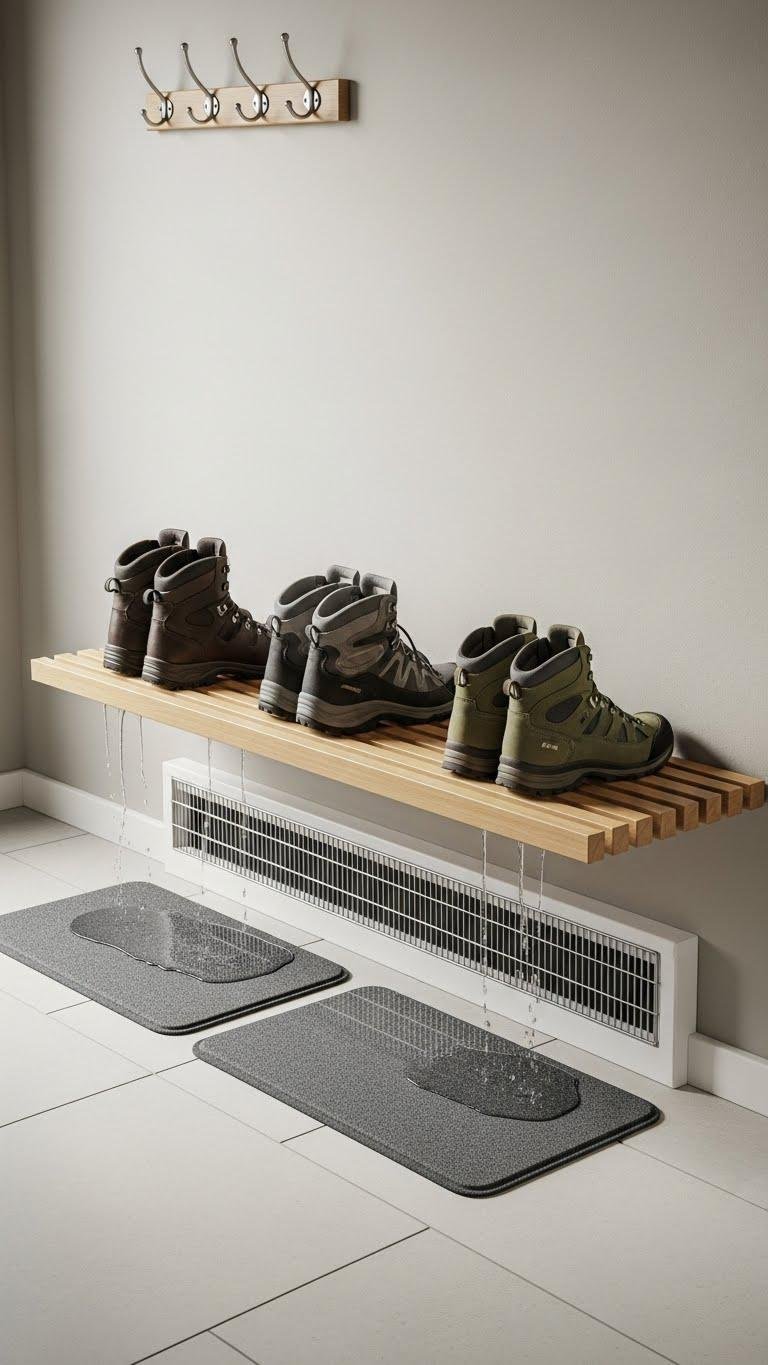
If you set aside one empty shelf near an entryway or heater, you’ll have a dedicated spot to dry wet boots without cluttering living spaces or mixing damp items with clean gear. Use open shelf ventilation, space boots toe-out, and place absorbent mats below.
You’ll keep odors down, speed wet boot drying, and preserve other gear—simple, free, and effective.
Paint or Decorate Plain Storage Benches to Match Décor
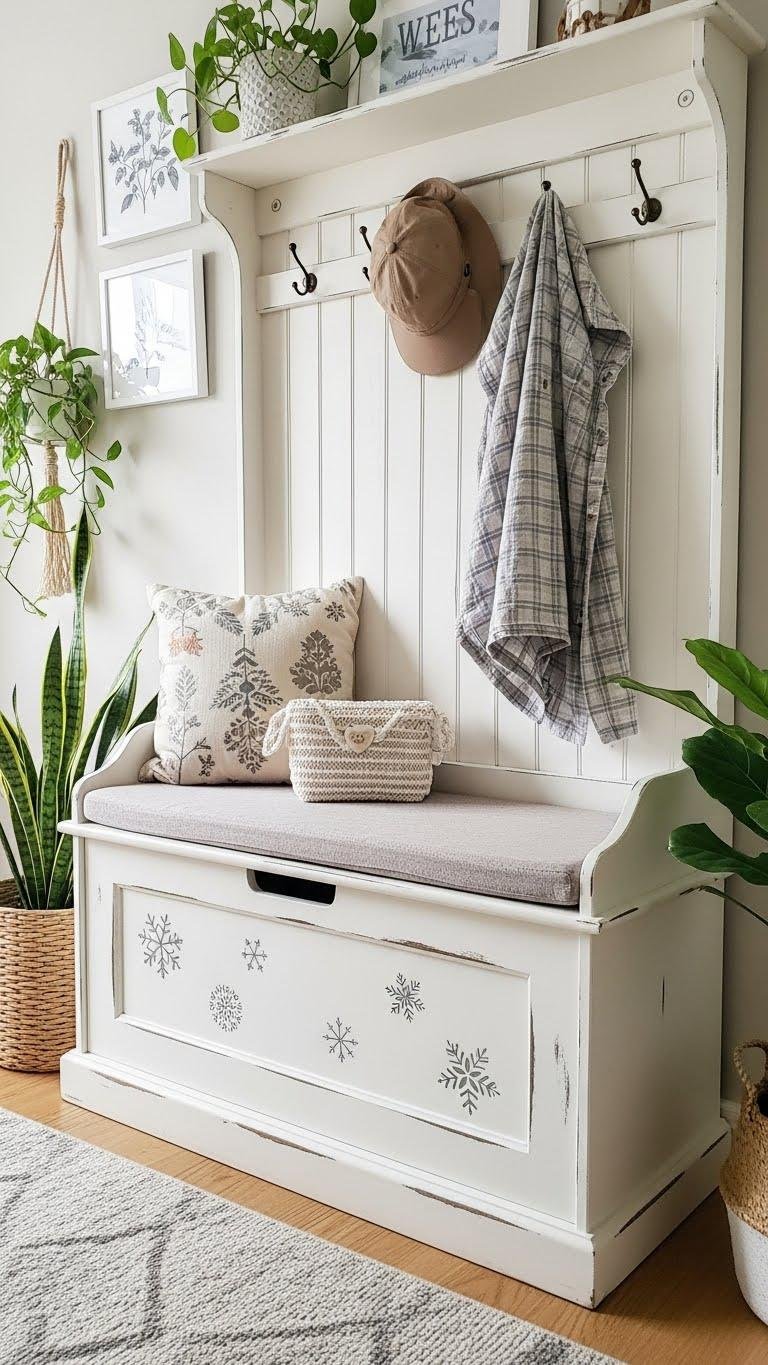
Give your plain storage bench a quick makeover to tie it into your entryway’s style and make it look intentional.
You can use simple paint techniques to refresh color, add stencil seasonal motifs for holidays or winter, and distress edges for a relaxed vibe.
Swap knobs or add cushioning to increase comfort.
These small updates free space visually and let you personalize organization without fuss.
Employ Rolling Carts for Portable Entryway Organization
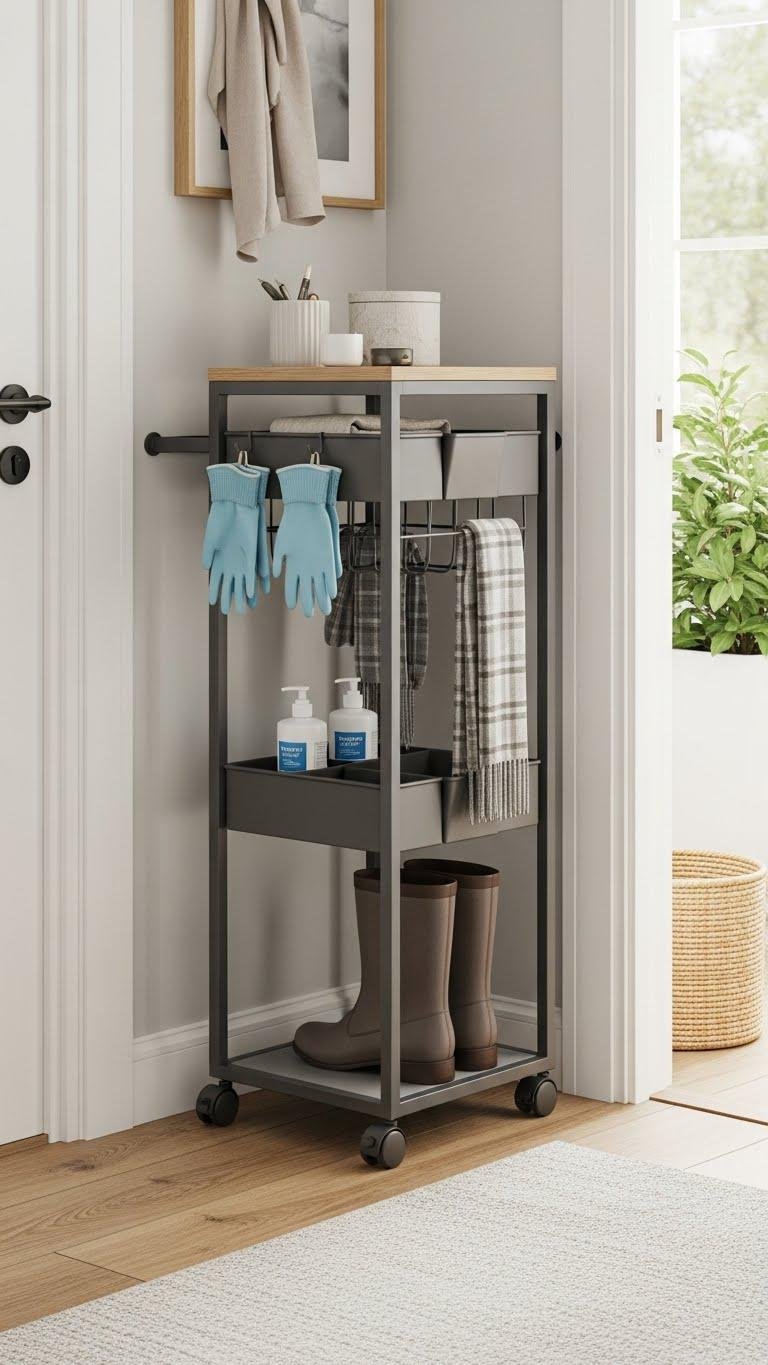
Roll a slim rolling cart into your entryway to create flexible, vertical storage that moves where you need it most.
You’ll use a mobile shoe tier, an entryway caddy for gloves and wipes, and designate cart stations for boots and scarves.
Push it aside when you want open space, pull it forward to unload, and enjoy simple, liberated organization.