
You’ll find 20 peppermint lip balm recipes that prioritize safe ingredient ratios, measurable beeswax-to-oil balance, and proper peppermint dilution (0.5–1%). Each formula names exact butters, carrier oils, antioxidants like vitamin E, and optional infusions (green tea, calendula). I’ll note melt points, storage guidance, and basic preservative considerations so you can choose the right balm for sensitivity, climate, or packaging—and then you can pick a recipe to make first.
Basic Peppermint Beeswax Lip Balm
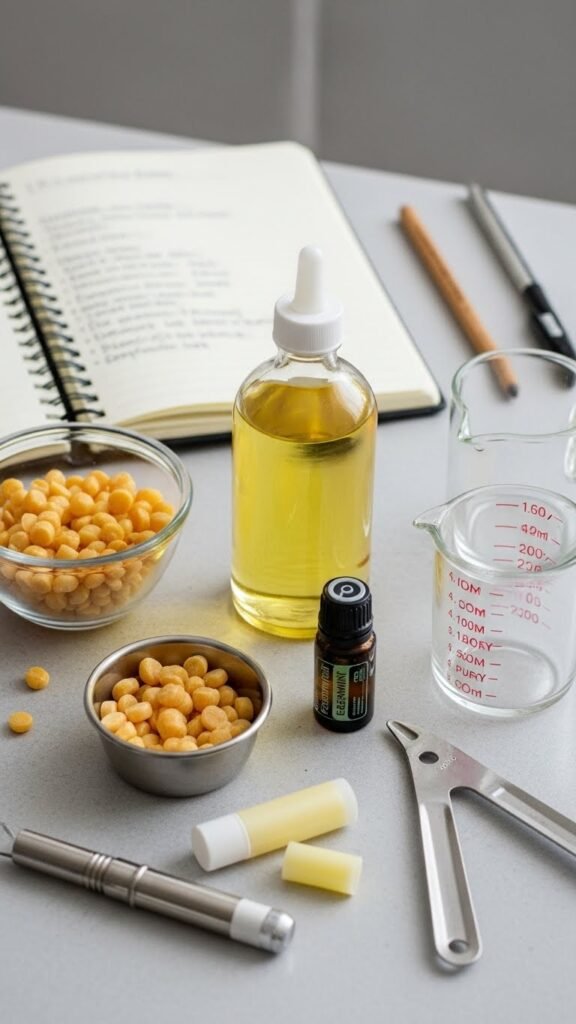
Starting with a simple base, you’ll combine beeswax, carrier oil, and a small amount of peppermint essential oil to make a stable, protective lip balm; keep ratios precise to guarantee proper consistency and safe dilution. You’ll check peppermint sourcing for purity and allergen data, calculate beeswax ratios (typically 10–20% solids), label concentration, and follow cosmetic safety and local regulatory guidance before you distribute or gift.
Shea Butter Peppermint Repair Balm
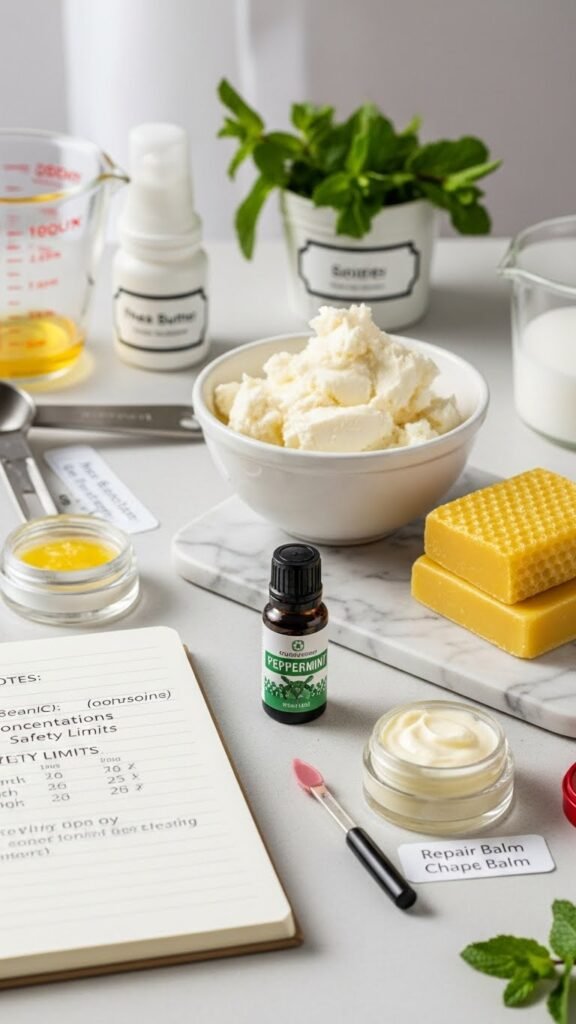
Blend rich, stable shea butter with your beeswax base and a measured drop of peppermint essential oil to create a repair balm that seals moisture and soothes chapped lips. You’ll favor Shea blends for emollience and Peppermint stability for consistent aroma; weigh ingredients, label concentrations, and comply with topical safety limits so you can craft a liberating, compliant balm for everyday rescue.
Coconut Oil and Peppermint Soothing Balm
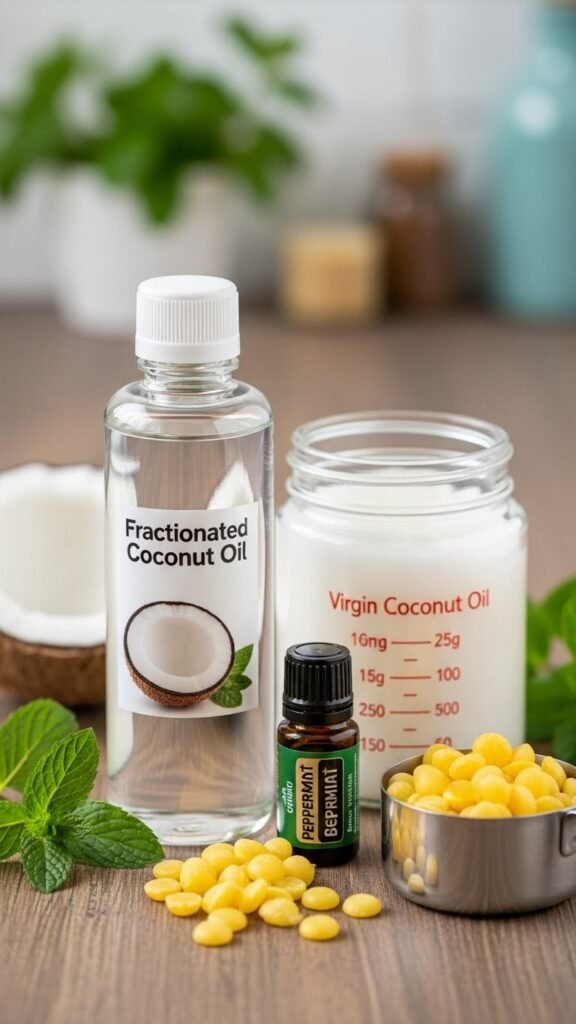
Reach for fractionated or virgin coconut oil as the emollient base, combine it with a measured beeswax ratio to give structure, and add peppermint essential oil at a safe topical concentration (typically 0.5–1% for lip products) so the balm soothes without irritating. You’ll control coconut extraction purity, prioritize peppermint synergy and scent pairing, and adjust beeswax for texture optimization while respecting labeling and usage limits.
Jojoba Peppermint Protective Lip Salve
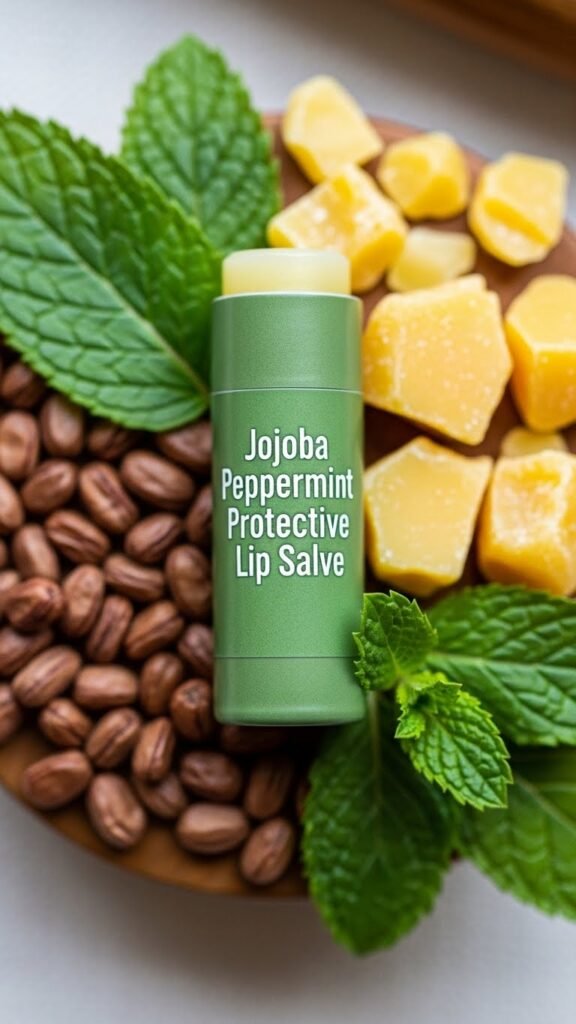
With a stable, skin‑compatible profile, jojoba oil gives this peppermint protective lip salve a long shelf life and non‑greasy finish that helps prevent chapping. You’ll blend jojoba stability with beeswax and measured peppermint essential oil, mindful of regulatory limits and allergen labeling.
Apply sparingly; you control scent strength and monitor peppermint interactions for irritation, ensuring safe, confident use.
Vitamin E and Peppermint Healing Balm
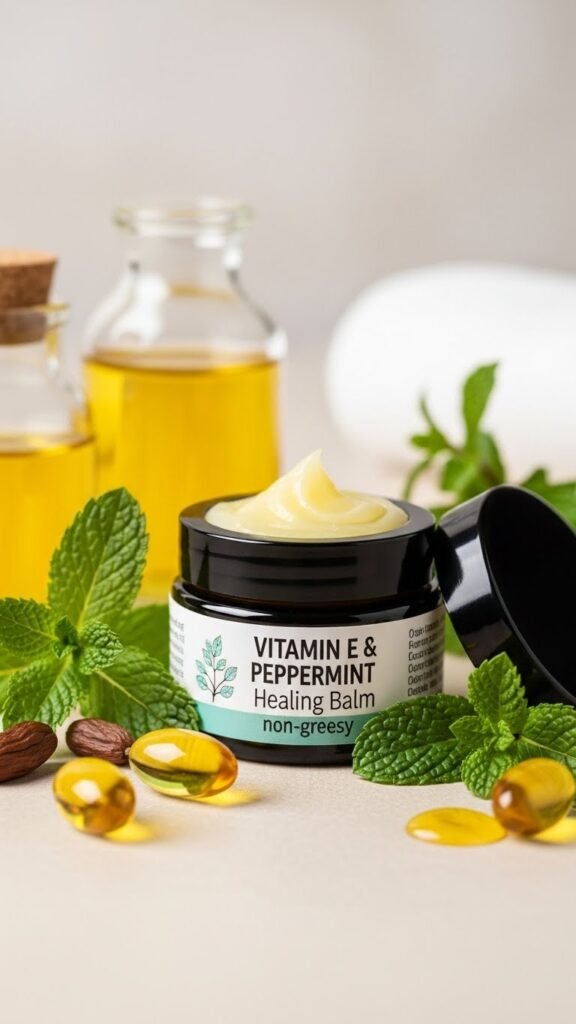
After enjoying the jojoba peppermint salve’s stable, non‑greasy feel, you can turn to a Vitamin E and Peppermint Healing Balm that pairs antioxidant protection with targeted soothing. You’ll blend Vitamin E-rich tocopherol, a neutral carrier for absorption enhancement, and medical‑grade Peppermint oil at safe dilution. Apply sparingly; label concentrations to meet regulatory limits and document topical synergy for consistent, liberated self‑care.
Aloe Vera Peppermint Restorative Lip Balm
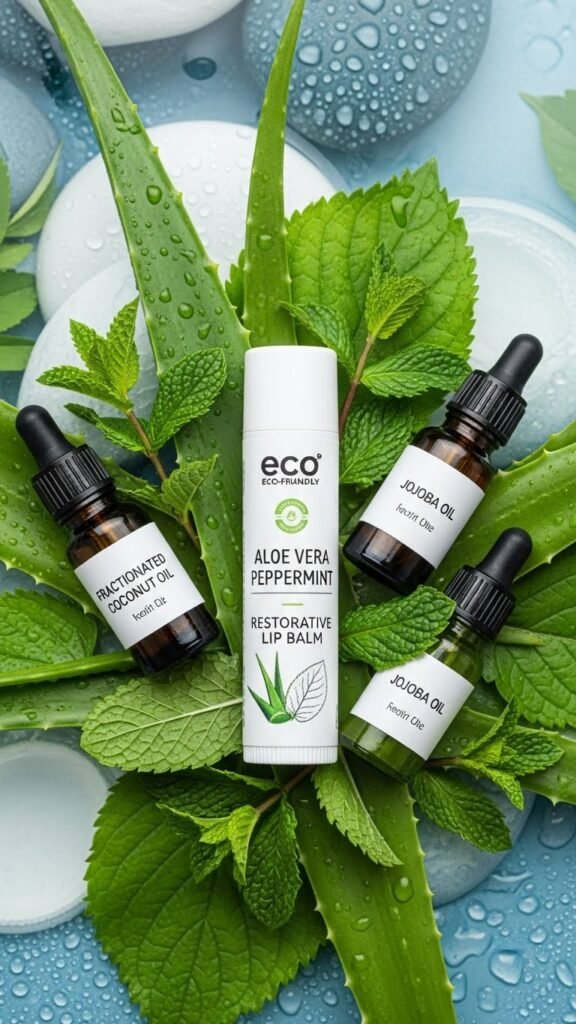
When you blend soothing aloe vera gel with light peppermint oil and a stable carrier like fractionated coconut or jojoba, you get a restorative lip balm that hydrates, cools, and protects without leaving a greasy film. You’ll use an aloe infusion for mucosal hydration, measured peppermint synergy for sensory effect, and preservative-compatible ratios. Label concentrations, note IFRA limits, and test stability before distributing.
Cocoa Butter Peppermint Nourishing Balm
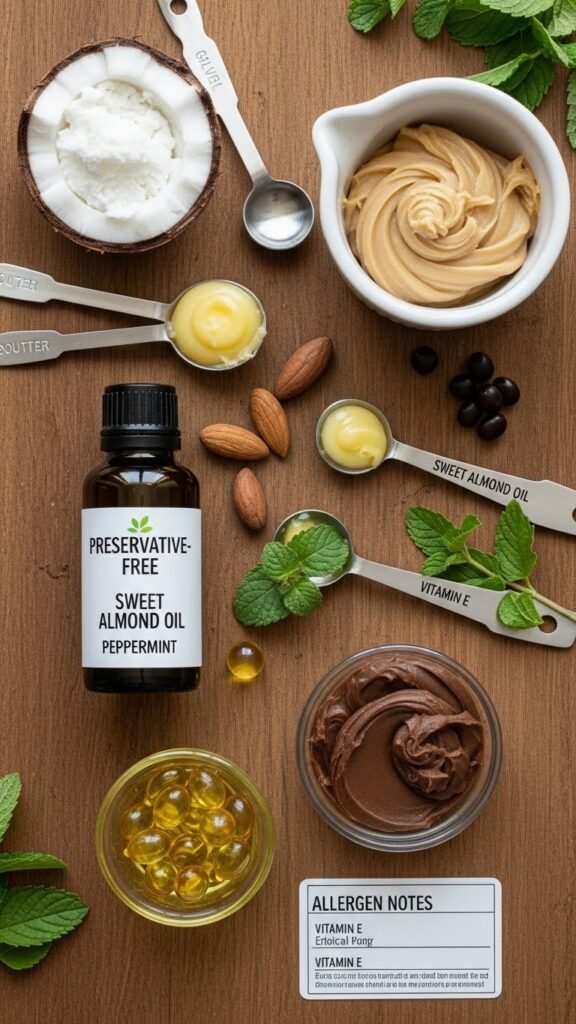
Although rich cocoa butter forms the creamy base, you’ll balance it with fractionated coconut or sweet almond oil to guarantee spreadability and reduce greasiness. Choose ethically certified cocoa sourcing, note butter melting points for safe lab-scale heating, and add peppermint essential oil at regulated limits. You’ll include vitamin E as an antioxidant and label batch date, preservative-free status, and allergen notes for responsible, liberating DIY use.
Honey and Peppermint Gentle Repair Balm
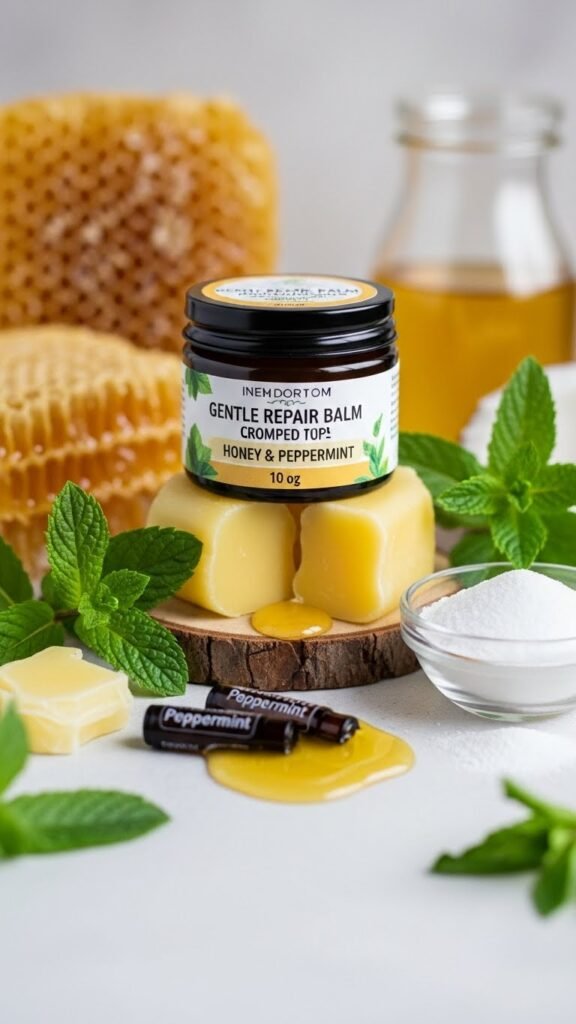
Bring together the humectant power of medical-grade honey with cooling peppermint to create a gentle repair balm that soothes chapped lips and supports barrier recovery. You’ll blend beeswax, fractionated coconut oil, measured honey, and a micro-drop of peppermint essential oil for breath refresher effect. Label ingredients, note allergy considerations (bee products, menthol), and comply with local cosmetic regulations before gifting or selling.
Avocado Oil Peppermint Deep Moisture Balm
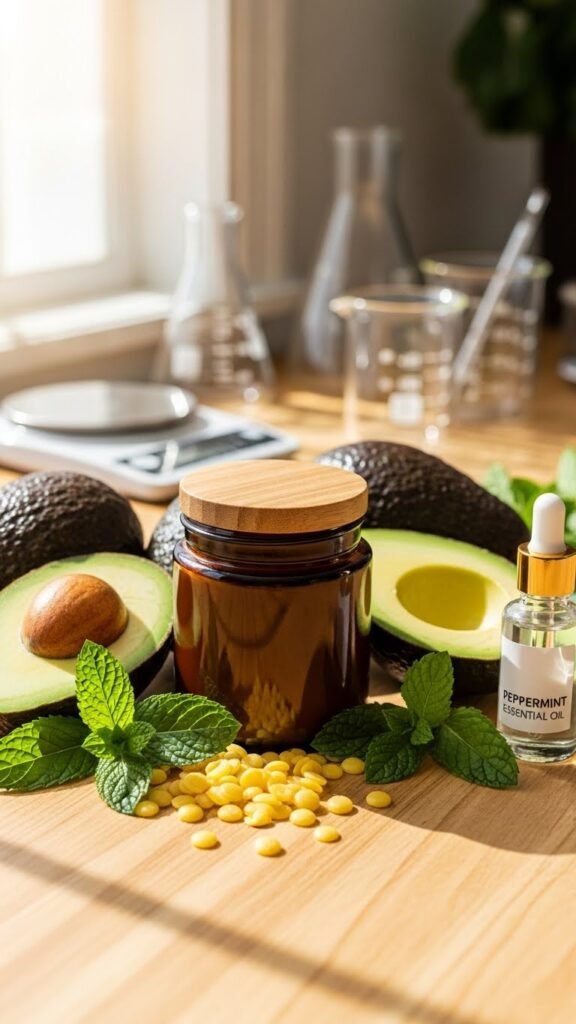
Whisk together rich avocado oil, protective beeswax, and a touch of peppermint essential oil to create a deep-moisture balm that penetrates and seals dry lips without feeling greasy. You’ll measure oils precisely, respect cold oil extraction notes, and test stability and labeling for regulatory compliance.
This avocado pairing balances emollience and scent; you’ll enjoy a liberating, effective formula that meets safety standards.
Green Tea Infused Peppermint Antioxidant Balm
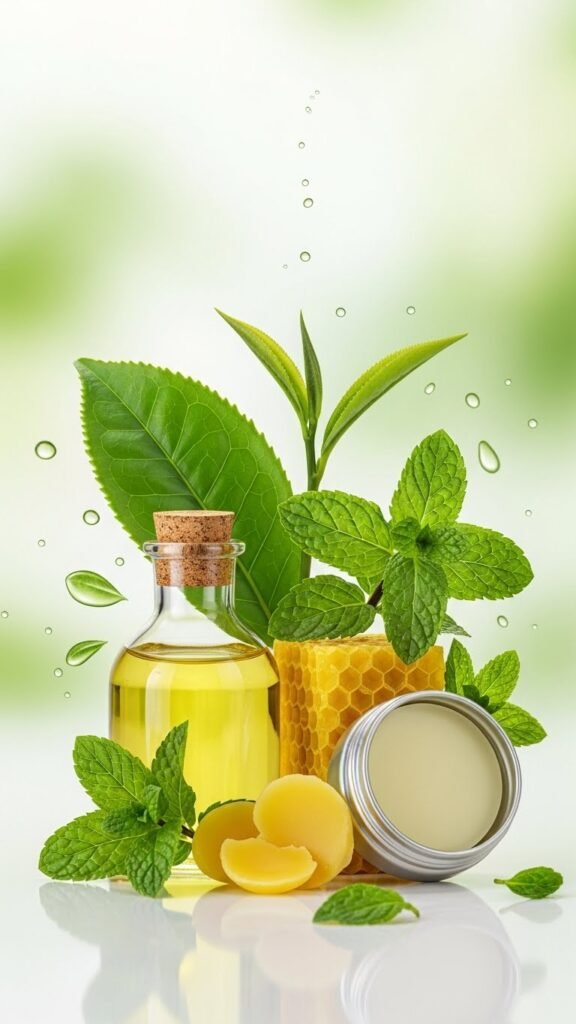
When you infuse high-grade green tea into a neutral carrier oil and blend it with beeswax and a trace of peppermint essential oil, you create an antioxidant-rich balm that soothes, protects, and adds subtle scent without irritation.
You’ll control antioxidant extraction time, document concentrations, and respect IFRA limits for peppermint.
Measure ratios for stability, test pH and scent, and consider flavor pairing for tasteful, compliant lip use.
Calendula and Peppermint Soothing Lip Salve
Lanolin-Free Peppermint Sensitive Skin Balm
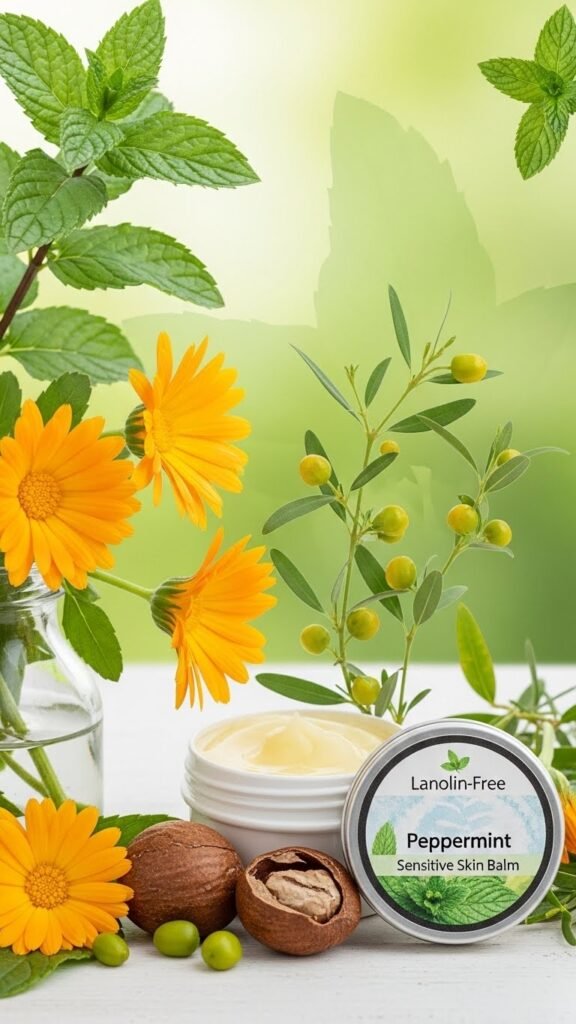
If you liked the calming calendula blend, you’ll appreciate a lanolin-free formula that keeps the soothing benefits while avoiding animal-derived allergens. You’ll use plant-based esters, shea, and jojoba for emollience; add minimal peppermint essential oil at low ppm. Design a sensitive formulation with clear labeling, recommend patch testing and allergy testing, and offer fragrance alternatives to protect compliant, free-spirited users.
Matcha Peppermint Cooling Lip Balm
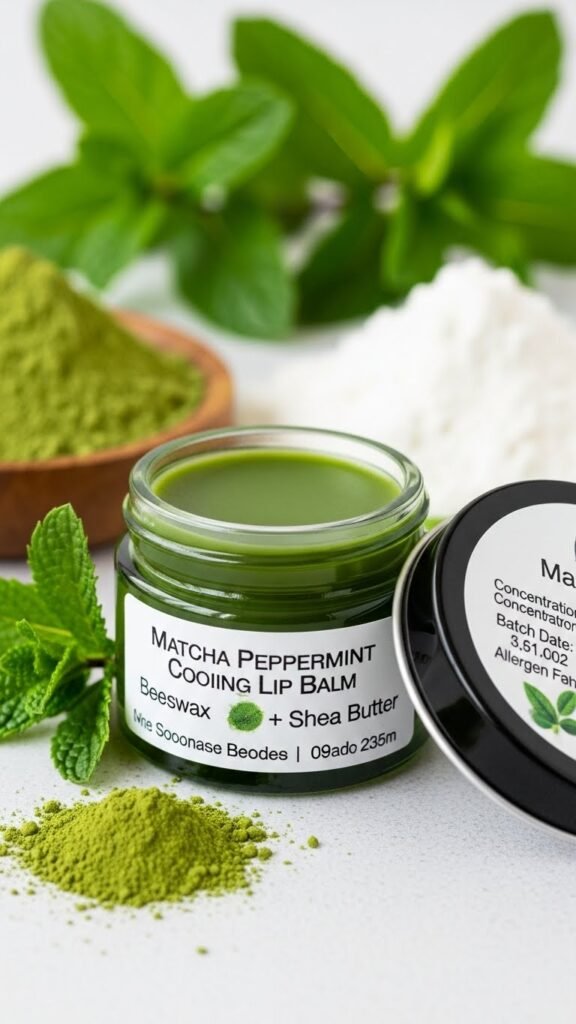
Often overlooked, a Matcha Peppermint Cooling Lip Balm pairs antioxidant-rich matcha powder with menthol-like cooling from peppermint to soothe and protect lips.
You’ll measure matcha cooling actives precisely, blend beeswax, shea, and fractionated oil for ideal lipid fusion, and add peppermint essential oil at safe concentrations.
Label concentration, batch date, and allergen info so you stay compliant and free.
Turmeric and Peppermint Brightening Balm
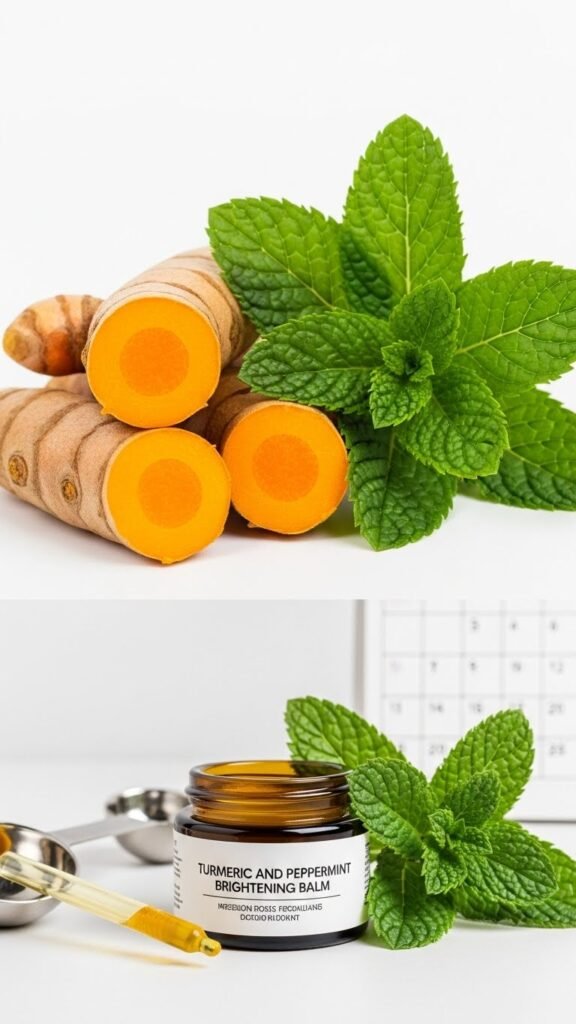
With turmeric’s curcumin delivering gentle brightening and anti-inflammatory activity and peppermint providing a cooling, sensory lift, this Turmeric and Peppermint Brightening Balm balances efficacy with safety through measured dosing and stable formulation choices.
You’ll control curcumin bioavailability using lipid carriers, mitigate Turmeric staining with minimal pigment loads, monitor Shelf life via preservative and antioxidant systems, and prioritize Lip safety throughout.
Coffee Scrub Infused Peppermint Exfoliating Balm
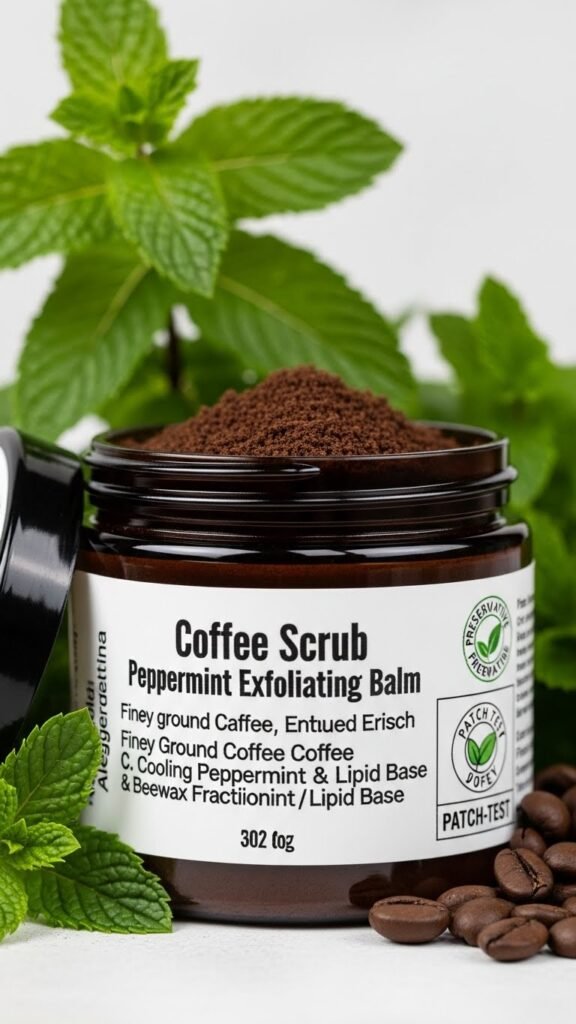
When you combine finely ground coffee for gentle mechanical exfoliation with a cooling peppermint-infused lipid base, you get an exfoliating balm that removes dead skin while soothing and deodorizing the lip area. You’ll measure coffee exfoliant precisely, blend fractionated oils, beeswax, and a controlled mint infusion (0.5–1% menthol-equivalent). Patch-test, label allergens, and note preservative-free shelf limits for safe, liberated use.
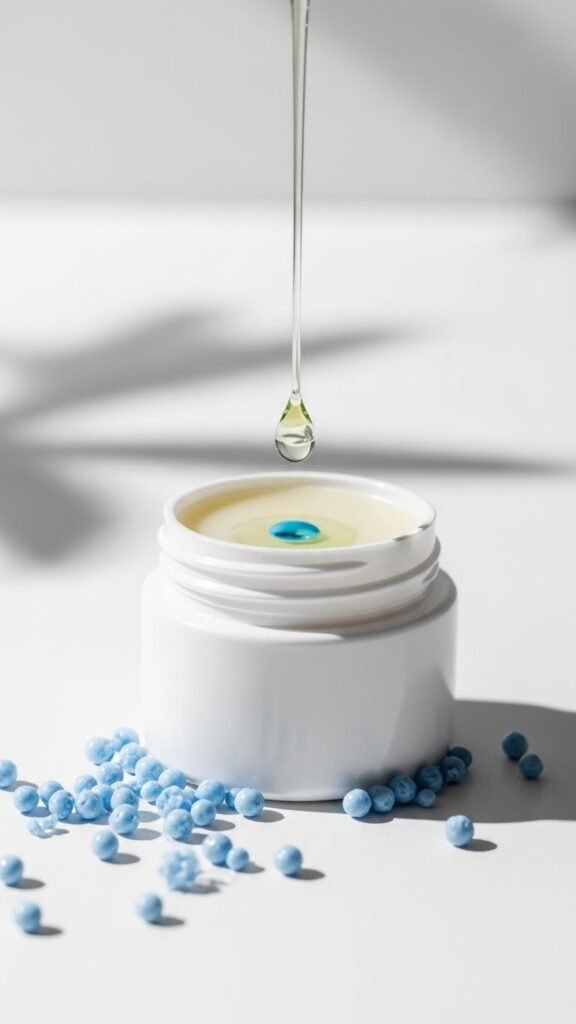
Unscented Base With a Drop of Peppermint Tingle Balm
Eco-Friendly Refillable Peppermint Lip Balm Mix
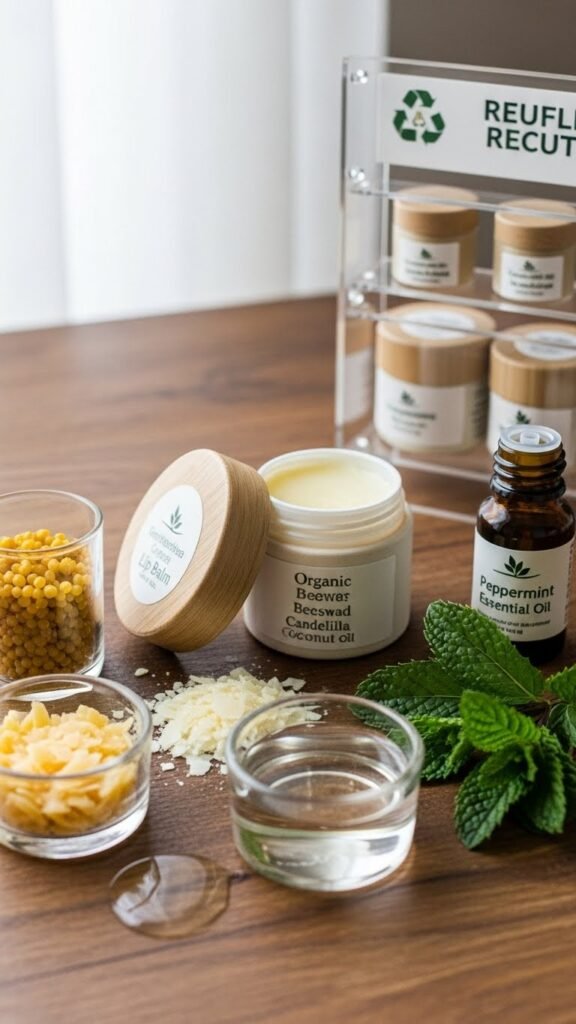
When you formulate an eco-friendly refillable peppermint lip balm mix, prioritize sustainably sourced ingredients and packaging that meet cosmetic safety and labeling requirements; choose a biodegradable or recyclable balm jar and a concentrated paste formulation that lets consumers refill with minimal waste. You’ll use certified organic beeswax or candelilla, fractionated coconut oil, peppermint essential oil at safe dilution, stability-tested preservative, and setup refill stations for clear waste reduction.