
When winter hits, you’ll want a compact, well-organized car kit that keeps you safe and self-reliant on icy roads. You’ll need items for mobility (jumper cables, shovel, traction material), visibility and signaling (flashlight, flares, reflective triangles), warmth and shelter (blankets, hand warmers, tarp), and basic repairs and first aid. I’ll outline 24 essential items and practical tips so you can assemble a kit that actually works when you need it.
Jumper Cables for Battery Emergencies
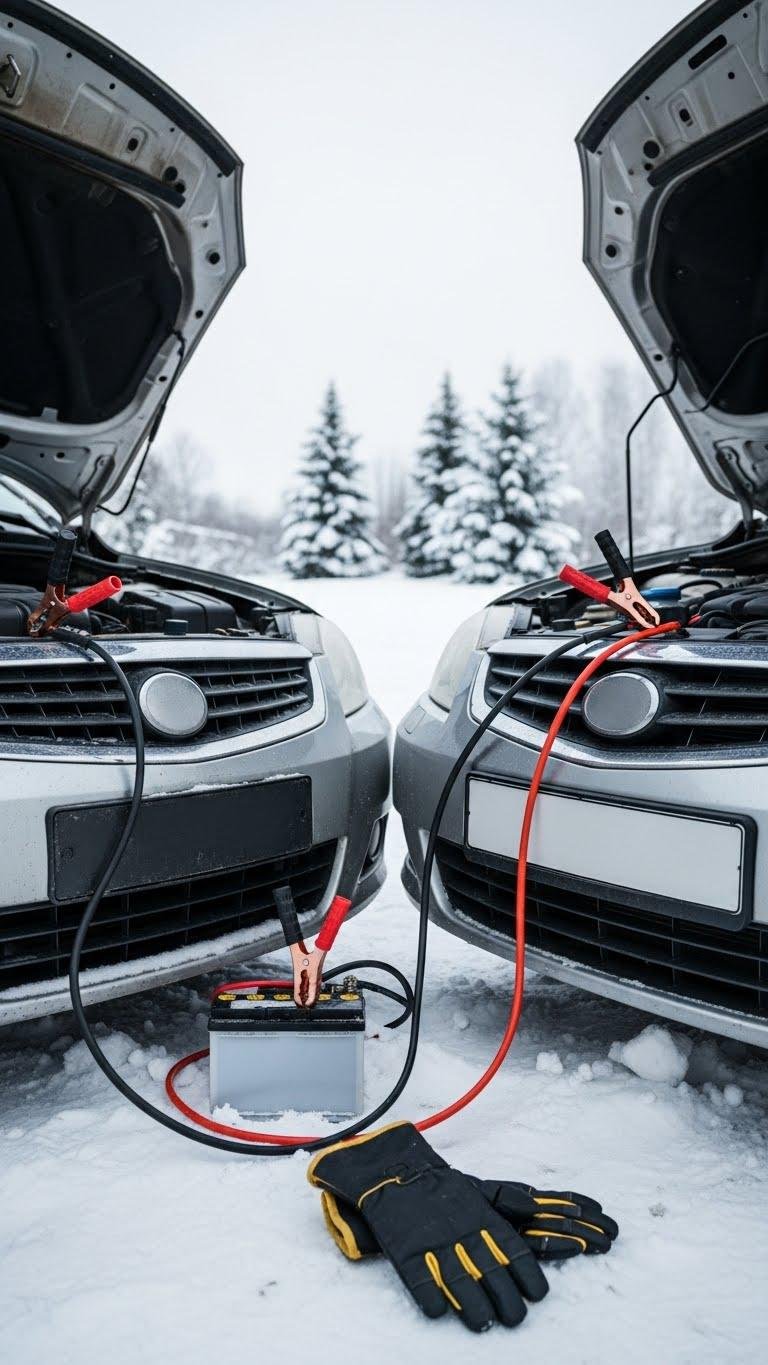
Keep a set of heavy-duty jumper cables in your winter emergency kit so you can quickly revive a dead battery without waiting for roadside assistance. You’ll choose cables rated for cold starts and respect battery chemistry when connecting clamps.
Follow clear safety protocols: wear gloves, keep sparks away from vents, attach clamps in correct order, and position vehicles safely. You’ll regain mobility fast and independently.
Ice Scraper and Snow Brush
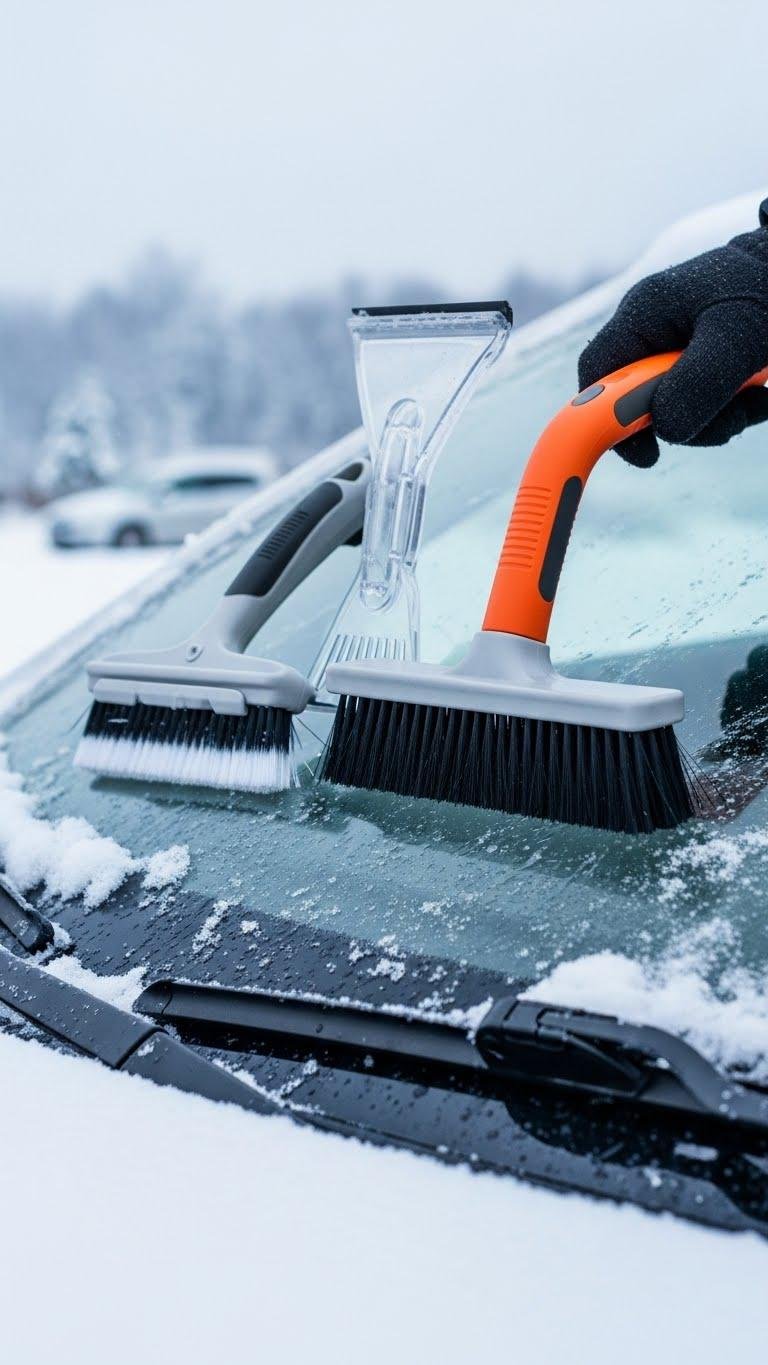
After jump-starting a dead battery you’ll often still face a windshield caked with frost or snow, so stow a sturdy ice scraper and snow brush within easy reach.
Choose a heated scraper for faster de-icing and an ergonomic handle to reduce strain. Light, compact designs fit your freedom-focused kit, letting you clear glass quickly and get back on the road with confidence.
Portable Shovel for Snow Removal
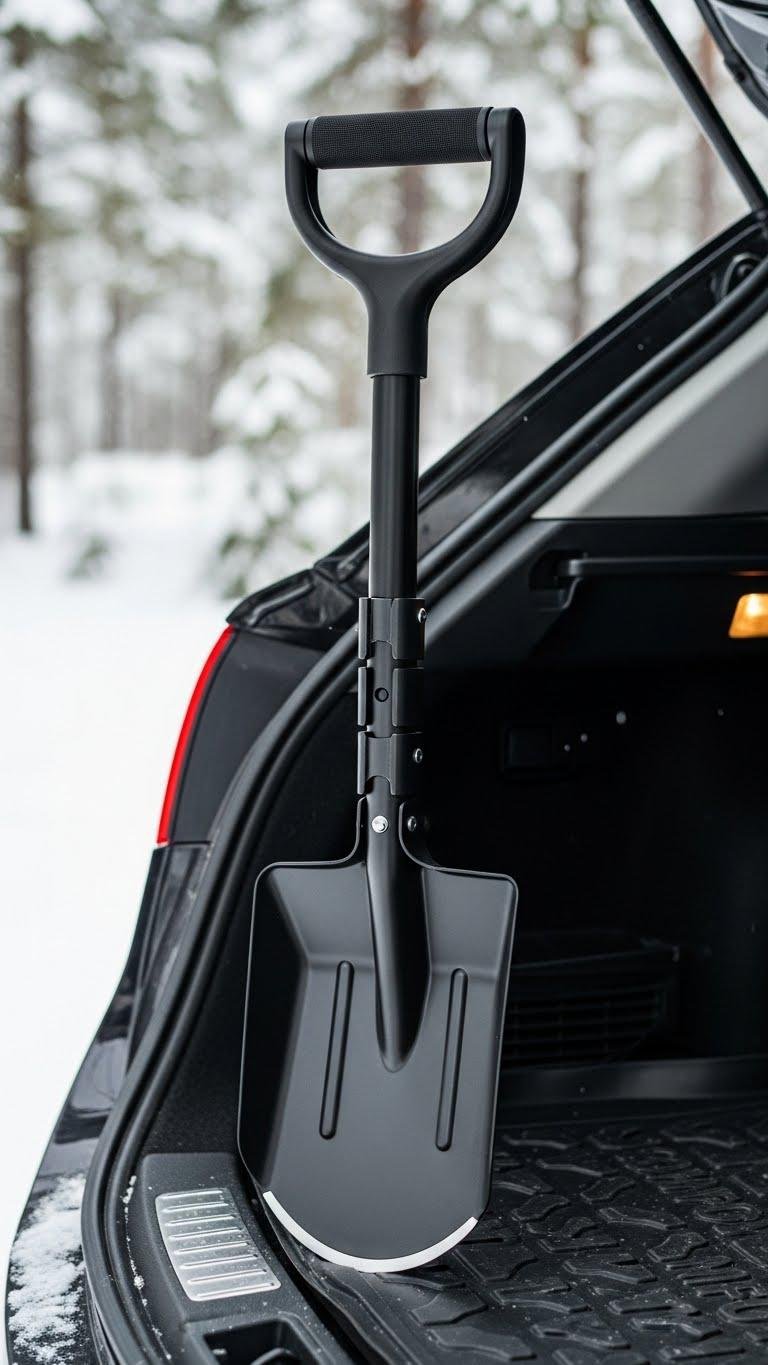
Carry a compact, collapsible shovel so you can dig your tires out of packed snow or clear a path to the road without hauling a full-size tool.
Choose a lightweight model with a folding design for tight storage, comfortable grip, and sturdy blade.
Prefer rust resistant materials like powder-coated steel or aluminum so your shovel lasts.
Keep it secured in the trunk for freedom to move.
Multi-Tool or Swiss Army Knife
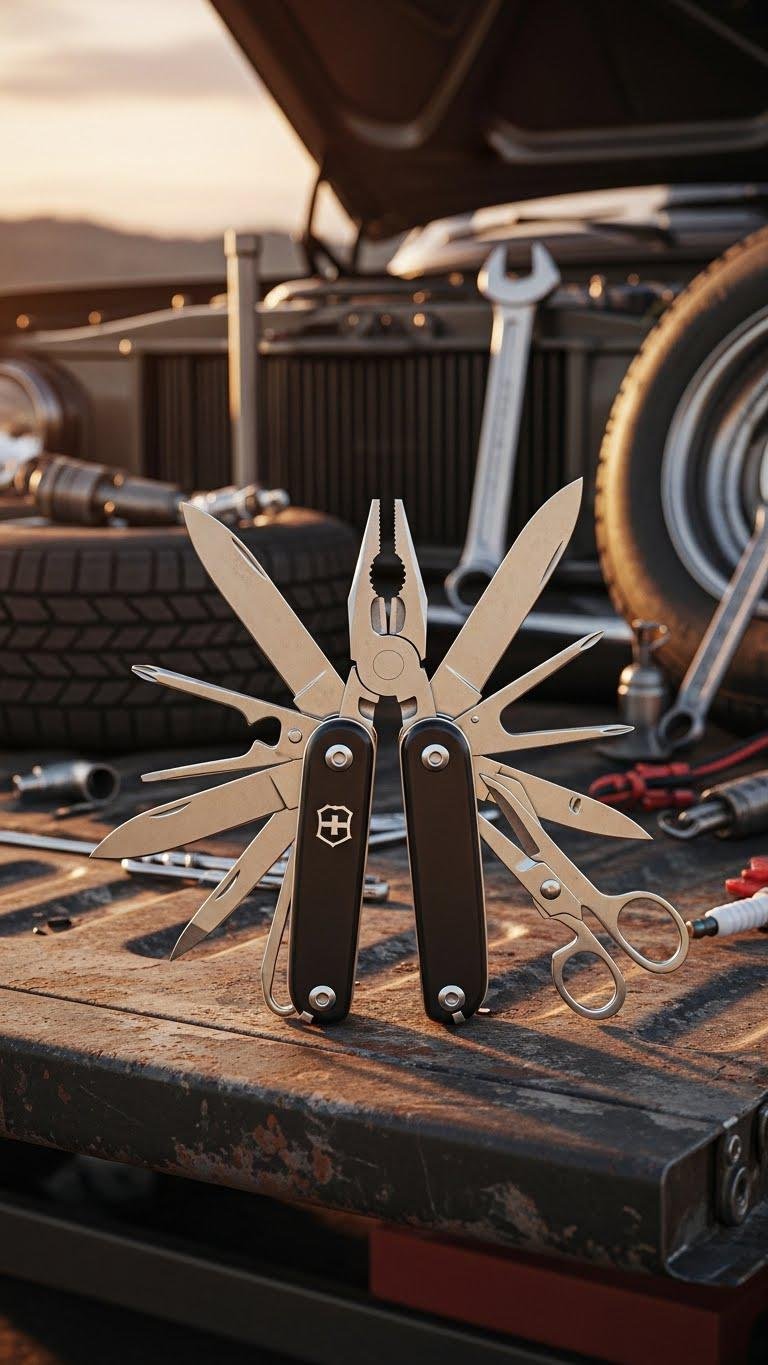
Pack a compact multi-tool or Swiss Army knife so you’ve got a handful of functions in one small device: pliers, knife blade, screwdriver, bottle opener, and scissors handle most common roadside tasks.
You’ll want compact pliers for gripping, a mini screwdriver set for basic fasteners, and a reliable blade and can opener.
Store it within easy reach for independent, confident repairs.
Tow Rope or Rated Towing Chain
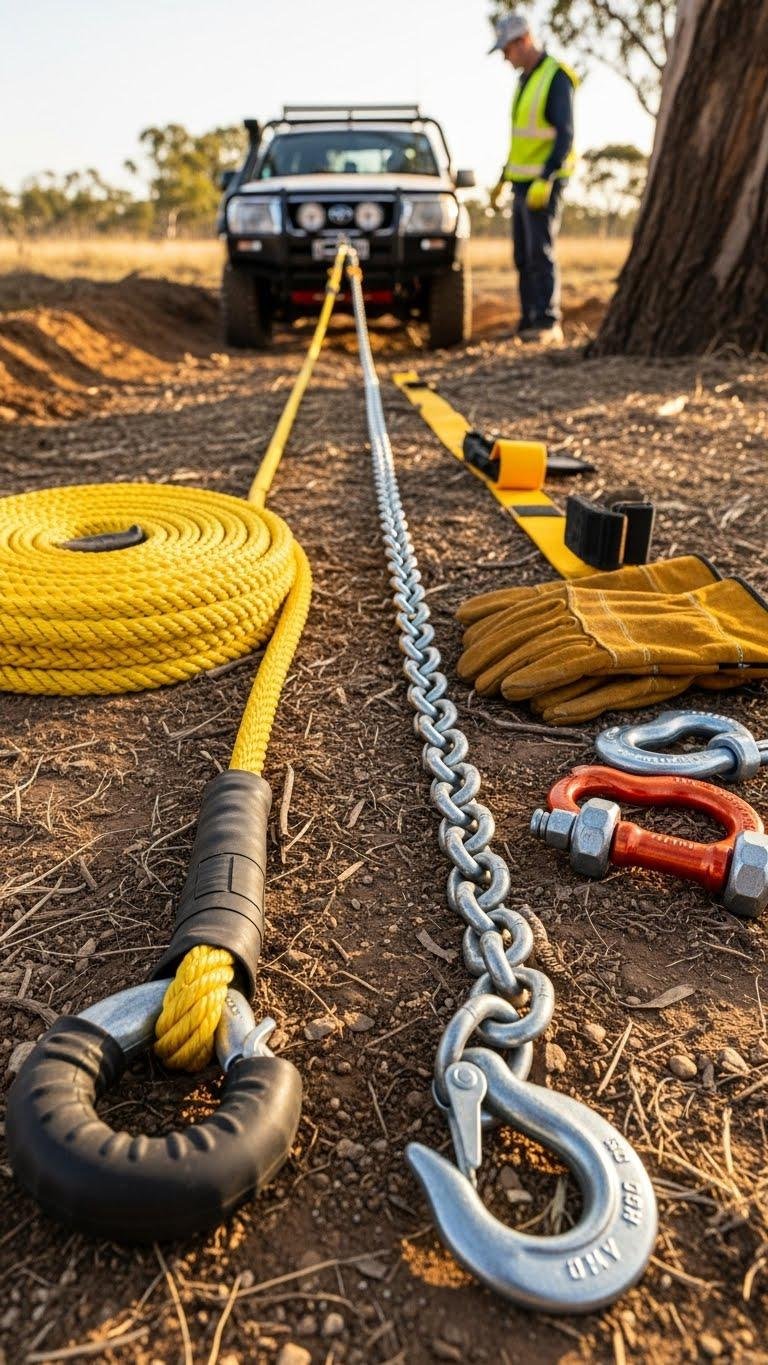
A heavy-duty tow rope or a rated towing chain gives you a reliable way to get unstuck or help another driver without relying on a tow truck.
Choose a rated, durable rope or chain matched to vehicle recovery weight, keep heavy-duty gloves and secure attachment points, and inspect for wear.
Practice safe hookup techniques and follow towing safety guidelines so you can move freely and responsibly.
Flashlight With Extra Batteries
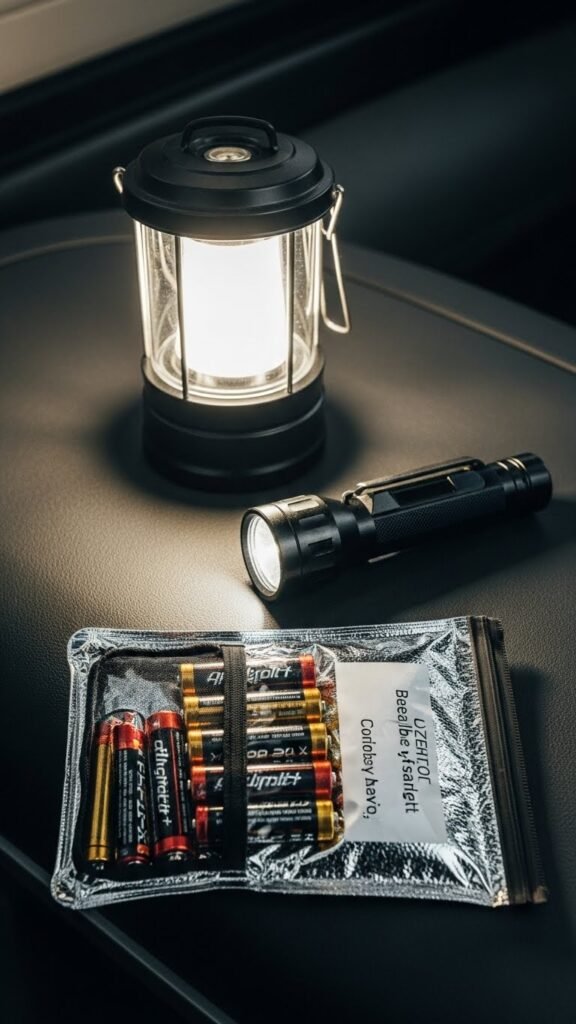
You’ll often need reliable light during winter vehicle emergencies, so bring a bright, durable flashlight plus extra batteries that match the model.
Pack a waterproof LED lantern for area light and a compact rechargeable flashlight for tasks.
Store batteries in a labeled, insulated pouch and rotate them seasonally.
Test both before trips so you’re free to move and fix issues confidently in cold conditions.
Emergency Flares or LED Road Flares
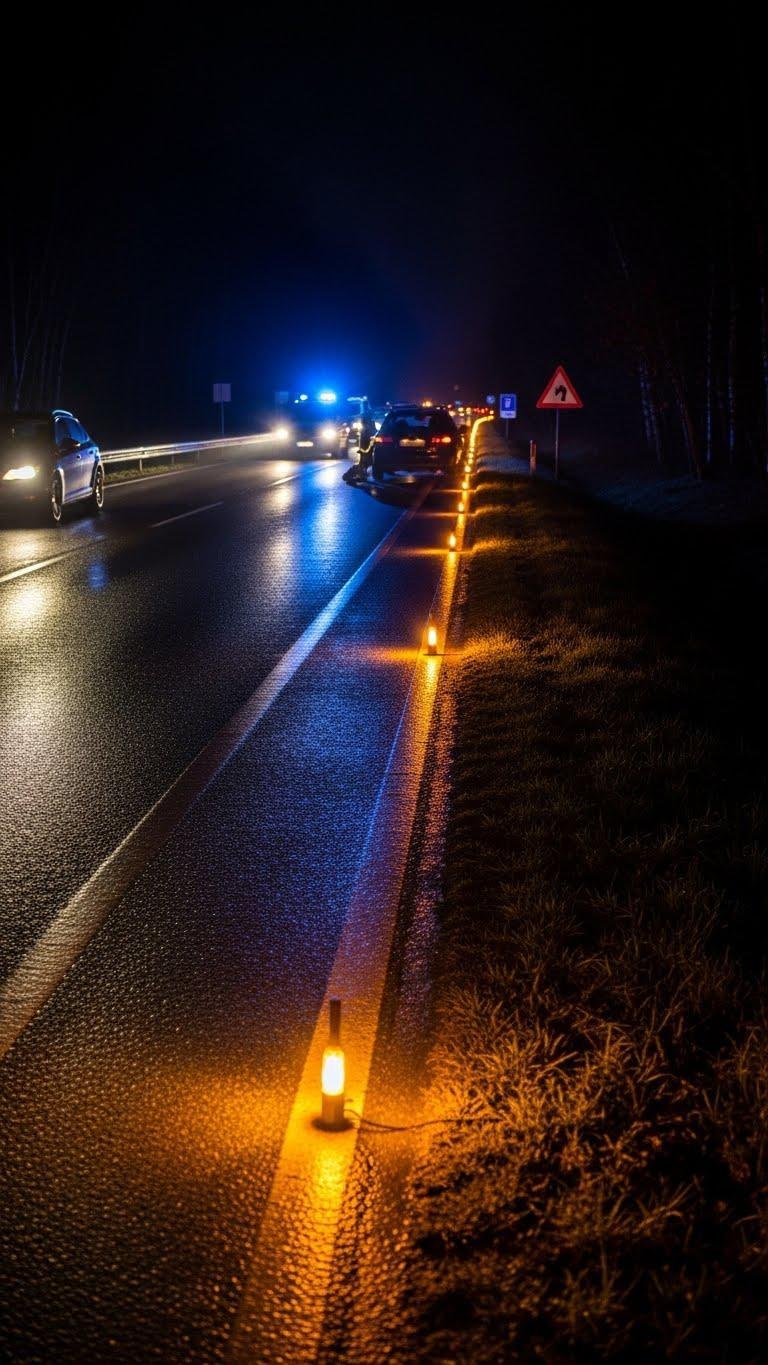
When roads are slick and visibility’s low, keep emergency flares or LED road flares within easy reach so you can quickly signal your location and warn oncoming drivers. Choose LED signals for battery longevity, waterproof construction, and multiple flash modes.
Use a clear placement strategy: position flares up and down the road to maximize roadside visibility, mark hazards, and guide rescuers to your exact spot.
Reflective Warning Triangles
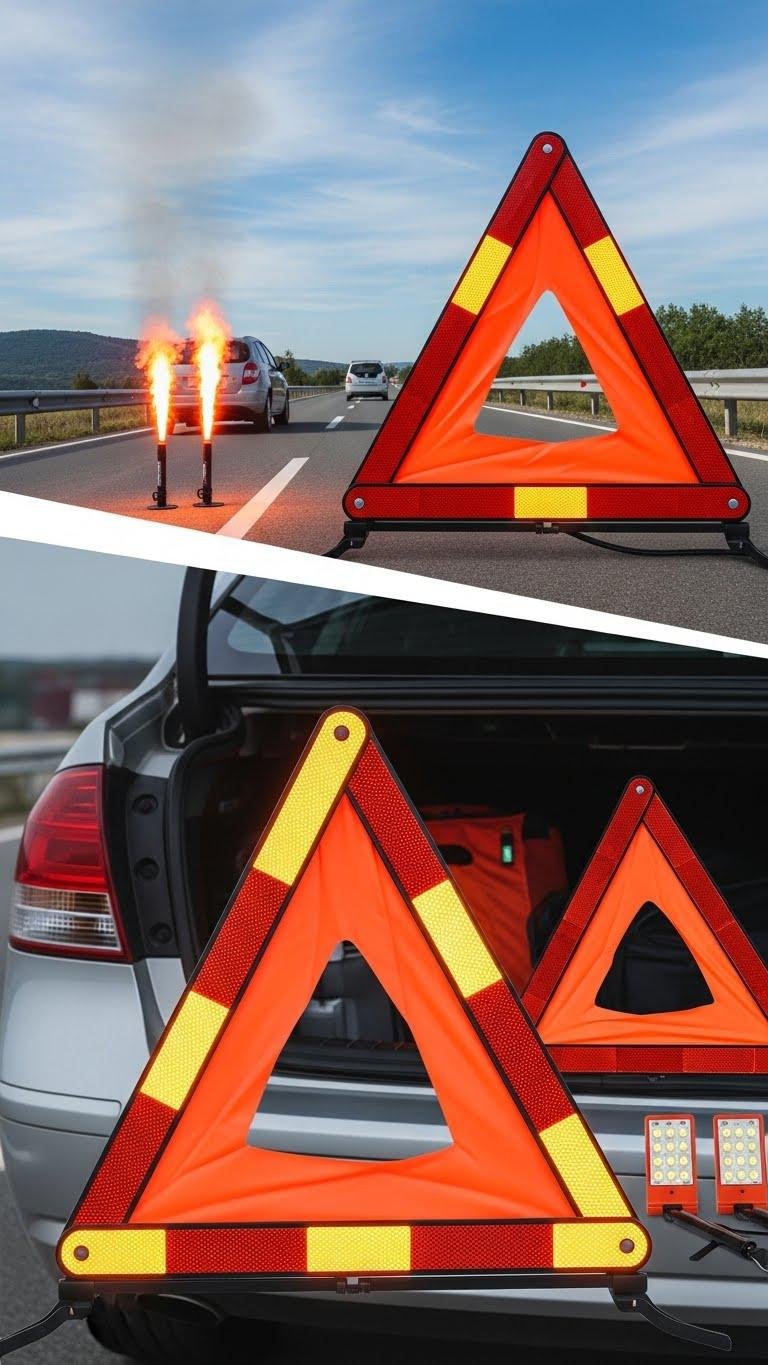
Keep a set of reflective warning triangles in your trunk and put them out quickly if your car becomes disabled; they give a stable, highly visible marker that complements flares or LEDs.
You’ll place them for high visibility placement—one behind, one further back—and check reflective tape maintenance regularly.
Choose sturdy, foldable triangles, practice rapid deployment, and store them accessible for freedom on the road.
Red Bandanna or Bright Signaling Cloth
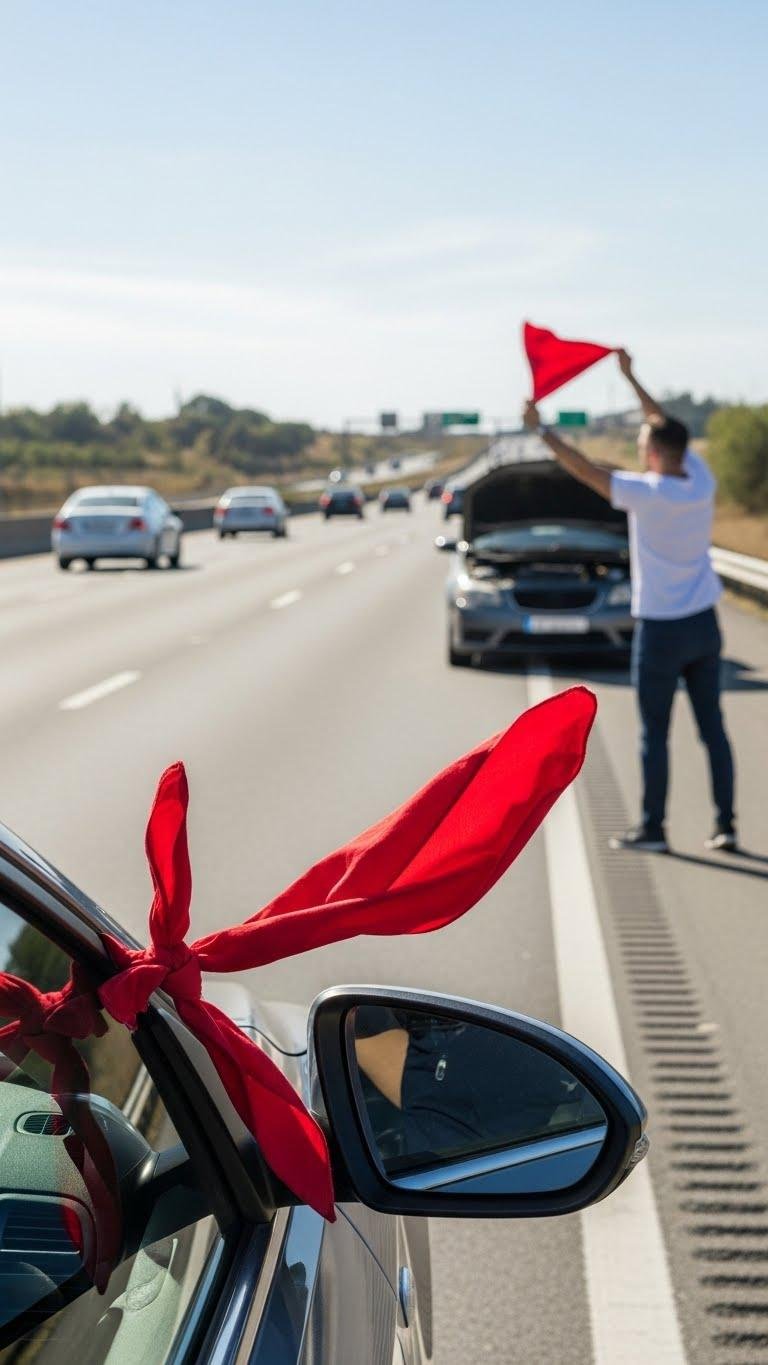
Tie a bright red bandanna or other high-visibility cloth to your car’s antenna, door handle, or roof rack to make a disabled vehicle easier to spot from a distance. Keep a folded spare in the glove box for high visibility signaling or to wave for help. Use bold colors and secure knots so your cloth resists wind while signaling Emergency distress clearly to passersby.
Small Candles and Matches

Pack a few small, unscented tealight or votive candles and a waterproof match container so you can get light and a little heat if you’re stuck overnight.
Choose candles with known candle burn times and test them beforehand; store extra matches in a sealed, dry tube for match storage safety.
Place candles on a nonflammable surface, never leave them unattended, and keep ventilation.
Blankets or Sleeping Bag
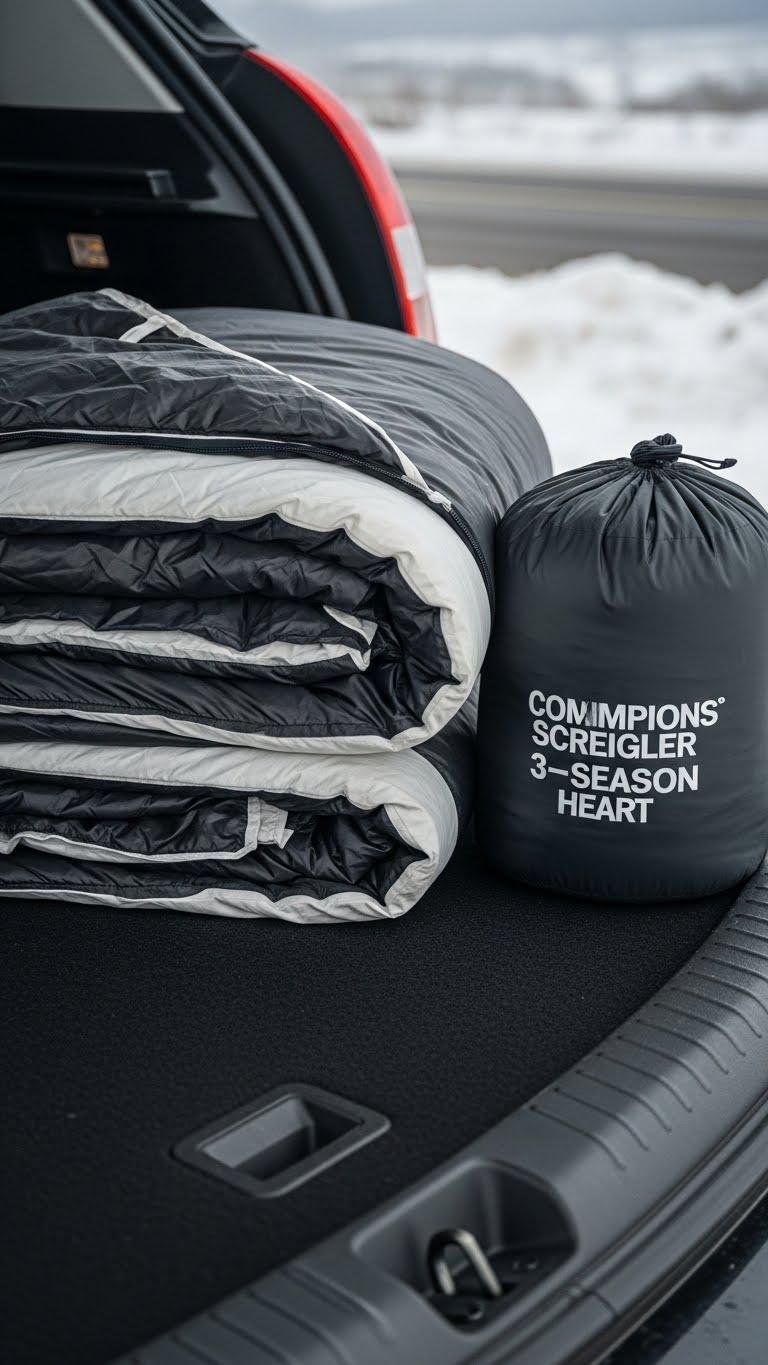
Always include at least one heavy, insulated blanket or a compact three-season sleeping bag in your car emergency kit so you can retain body heat overnight. Pack emergency bedding with good thermal insulation, lightweight enough to stow easily. You’ll want durable materials, a compressible stuff sack, and simple care instructions. These let you preserve warmth, stay mobile, and maintain freedom during roadside delays.
Extra Warm Clothing and Footwear
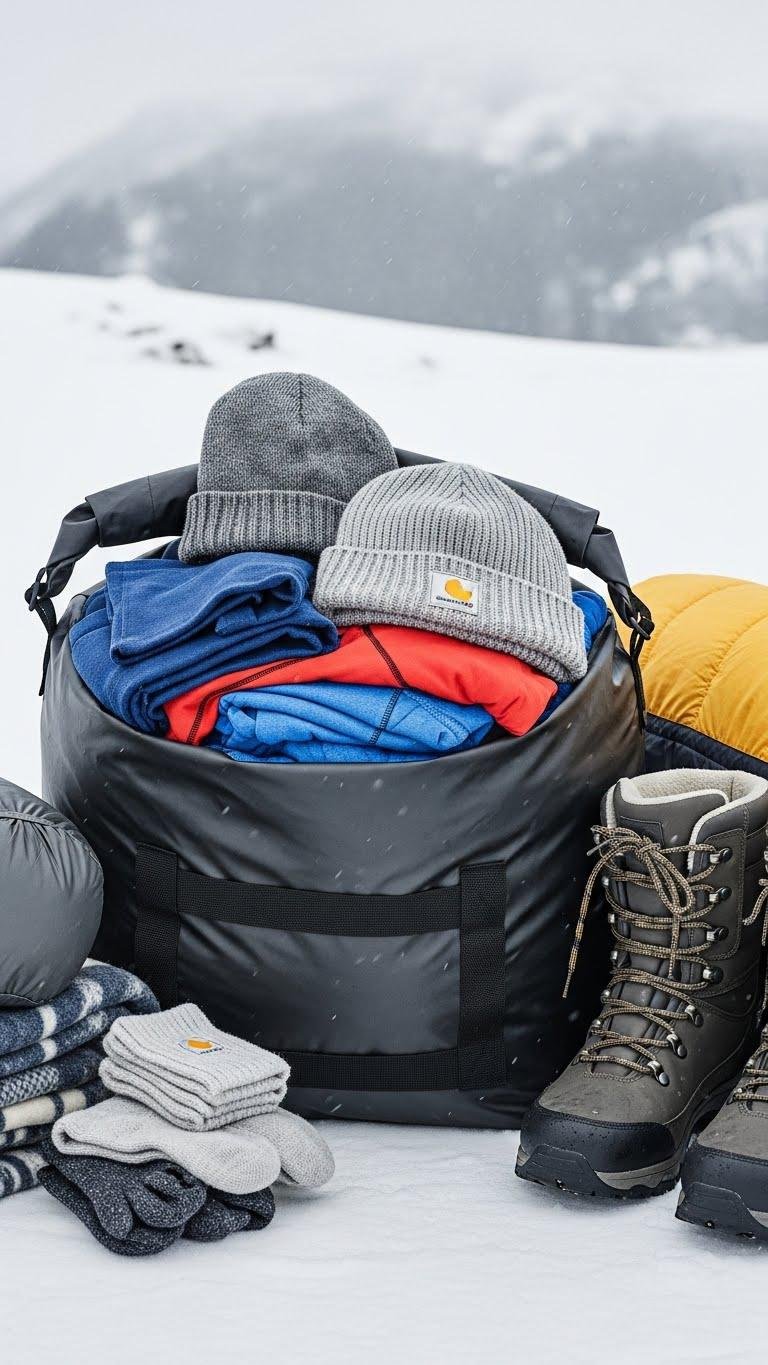
Alongside blankets or a sleeping bag, you should keep a set of extra warm clothing and sturdy footwear to protect against cold, wet conditions and to help you move safely if you need to leave the vehicle.
Pack moisture-wicking thermal layers, a windproof outer shell, warm socks, hat, gloves, and insulated boots. Store items in a waterproof bag so you can grab them and go.
Large Plastic Garbage Bags for Windbreaks

If you find yourself stranded in cold, windy conditions, large plastic garbage bags can double as simple, effective windbreaks to protect you and your passengers from heat loss.
Use them as a windbreak sheltering wall by staking or anchoring against the car, cut armholes for an improvised raincoat, or wrap seats to block drafts.
Pack heavy-duty bags and duct tape for secure setup.
Space Blankets for Thermal Insulation
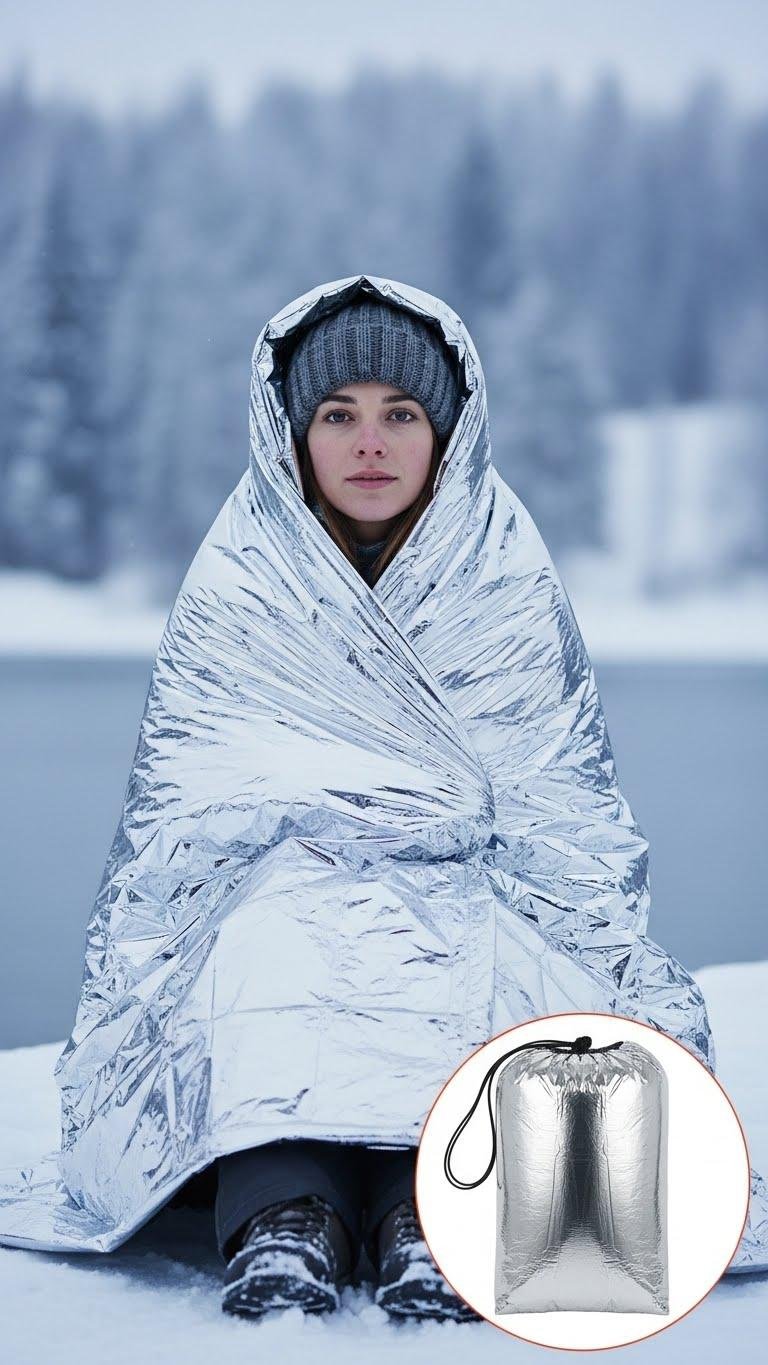
When the temperature drops, a space blanket can make a big difference in retaining body heat by reflecting up to 90% of your radiant warmth back toward you.
You’ll pack compact mylar space blankets for emergency insulation because they’re lightweight, waterproof, and take almost no space.
Use one to wrap around yourself, seat a stranded passenger, or line gear to conserve heat until help arrives.
Bottled Water for Hydration
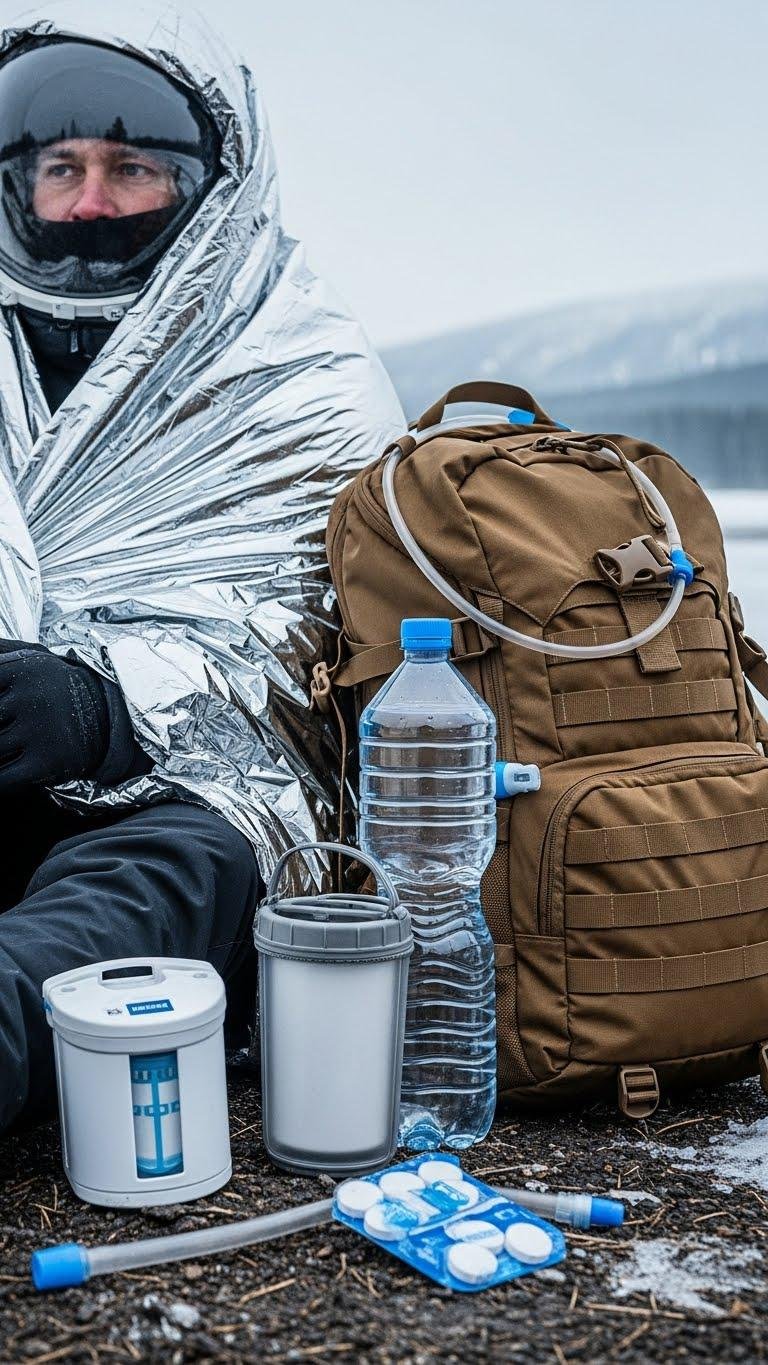
Space blankets will keep you warm, but they won’t replace water — staying hydrated helps your body regulate temperature and mental function, especially in cold stress.
Pack sealed bottled water and a compact hydration storage option so you can distribute supplies. Include a small potable purification method (tablets or filter straw) for extended emergencies. Rotate bottles annually and secure them against freezing.
Non-Perishable High-Energy Snacks
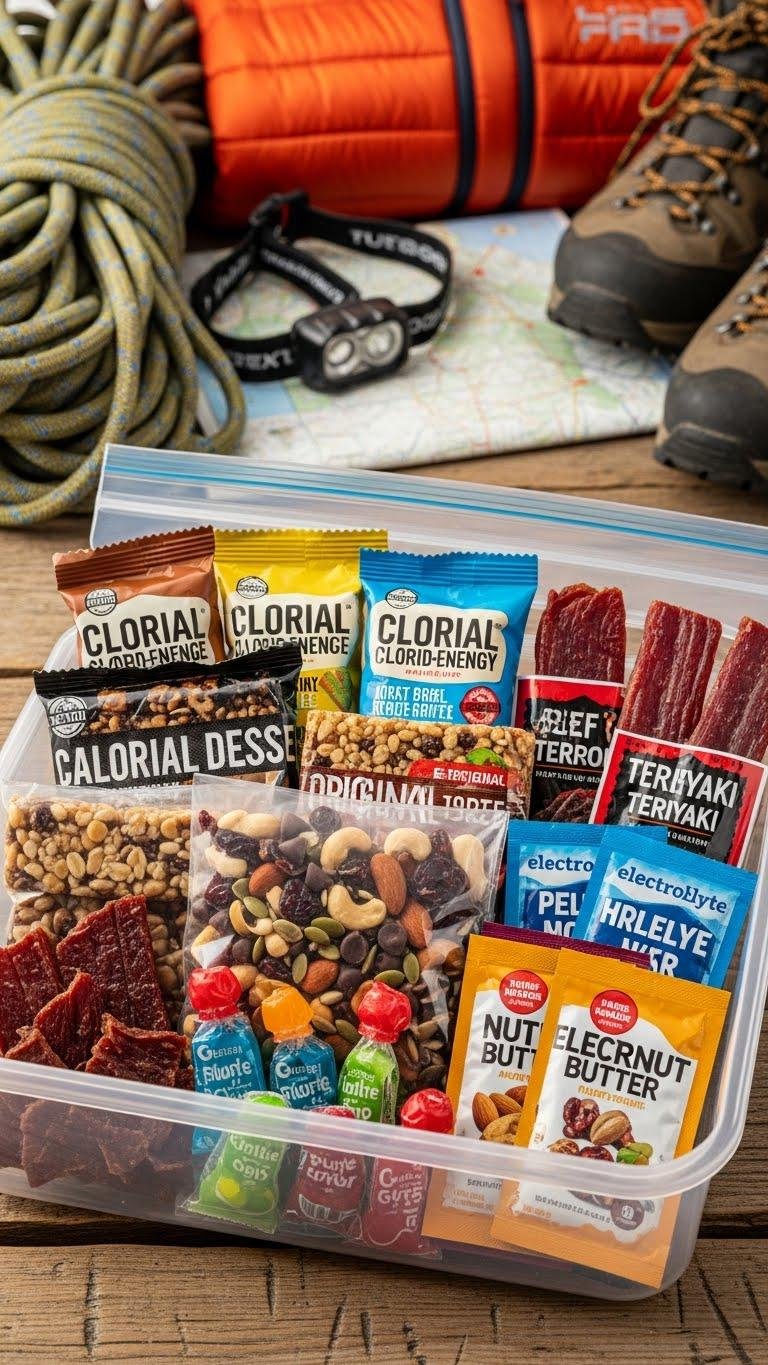
Pack a variety of non-perishable, high-energy snacks so you can maintain calories and focus during long delays or cold-weather exertion.
Bring calorie dense bars, trail mix, jerky, and nut butter packets for compact, lasting fuel.
Include electrolyte gummies to replace salts if you’re sweating or shivering.
Rotate supplies regularly, store items in a resealable container, and choose sturdy packaging for freedom on the road.
First-Aid Kit for Minor Injuries
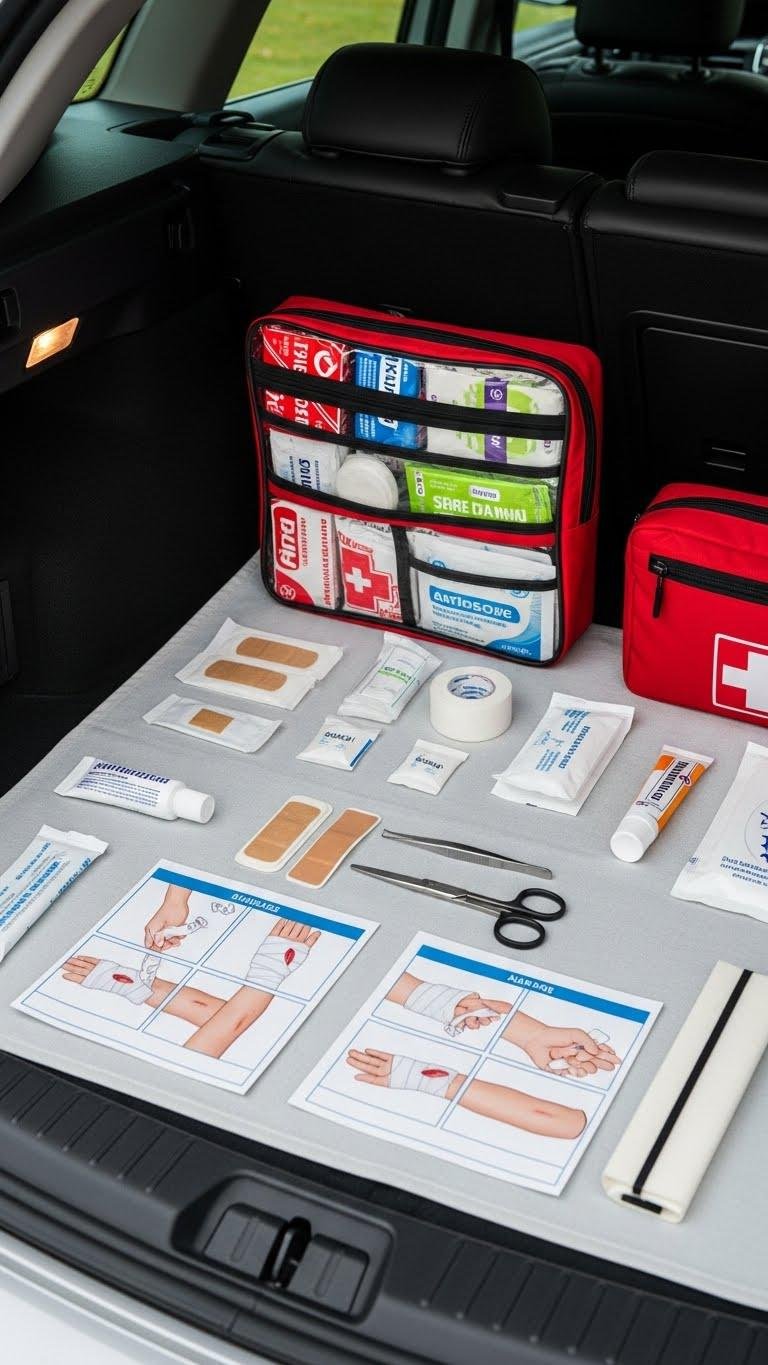
Keep a compact, well-organized first-aid kit in your car so you can treat cuts, scrapes, burns, and minor sprains quickly and with confidence. Include adhesive bandages, sterile gauze, tape, antiseptic wipes, burn gel, tweezers, scissors, and a splint.
Learn basic bandage techniques and infection prevention steps—clean wounds, apply sterile dressings, secure dressings snugly, and replace them when soiled to stay self-reliant.
Cell Phone Charger and Adapter
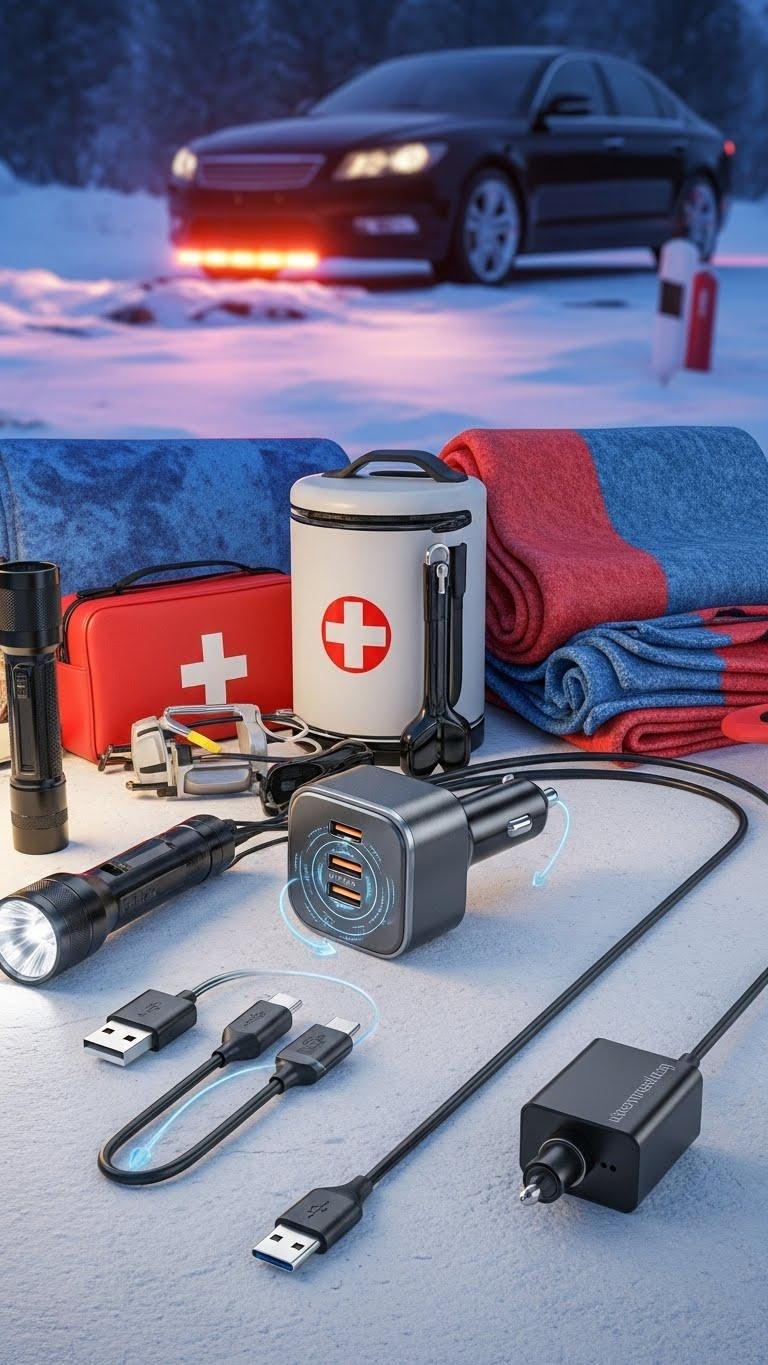
Don’t rely on your phone’s battery to last through a winter roadside emergency—bring a dedicated car charger and an extra adapter so you can charge from any vehicle or portable power source.
Pack an in car charger with fast charging, a USB-C cable, and a small international adapter if you travel across borders.
Keep items accessible and stored with other emergency gear.
Pencil and Paper for Communication

Why bring pencil and paper when your phone usually handles messages? You’ll want a small notebook and pencil for handwritten notes when batteries die or signal’s gone.
Pre-fill message templates for location, help needed, and medical info so you can scribble fast. Paper’s light, reliable, and gives you freedom to communicate clearly without electronics — simple, low-tech redundancy.
Seat Belt Cutter and Window Breaker Tool
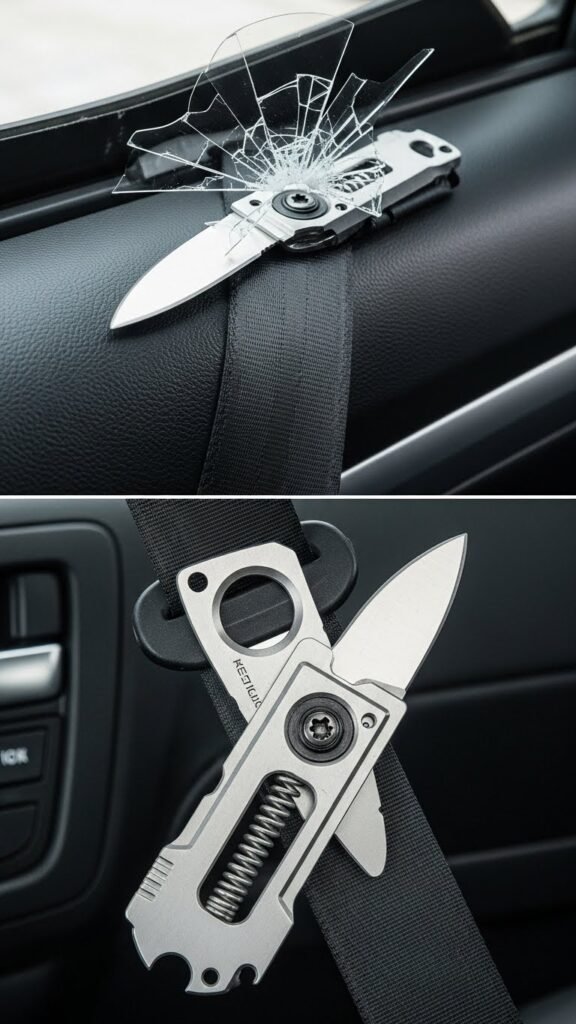
If you ever find yourself trapped by a jammed seat belt or locked inside a vehicle after a crash, a compact seat belt cutter with a recessed blade and an integrated spring-loaded window breaker can save you precious minutes.
You’ll want a tool designed for quick emergency escape, one that cleanly slices belts and reliably shatters tempered glass so you can get out and move toward safety.
Whistle for Attracting Attention
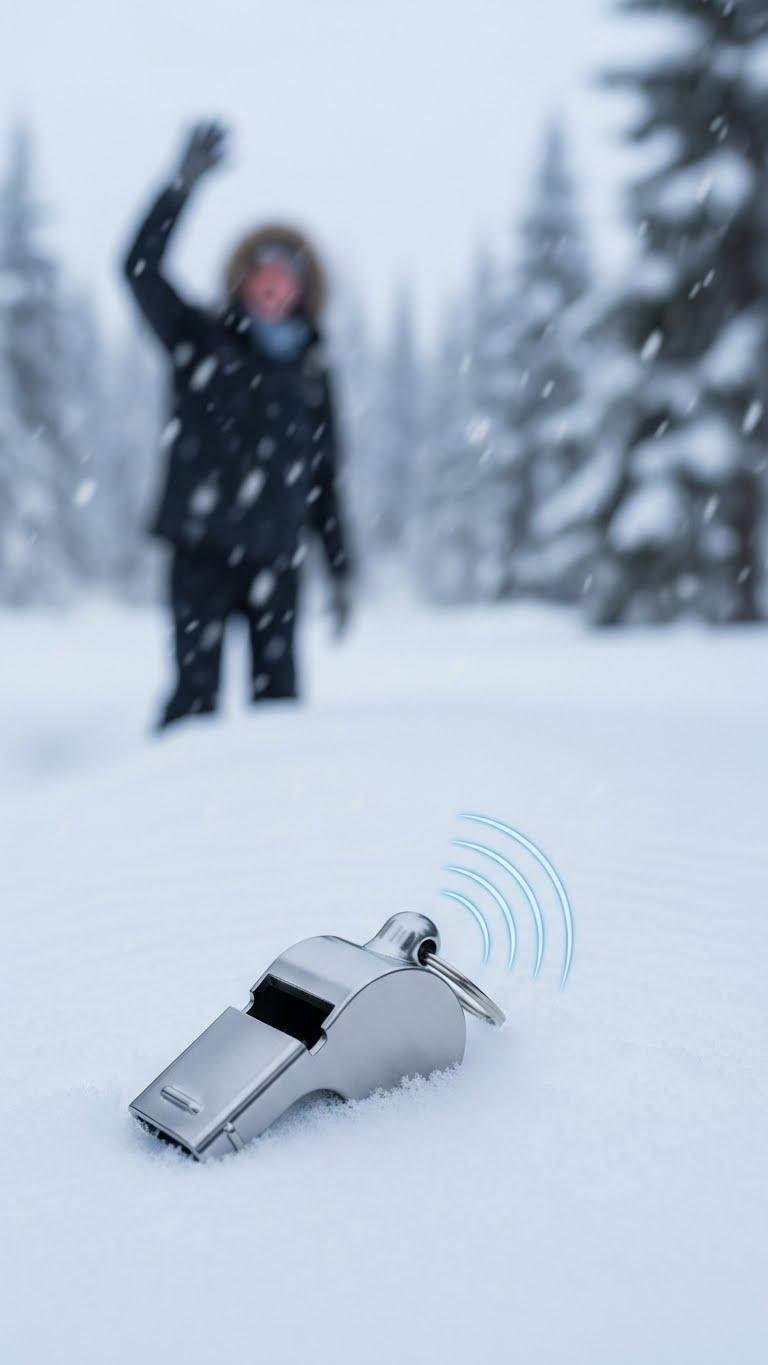
Often overlooked, a loud whistle is one of the simplest, most reliable tools for attracting attention when you’re stranded or injured after a winter crash.
You’ll carry a compact whistle to conserve space, practice a three-blast signal technique, and keep it accessible.
Its clear tone improves rescue communication over distance and in whiteout conditions, letting you call for help without draining power.
Bag of Sand, Kitty Litter, or Salt for Traction
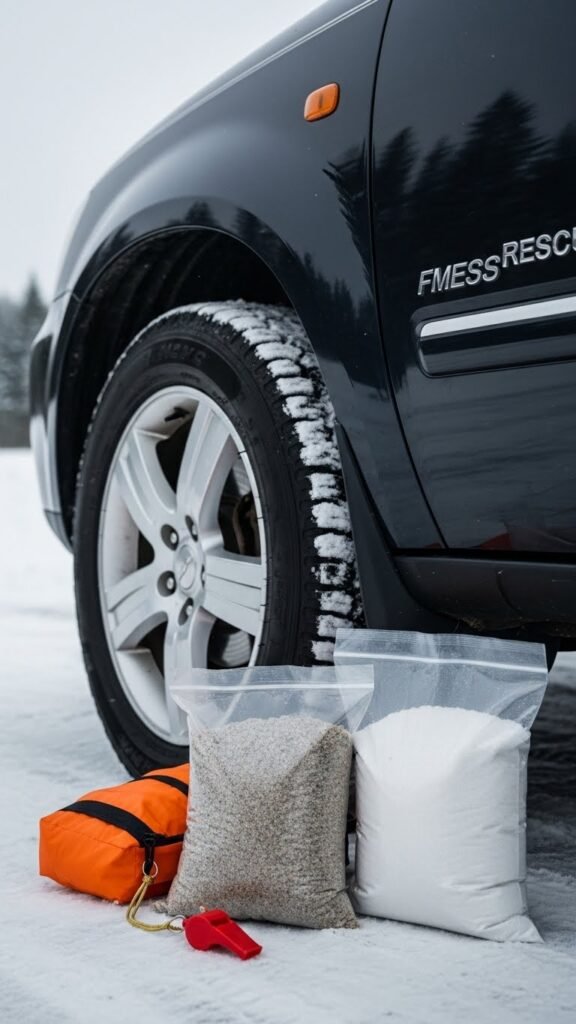
A whistle helps rescuers find you, but you’ll also need a way to free your tires when they lose grip on ice or packed snow.
Keep a bag of sand, kitty litter, or salt to improve traction. Consider melting effectiveness versus environmental impact: sand and litter add grip without runoff, salt melts ice faster but harms vegetation and waterways, so choose based on terrain and values.
Tire Repair Kit, Spare Tire, and Hand Tools
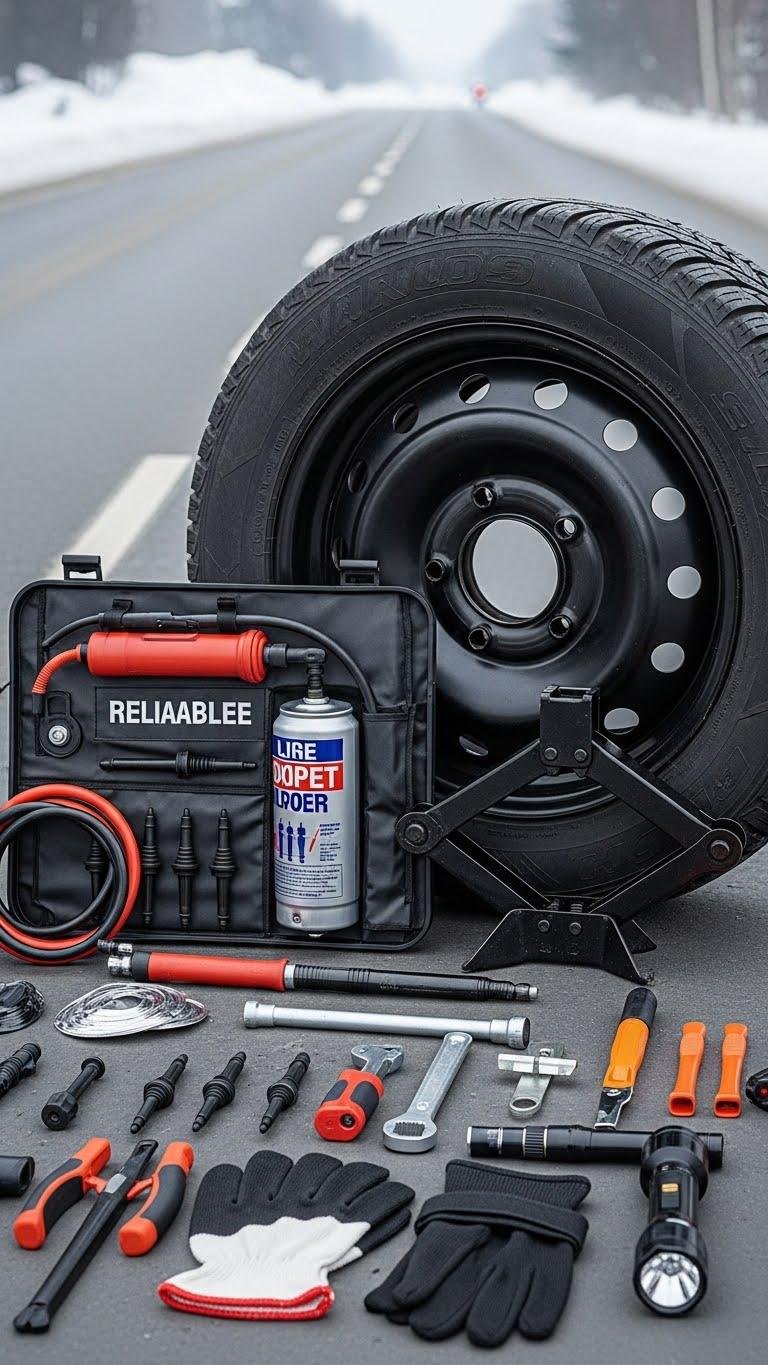
Keep a well-organized tire repair kit, a fully inflated spare, and basic hand tools within easy reach so you can fix a flat or change a tire safely and quickly.
Check tire pressure regularly, carry a reliable inflator, plugs, and a bead seating tool. Include jack, lug wrench, gloves, and flashlight. Practice the swap beforehand so you stay confident and free on winter roads.