
You’ll want a concise kit of 24 DIY snow tire traction socks built from durable polyolefin blends, reinforced elastics, and targeted rigidity to fit front- or rear-drive wheels. This practical guide shows construction, quick-install techniques, and emergency zip-tie chain options so you can fit, test, and remove socks safely while preserving pavement and avoiding legal pitfalls—keep going to get the specific designs, materials, and step-by-step checks.
Polyolefin Fabric Tire Socks for Gentle Ice Grip
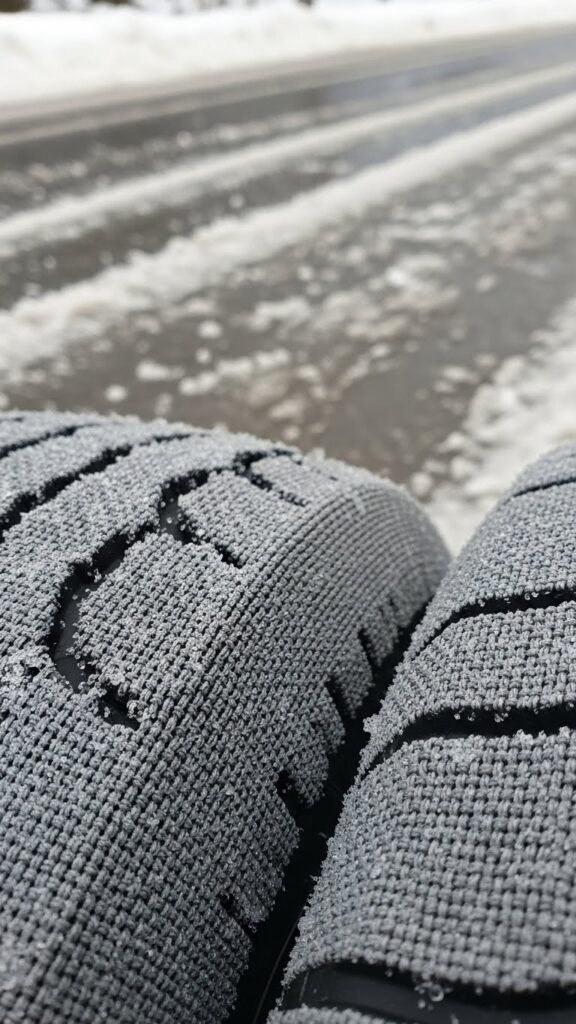
For light winter conditions where you need improved traction without damaging pavement, polyolefin fabric tire socks offer a low-profile, high-friction solution you can fit over your tires quickly.
You’ll rely on a dense polyolefin weave and integrated ice channeling membrane to shed slush, increase contact adhesion, and preserve pavement.
Install deliberately, monitor wear, and remove on clear roads to maintain freedom of mobility.
Elastic-Banded Snow Socks for Easy Fit
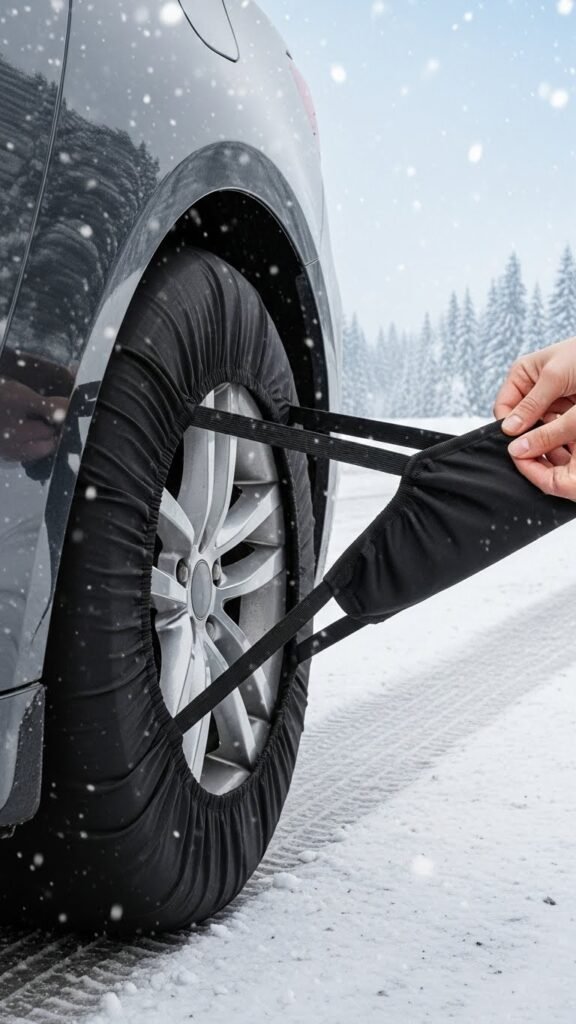
If polyolefin fabric socks prioritize pavement-friendly traction, elastic-banded snow socks prioritize rapid, secure fit and retention under varied driving maneuvers. You’ll install lightweight covers with integrated elastic bands that cinch around bead and tread, delivering uniform tension and minimizing slippage.
The design gives you an easy fit, predictable engagement, and quick removal so you maintain mobility and control in changing winter conditions.
Zip Tie Reinforced Traction Sock Design
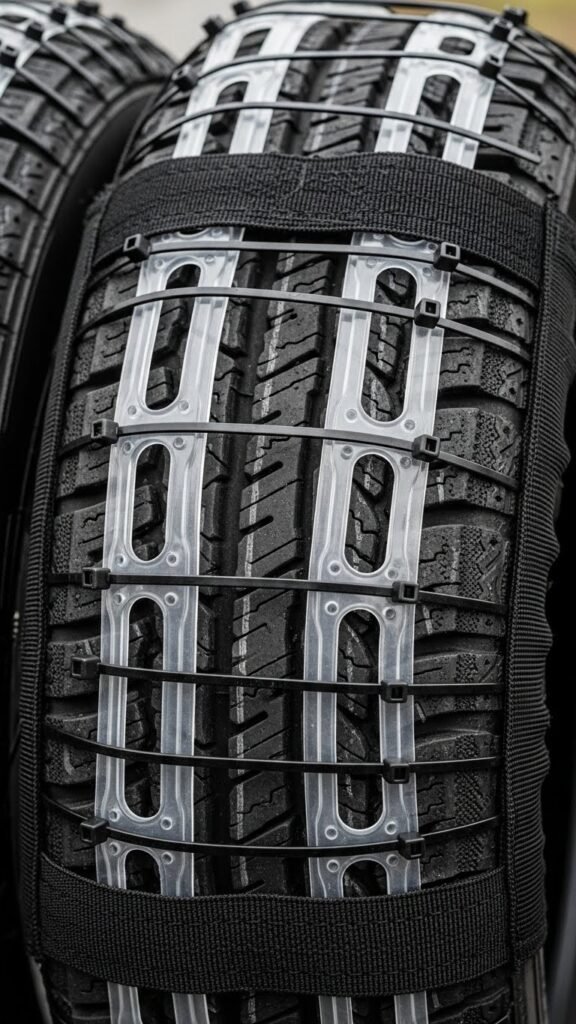
When you reinforce elastic-banded traction socks with strategically routed zip ties, they gain targeted rigidity across the tread and sidewall that prevents bunching and lateral slippage during cornering and braking.
You’ll use zip tie threading through reinforced channels, set a reinforcement pattern aligned with contact patches, trim excess, and tension evenly.
The result is a durable, controllable DIY traction aid that preserves mobility and confidence.
Lightweight Textile Socks for Urban Winter Driving
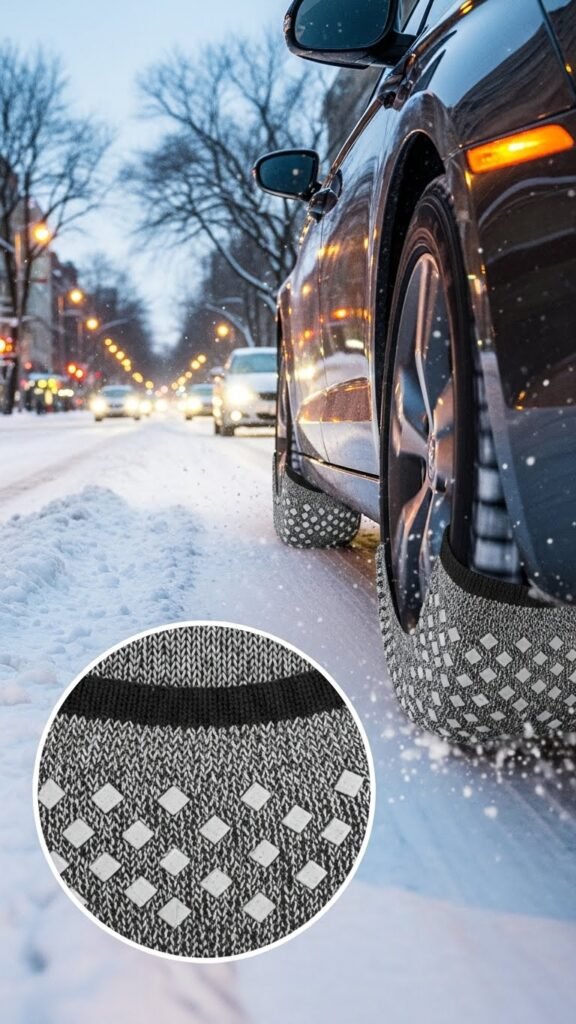
Moving from zip-tie–reinforced designs, lightweight textile socks offer a low-profile alternative tailored to urban winter driving where speed, maneuverability, and quick installation matter.
You’ll fit abrasion-resistant woven fibers with embedded grip patterns that optimize urban traction while minimizing road noise and pedestrian impact.
You’ll prioritize compact storage, rapid deployment, and predictable lateral response for confident, free-moving winter commutes.
Quick-Stretch Socks for Front-Wheel Drive Vehicles

Because front-wheel drive cars rely on the driven axle for both propulsion and steering, you’ll want quick-stretch socks engineered to deploy under tension and seat firmly over the front tires without shifting, slipping, or bunching.
Choose a tire sock with reinforced elastic, textured traction fibers and minimal stretch memory so you can install quickly, preserve front wheel performance, and maintain control in variable snow.
All-Wheel Drive Full-Coverage Sock Method
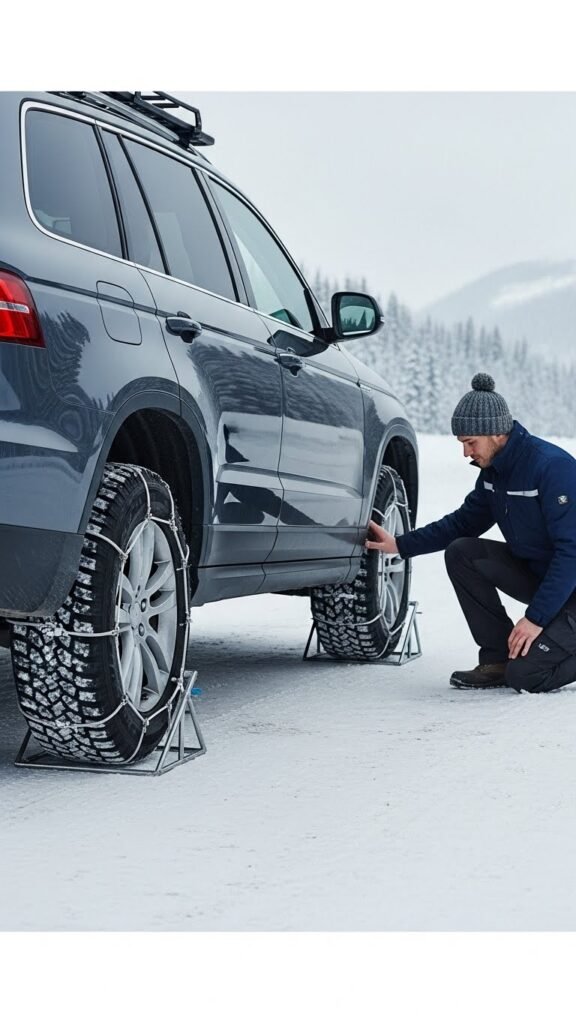
While you’ll still chock the wheels and work on a level surface, an all-wheel drive full-coverage sock method requires fitting traction socks to all four wheels and tensioning them uniformly so the drivetrain shares grip evenly; this reduces the risk of unwanted yaw or drivetrain stress. You’ll make certain symmetric traction distribution, verify clearances, test low-speed handling, then remove and inspect socks before seasonal storage.
Low-Speed Snow Sock Configuration (25 Mph Limit)
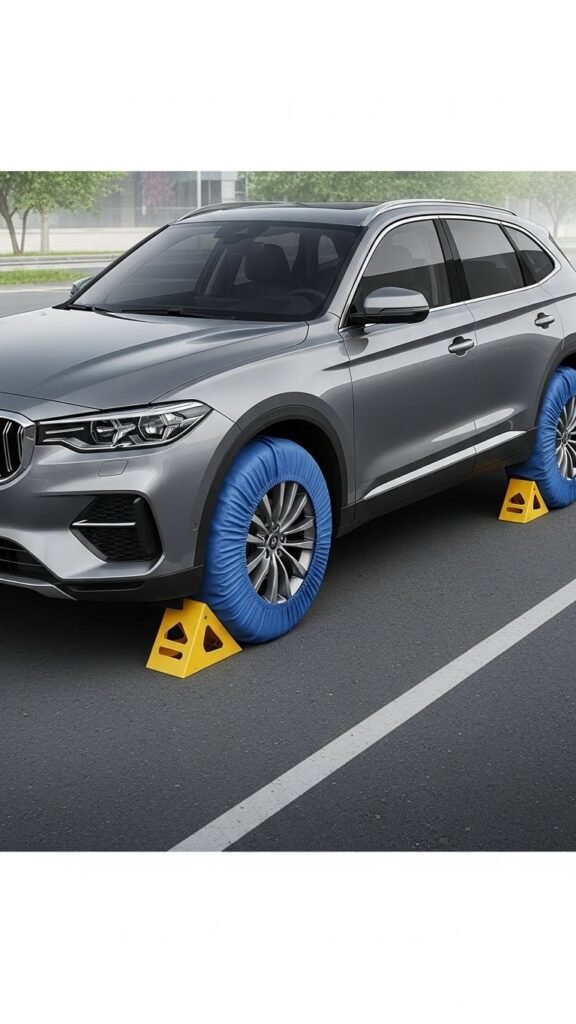
Glove-Assisted Installation Technique
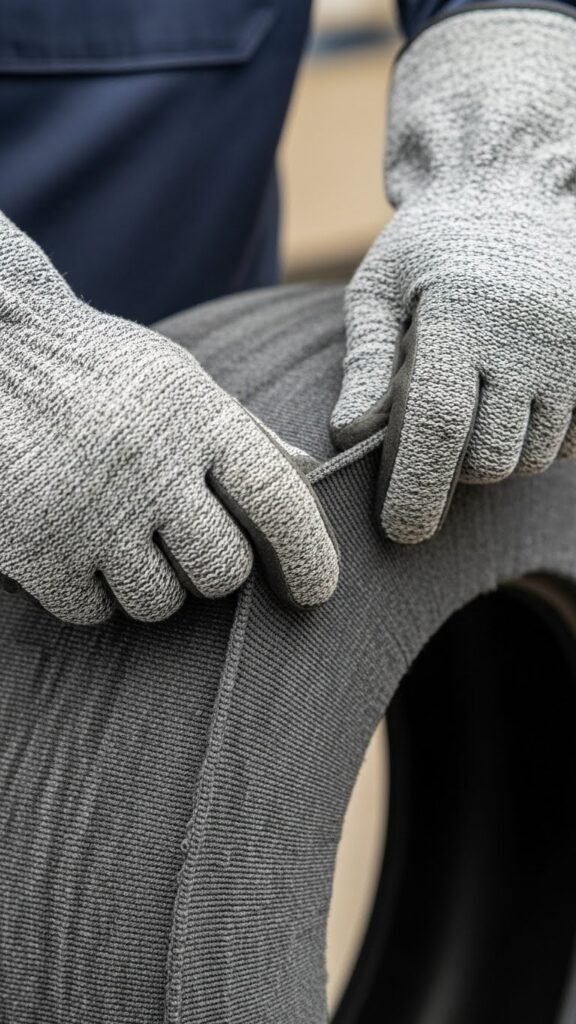
Gripping the edges with insulated, textured gloves, you’ll position the sock over the tire bead and stretch it evenly around the tread, using fingertip control to avoid trapping fabric or creating folds that reduce traction.
Use the glove technique to maintain consistent tension, rely on tactile feedback to detect misalignments, and adjust quickly so the sock seats true and preserves mobility and control.
Half-Roll Positioning and Fit Check Routine
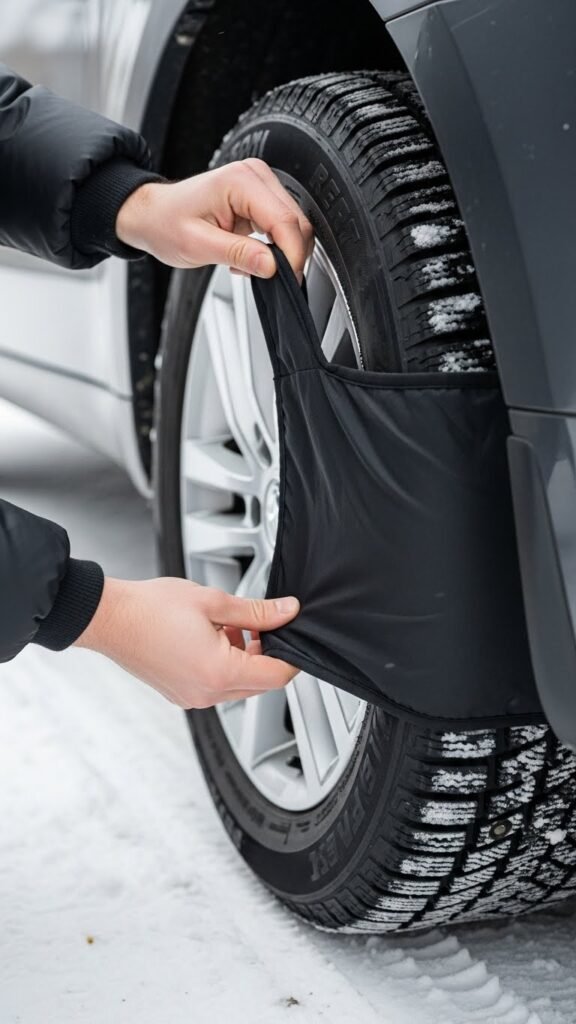
Because a correctly seated sock starts at the halfway point of the tread, position the lower edge in a neat half-roll around the tire’s midpoint and use your palms to hold that roll steady while you check alignment.
Rotate the wheel slowly, perform easy alignment by centering the sock over the tread, then complete a fit verification: tension, coverage, and smooth edges before driving.
DIY Emergency Zip Tie Chain for Icy Patches

If you find yourself stuck on an icy stretch with no chains, a DIY zip-tie chain gives you a fast, effective temporary traction solution you can assemble with minimal tools and materials.
You thread heavy-duty zip tie segments across tread, secure ends with a heel loop knot, trim excess, and test snugness.
In an emergency you’ll appreciate the quick release option for rapid removal.
Storage and Drying Procedure After Use
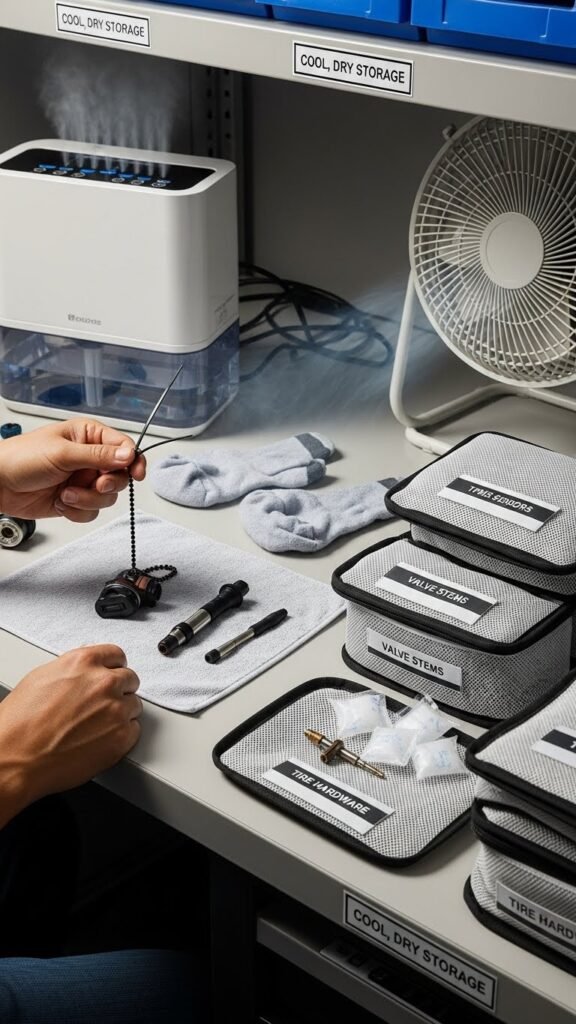
After removing the zip-tie chain from the tire, you’ll want to inspect and dry every component before storage to prevent corrosion, material fatigue, or mold.
Lay socks flat, unzip any seals, and use forced air or dehumidified ventilation strategy to remove moisture.
Store in breathable containers with silica packs for humidity control.
Label and keep in a cool, dry, accessible location for rapid redeployment.
Quiet-Drive Sock Setup to Reduce Noise and Vibration
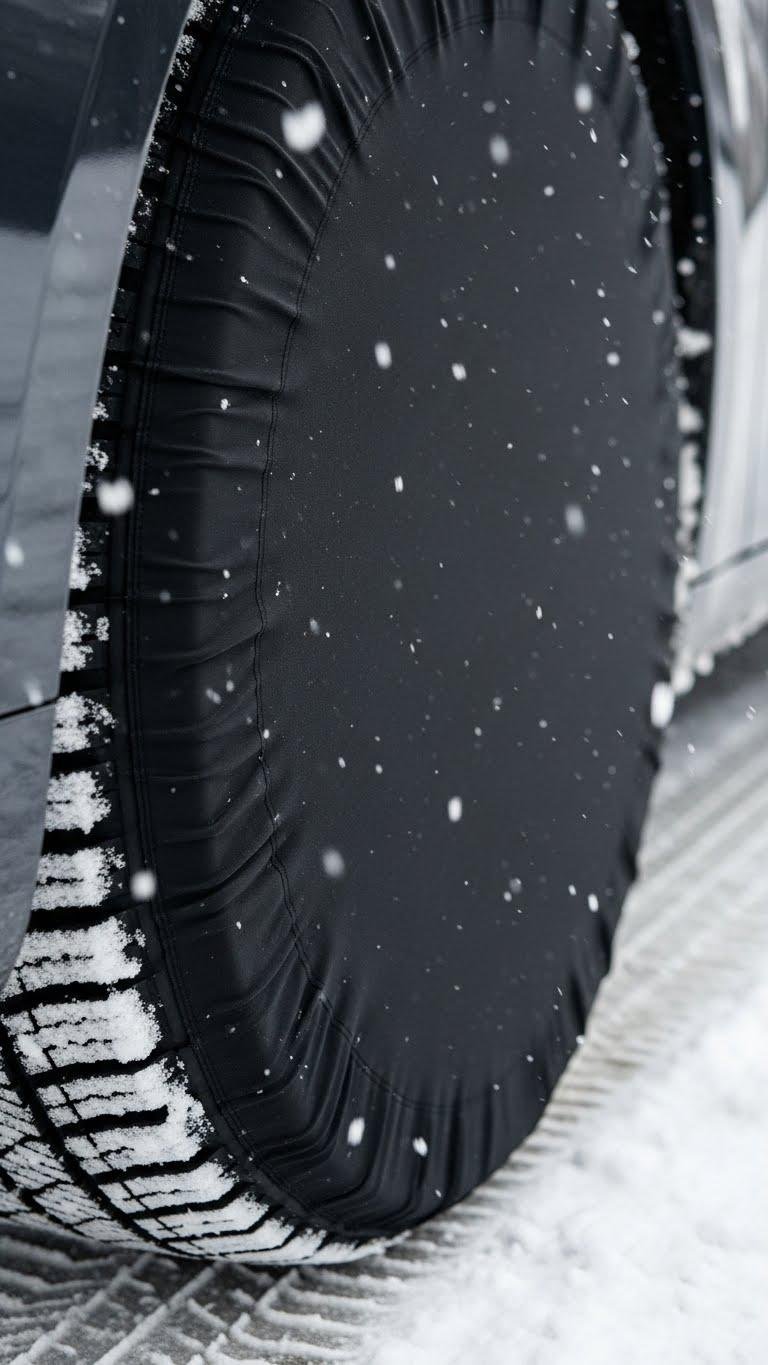
Dial in your sock placement and tension so the fabric runs true across the tread and avoids wrinkles or loose areas that can slap the wheel well; improper fit amplifies scraping and harmonic vibrations.
You’ll align seams with grooves, preload elastic evenly, and trim edge excess. That optimized fit delivers measurable noise reduction and vibration damping, preserving ride comfort while keeping you mobile and self-reliant on winter roads.
Practice Installation Drill Before Winter Trips
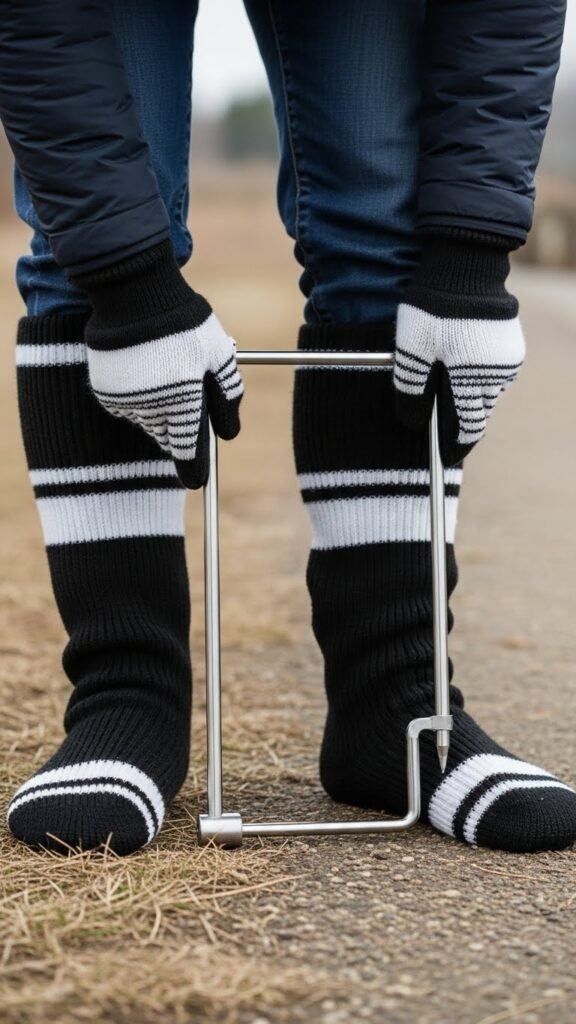
Regularly rehearse the full installation drill before heading into winter conditions so you can fit the socks quickly, safely, and without surprises.
You should run timed practice runs on dry ground to refine installation timing, sequence, and muscle memory.
Track minutes per wheel, refine tool placement, and repeat until you can deploy or remove socks confidently under pressure while preserving mobility and autonomy.
Compatibility Check With Vehicle Manufacturer Guidelines
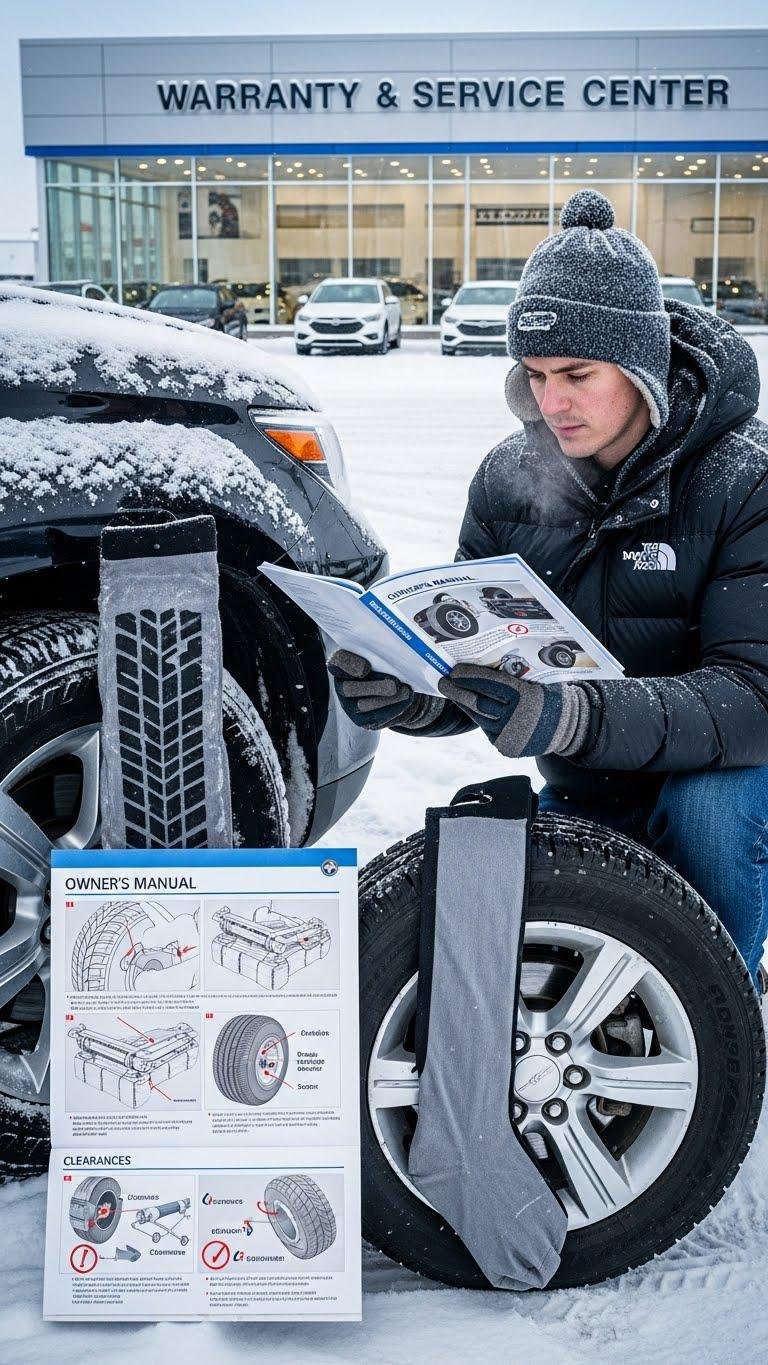
After you’ve timed and practiced fittings on dry ground, confirm that your vehicle manufacturer allows temporary traction devices like snow socks and note any limits they set.
You should review owner manual manufacturer recommendations, check axle, brake, and sensor clearance, and record installation steps.
Assess warranty implications before use; if unclear, get written approval from dealer to preserve your freedom to travel confidently.
Legal Compliance and Local Regulations for Traction Devices
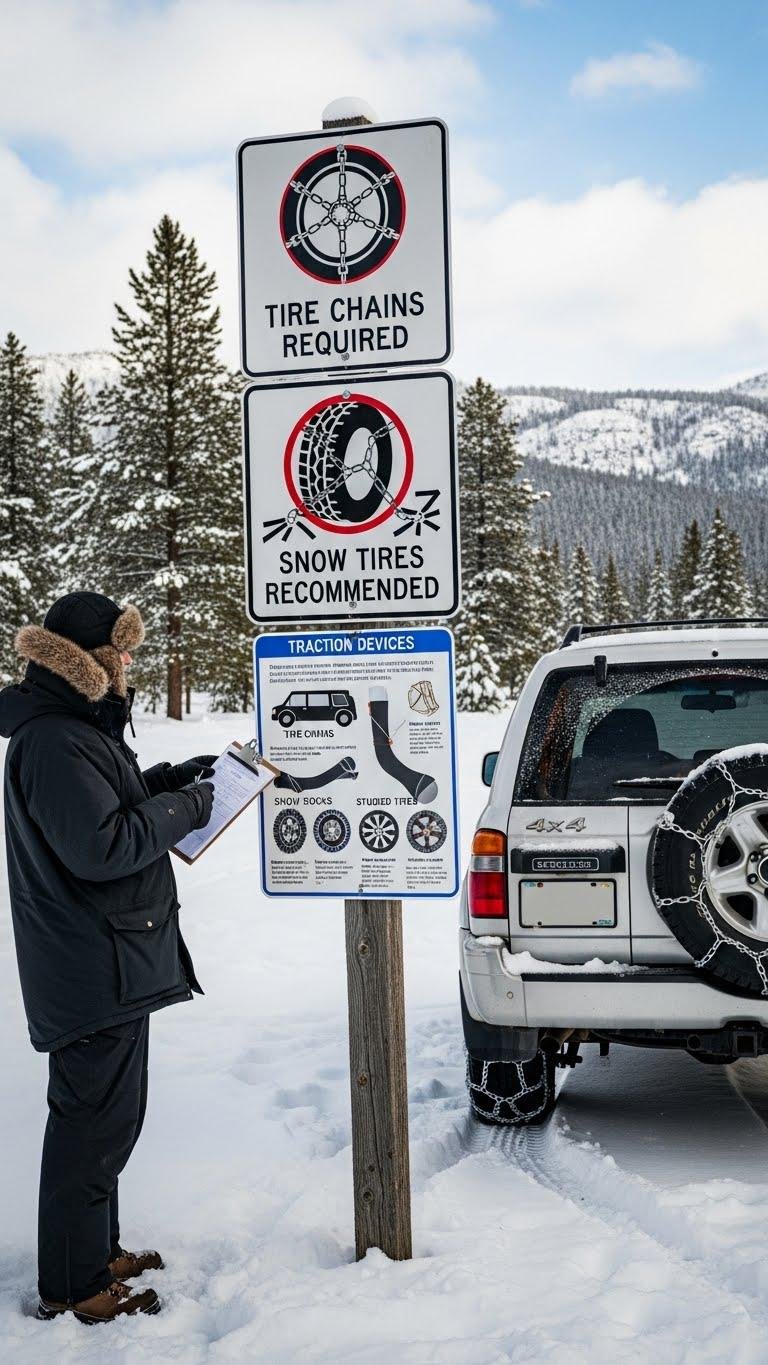
Because laws and road rules change by jurisdiction, you should verify local legal requirements for traction devices before use and carry documentation proving compliance.
Check municipal ordinances for permitted materials, deployment rules, and seasonal restrictions.
Note Insurance implications: noncompliant use can void coverage or affect claims. Keep receipts, manufacturer specs, and any permits accessible to assert compliance during stops or accidents.
Cost-Effective Sock Kits With Storage Bag Tips
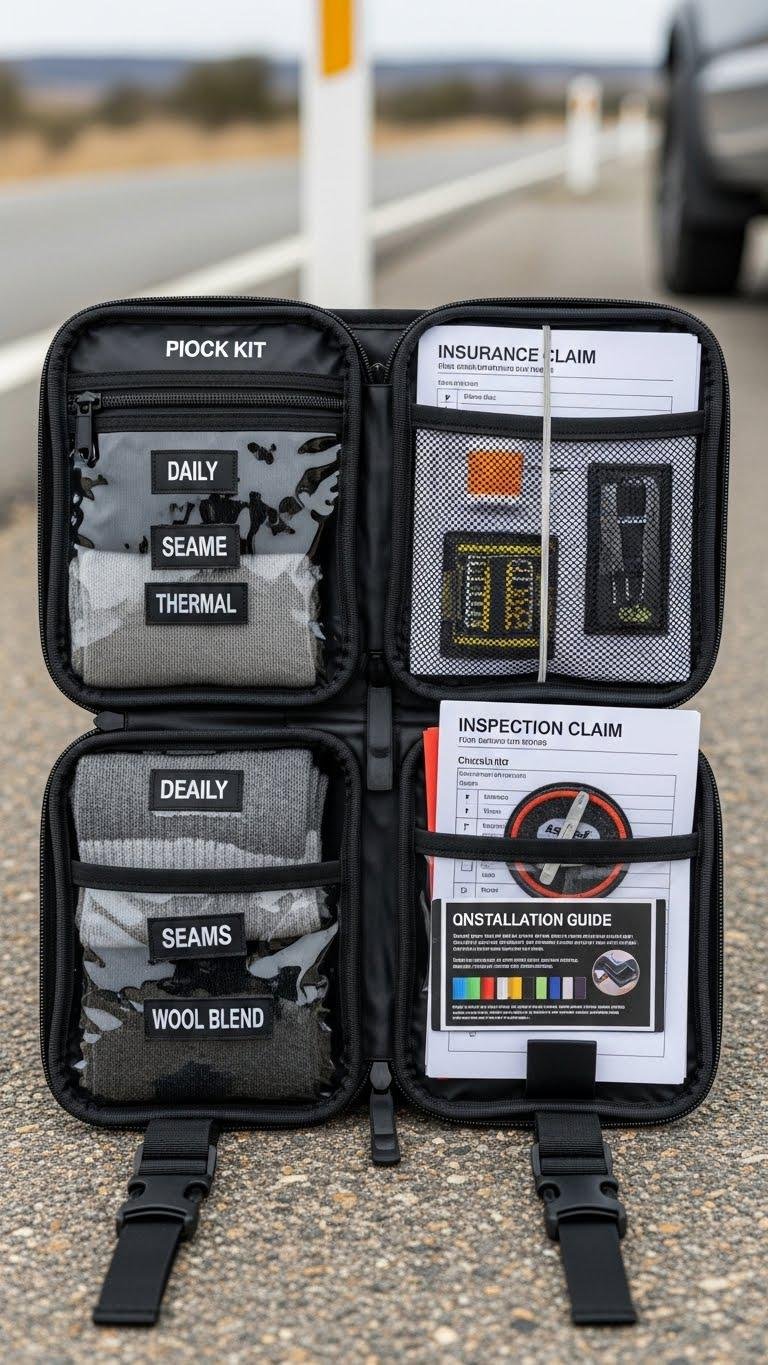
Knowing the rules and having paperwork on hand helps you choose and carry a compliant sock kit that won’t create problems during roadside checks or insurance claims. Select budget bundles with durable fabric, reinforced seams, and clear sizing.
Use a compact storage bag with labeled compartments, waterproof lining, and quick-access straps. Pack inspection copies, basic repair tools, and a concise installation guide for efficient deployment.
Long-Term Care and Fabric Preservation Techniques
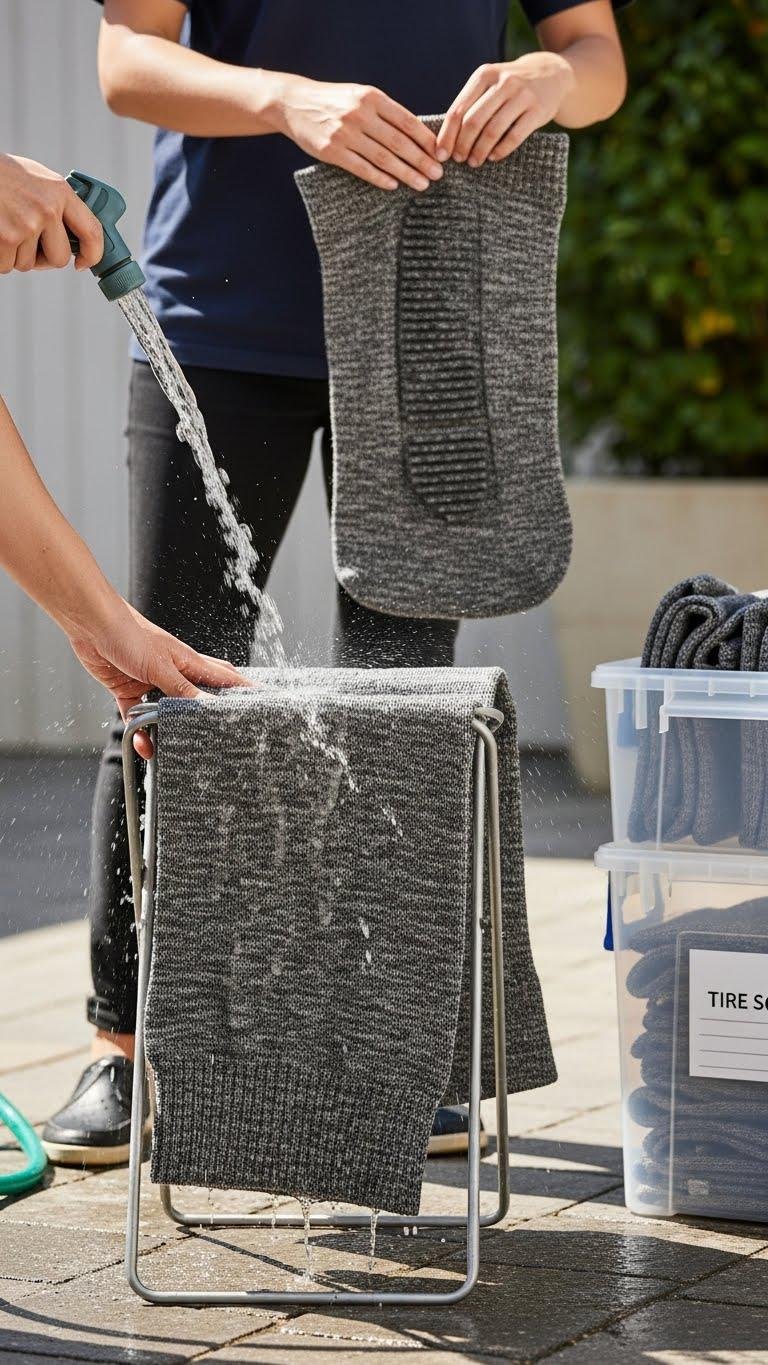
If you want your tire socks to remain effective season after season, adopt a routine that focuses on cleaning, inspection, and proper storage: rinse off road salts and grit after every use, let the fabric air-dry completely out of direct sunlight, and inspect seams and the wear-sensitive contact areas for thinning or fraying before each reinstall.
Then apply targeted fabric conditioning, reinforce vulnerable zones with stitch reinforcement, and store in a breathable, labeled container.