
You’ll love how scalloped edges soften any blanket and give your space instant cottage warmth. Picture layered shell stitches, soft merino or washable acrylic, and neat picot trims in muted pastels or rich wool tones. I’ll share practical tips on yarn choices, easy shaping, and quick no-sew options so you can pick a project that fits your time and skill — and one charming pattern might just become your next favorite.
Classic Crochet Shell-Edge Acrylic Throw
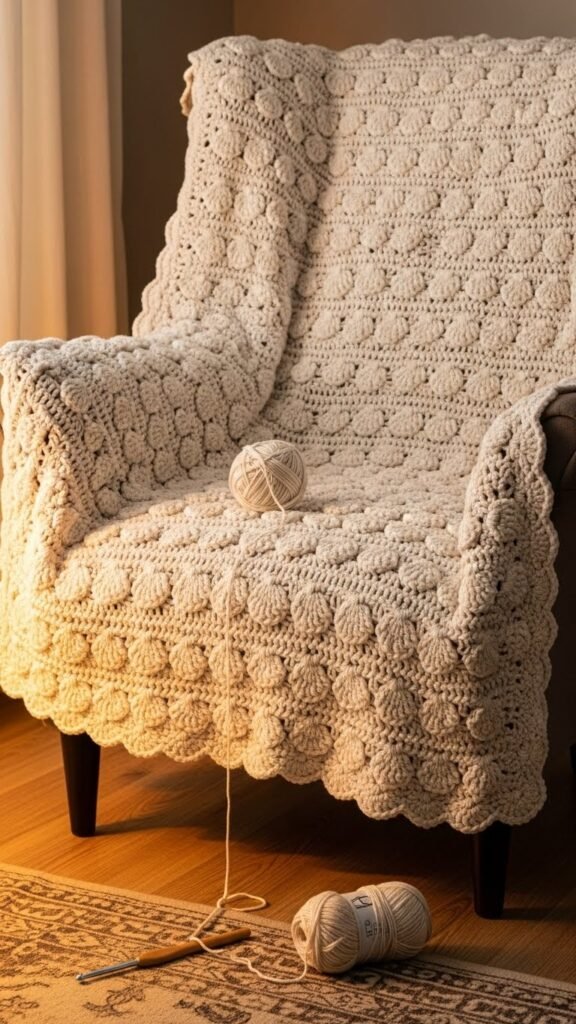
Pick up your hook and imagine an oversized throw in soft acrylic, its rows of shell stitches forming a scalloped border that catches the lamplight; this Classic Crochet Shell-Edge Acrylic Throw is warm, durable, and beginner-friendly, so you’ll finish a cozy blanket without fuss.
You’ll learn simple acrylic care, adjust stitch tension for even shells, and savor portable, freeing progress evening by evening.
Wool-Blend Chunky Scallop Blanket
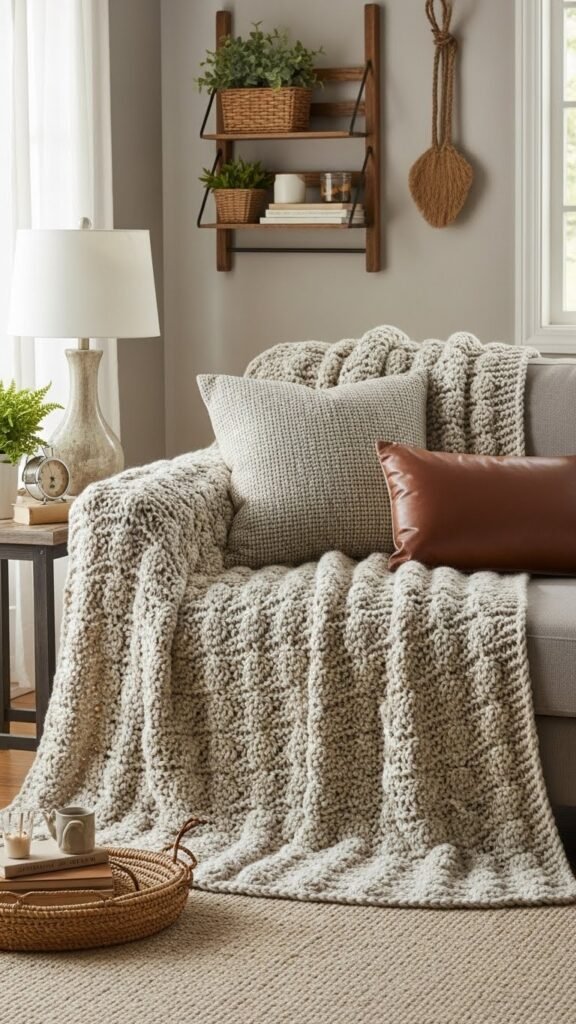
If you loved the easy-going durability of an acrylic shell-edge throw, try the Wool-Blend Chunky Scallop Blanket for a warmer, more tactile update.
You’ll relish heft and drape as you stitch bold scallops in natural hues. Use simple yarnblending techniques, block gently, and follow woolcare tips to preserve loft. Let this cozy, unruly blanket embody your free, unfussy home style.
Pastel Layered Fan Scarf Blanket
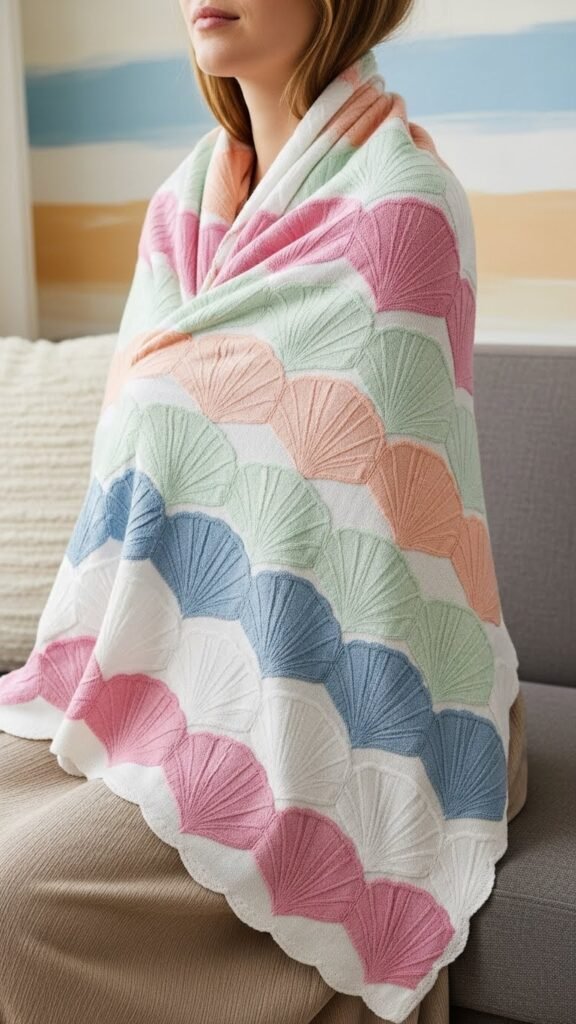
When you wrap the Pastel Layered Fan Scarf Blanket around your shoulders, you’ll notice how the soft fan motifs stack like petals, creating a lightweight warmth that’s perfect for cool mornings or tucked-on-the-couch evenings.
You’ll love pastel palettes and airy drape; the layered textures add cozy depth. Knit gently, block flats, and stitch a neat scallop edge for a free-spirited, polished finish.
No-Sew Fleece Scalloped Throw
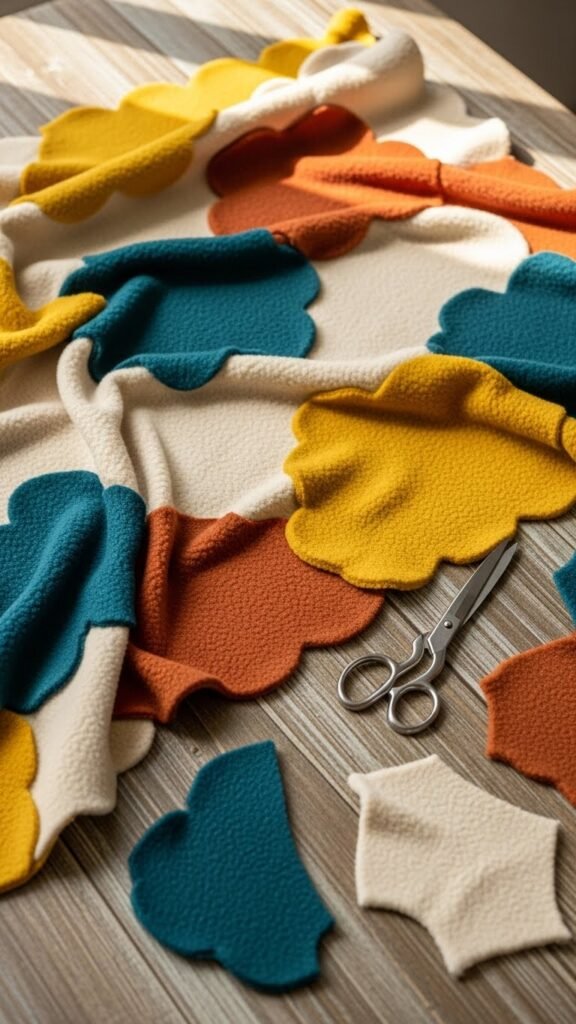
Often you’ll find that the simplest projects make the coziest results: the no-sew fleece scalloped throw gives you a plush, washable blanket with a finished scallop edge—no needles required.
You’ll cut repeating scallops, knot fringe for a clean edge, and enjoy a minimalist, cottage-ready accessory. This technique is fast, forgiving, and freeing—pick bold or soft fleece, and let your hands shape comfort.
Vintage Cottage Cotton Scallop Border
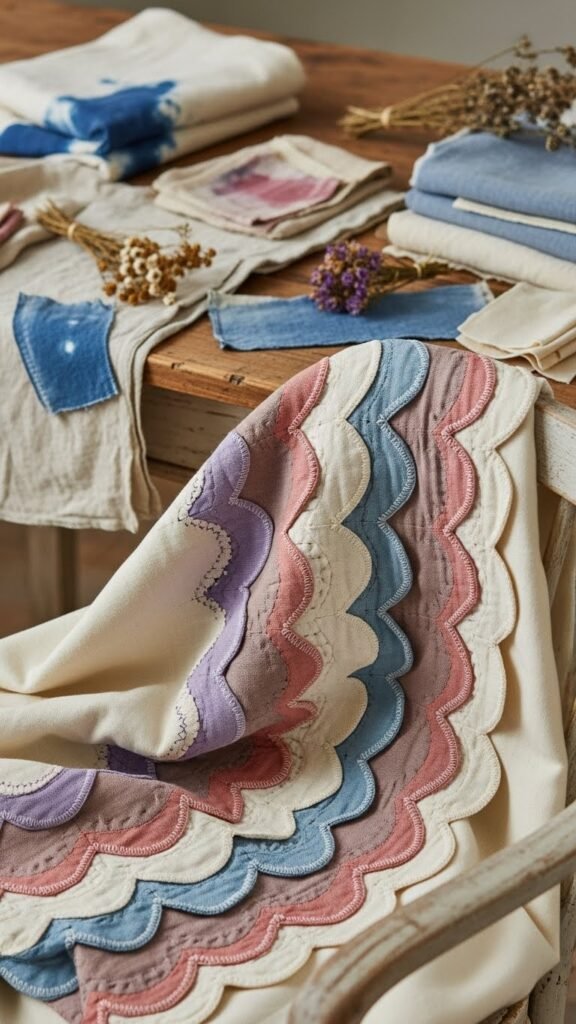
Bring a soft, lived-in charm to your blanket by adding a vintage cottage cotton scallop border that looks hand-stitched even when it’s simple to make.
You’ll rescue scraps, echo antique linens, and use cottage dyeing to soften hues. Pin scallops evenly, stitch with running or blanket stitch, press gently, and let irregularities read as freedom — a cozy, intentional finish.
Ombre Treble Shell Winter Blanket
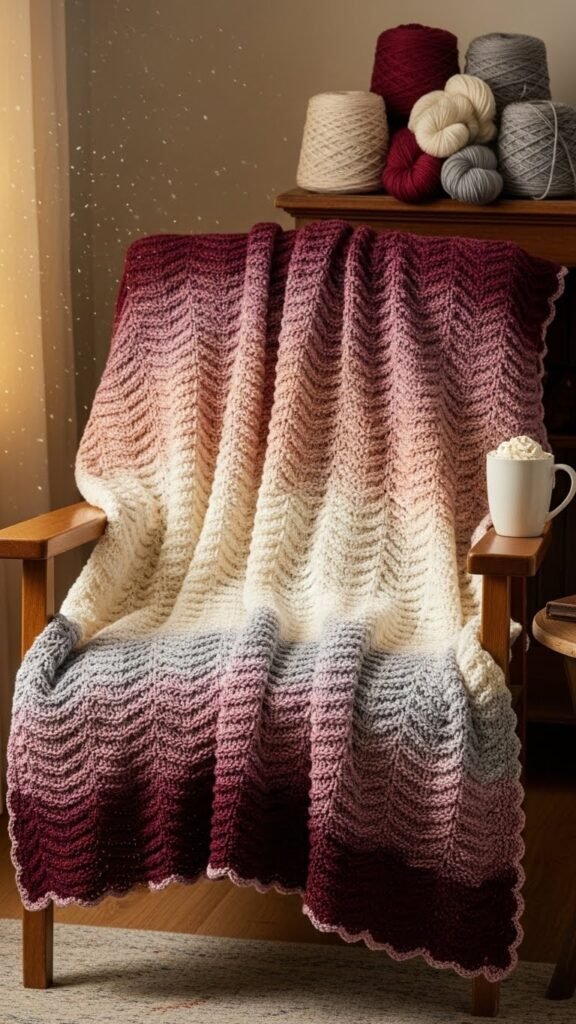
After you’ve stitched that cottage scallop border, lean into a slightly bolder rhythm with an ombre treble shell winter blanket that layers color and texture without fuss.
You’ll work gradient stitch rows, easing shades from deep berry to soft cream, spacing shells for cozy drape. Watch for yarn pooling; adjust tension or change skeins to keep color shifts natural and free.
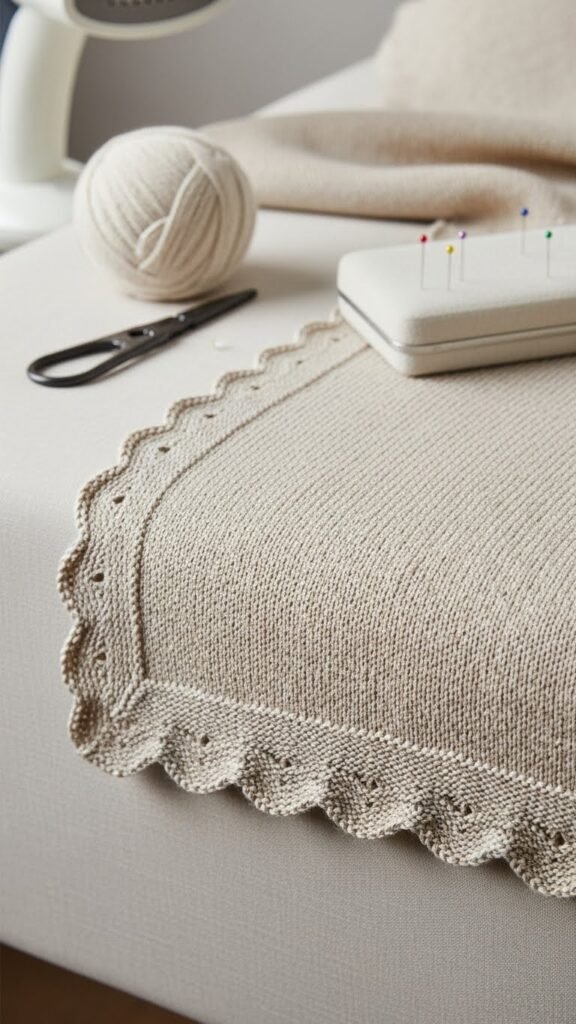
Tiny Scallop Edging on Knit Throw
Rustic Natural Fiber Scalloped Lapghan
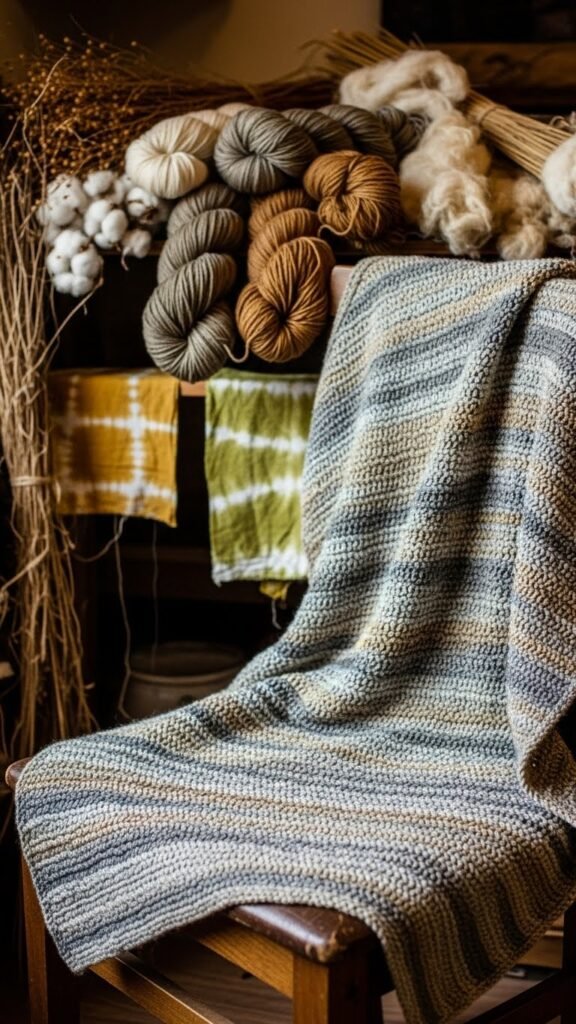
A rustic natural-fiber scalloped lapghan wraps you in earthy texture and gentle curves, and you’ll love how the simple stitchwork lets the material’s character shine; choose wool, alpaca, or a linen-wool blend for warmth and a soft halo, then work the scallop border in a contrasting neutral to highlight each curve.
Embrace hand spun yarn, plant fibers, eco dyeing and rustic dyes for a freeing, lived-in look.
Two-Row Ruffle Scallop Edge Blanket
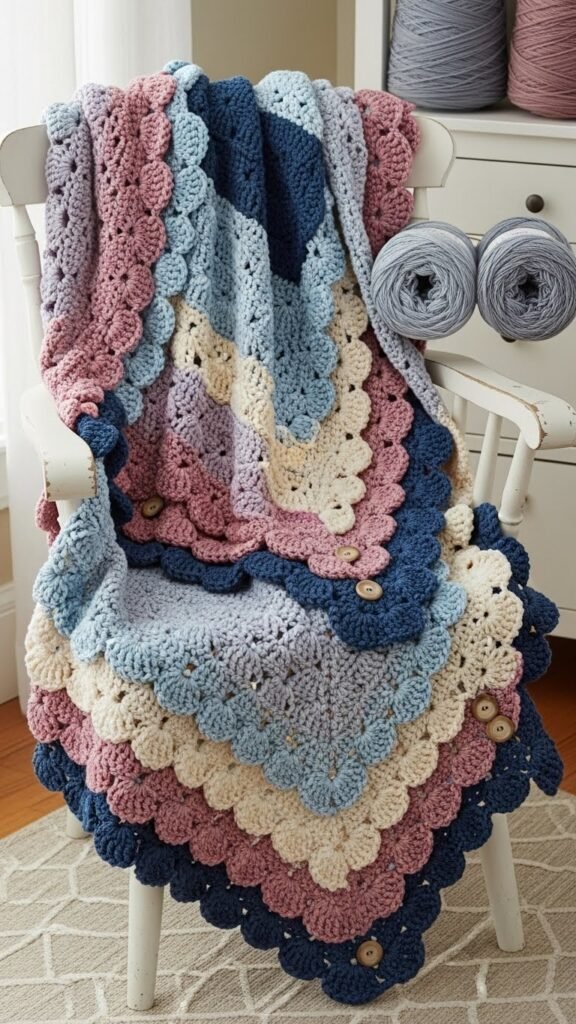
Start by picking a soft, slightly springy yarn—think worsted wool, a wool-blend, or a bulky cotton—for the two-row ruffle scallop so the edges keep their shape without being stiff.
You’ll crochet two shallow rows of shells, easing tension for a gentle ruffle. Try yarn substitutions for color or texture, then finish with button accents for a playful, free-spirited cottage look.
Variegated Yarn Large Shell Blanket
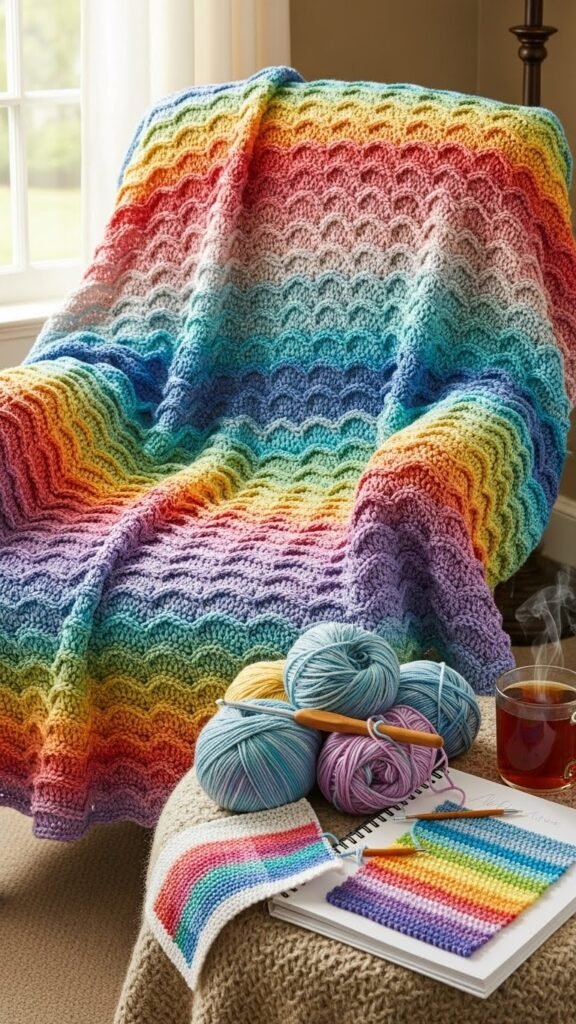
Choose variegated yarn that lets large shell stitches sing—its color changes will create sweeping pools and gentle striping across the blanket without extra effort.
You’ll enjoy experimenting with color pooling and texture placement as you crochet; alternate shell counts to guide bands, and block gently to reveal scallop definition.
Keep stitches loose for drape, and embrace unexpected color runs as part of the design.
One-Row Integrated Scallop Border Afghan
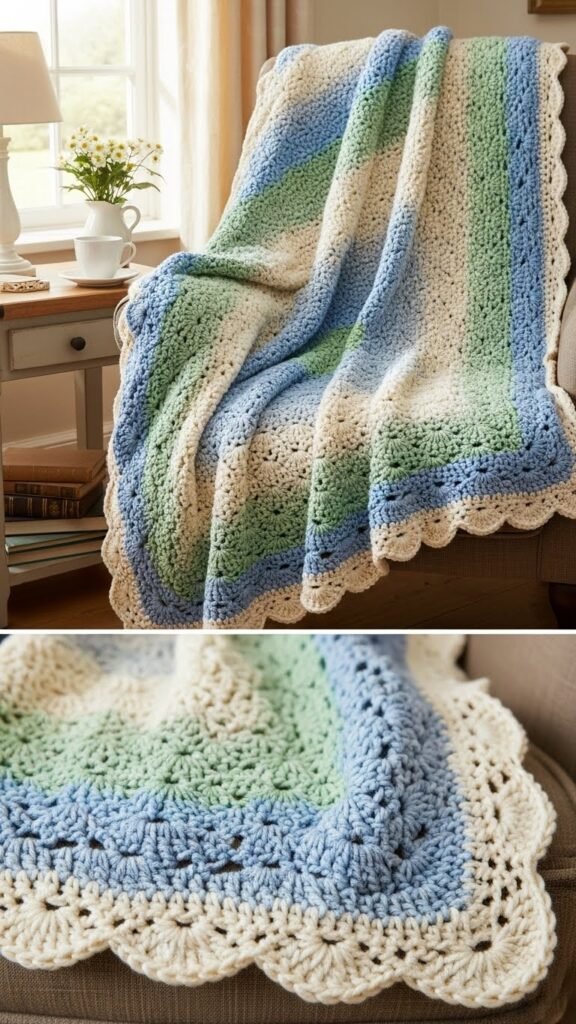
Now that your variegated large shell blanket has its color pools and scallops settled, finish the edges with a one-row integrated scallop border to echo those curves without adding bulk.
You’ll check scallop gauge, adjust stitch counts, and mark edge placement so shells sit evenly.
Work slowly, visualizing each rounded shell; weave in ends discreetly for a free, cottage-ready finish.
Cornered Shells for Rectangular Throws
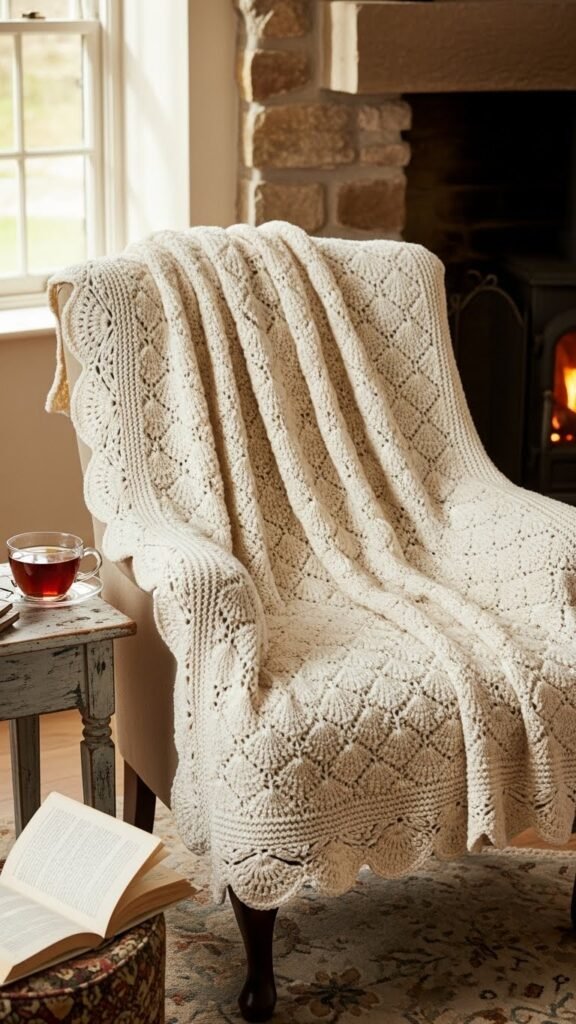
When you turn your blanket to a rectangle, give the corners special attention so the shell pattern flows gracefully instead of bunching or stretching. Soften corners by easing corner scallops—reduce or expand stitches gently and mirror adjacent rows. For end shells, add half-shells or small picots to bridge edges, keeping rhythm and allowing the throw to drape freely with that cozy, cottage finish.
Delicate Picot-Scallop Baby Blanket
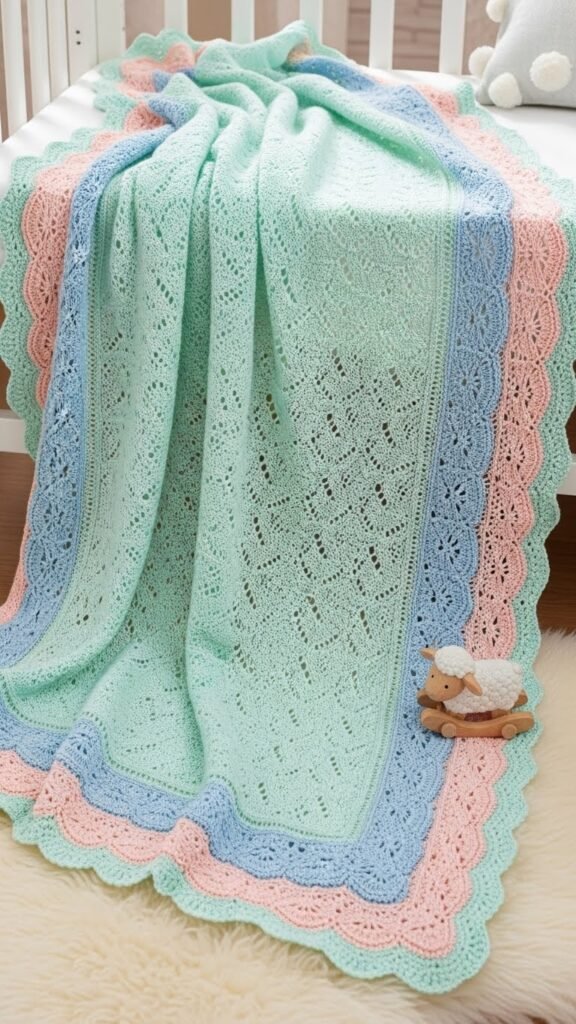
Often you’ll reach for soft pastels and tiny stitches when making a delicate picot-scallop baby blanket, because that lightness helps the scallops read small and sweet without weighing the fabric down.
You’ll choose airy yarn, add lace motifs along the border, and finish with tiny picots for gentle texture. Work loosely, block lightly, and let the piece breathe for carefree cuddles.
Heirloom Crochet Scallop Bedspread
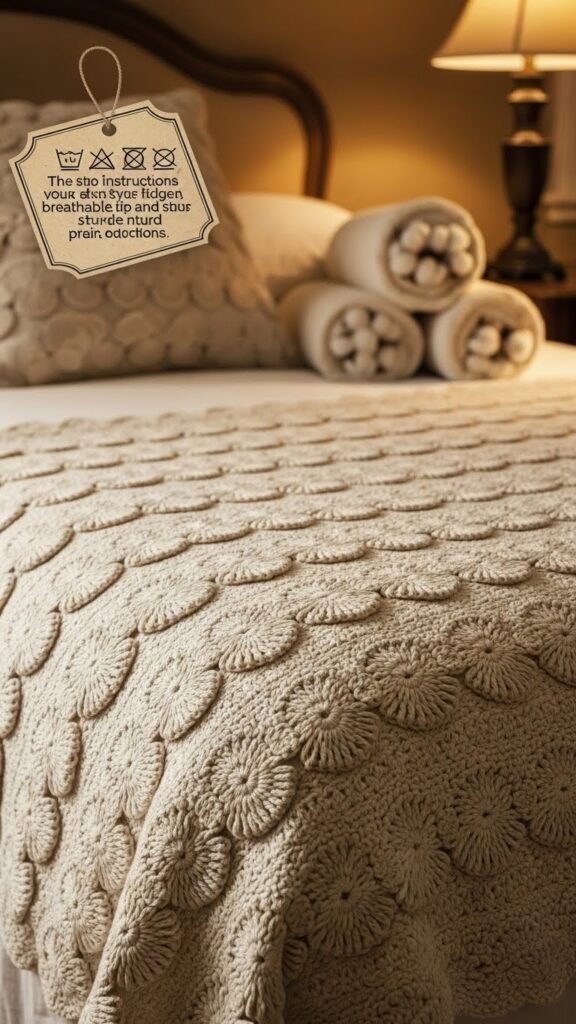
Think of an heirloom scallop bedspread as a slow-made centerpiece that will age into family history; you’ll work rows of delicate shells and sturdy joins so the piece can be used and loved for decades.
You’ll follow antique patterns, choose breathable natural yarns, and savor long stitches.
For heirloom maintenance, label care, mend gently, and store rolled in cotton to keep freedom in use.
Soft Pastel Granny Square With Scallops
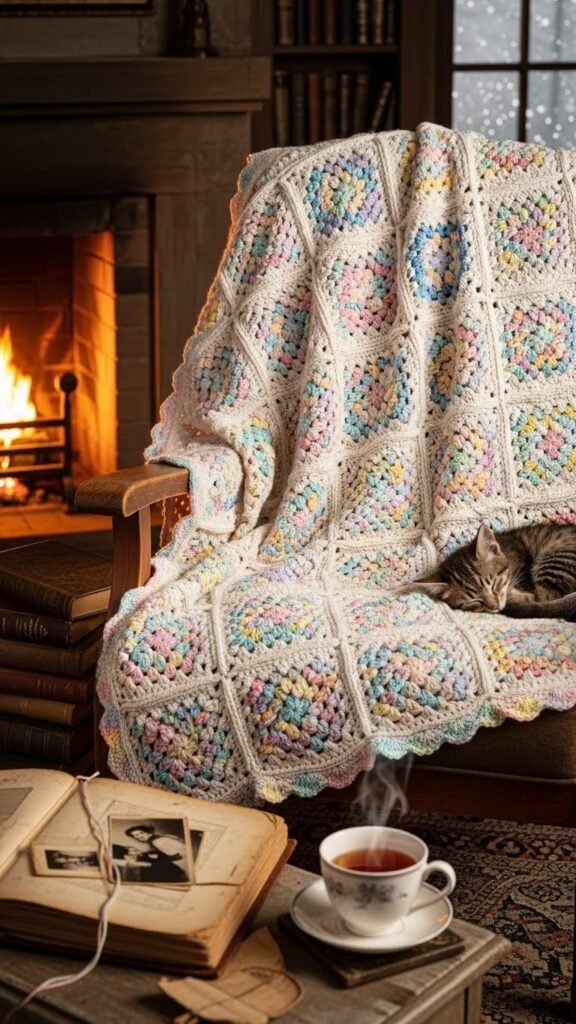
If you loved how the scallop bedspread ages into family history, you’ll enjoy putting that same patient care into a soft pastel granny square with scallops.
You’ll choose airy pastel motifs, let granny texture sing, and stitch deliberately.
Block each square for neat scallops, weave in ends loosely for softness, and mix colors freely so each square feels like a small, liberated heirloom.
Textured Bubble Scallop Throw
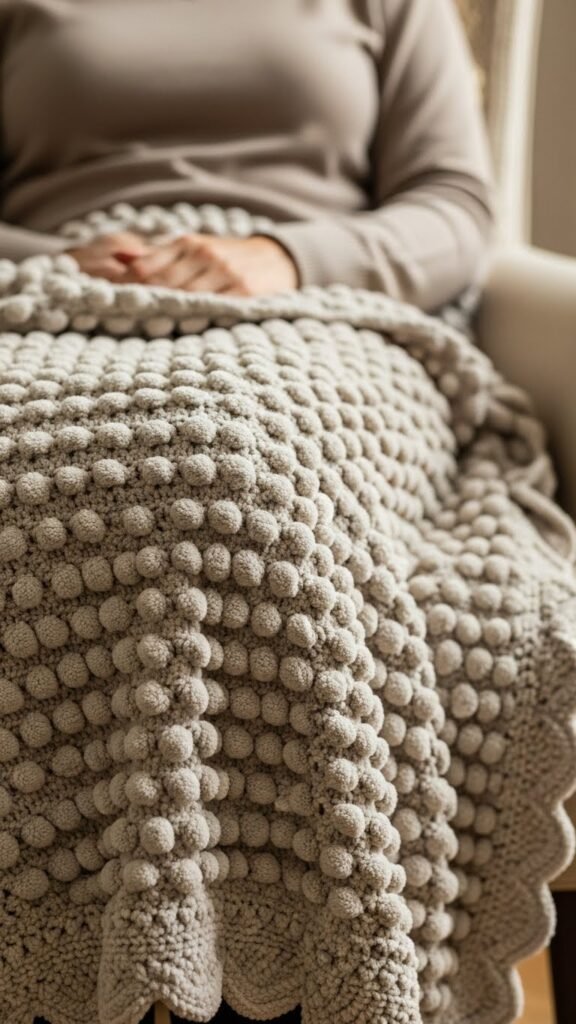
When you settle into a chair with this Textured Bubble Scallop Throw draped over your knees, you’ll notice how the raised bubble clusters catch the light and invite touch; the scalloped border frames the whole piece like a soft, handmade hug.
You’ll love the bubble texture for warmth and grip, the scallop motif for charm, and simple stitch counts make customization easy and freeing.
Reversible Scallop Edge Knit Blanket
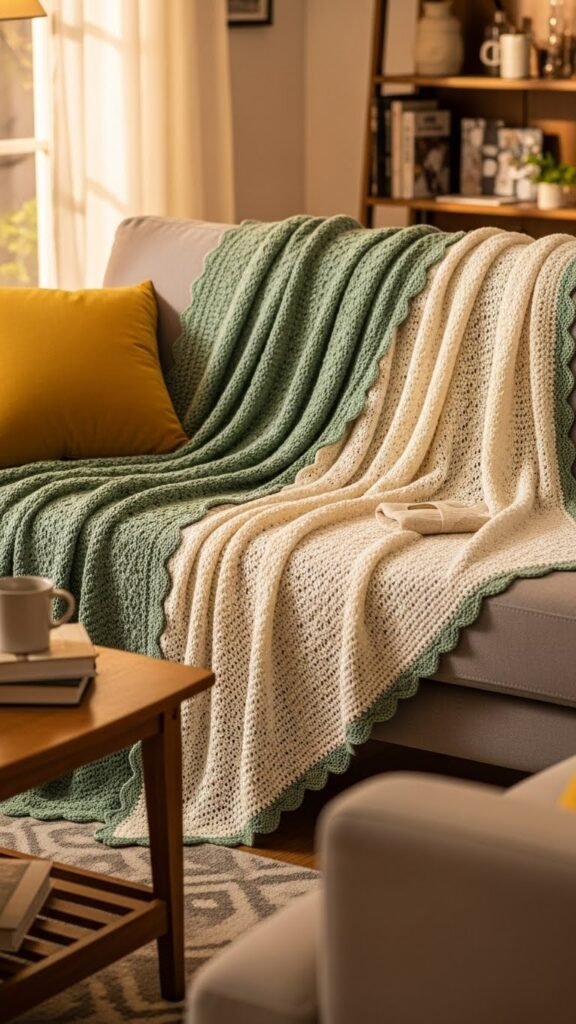
A reversible scallop edge knit blanket gives you two cozy looks in one: each side shows the scalloped border and clean stitch definition, so you can flip it to suit the room or mood.
You’ll appreciate the edge stability from a slipped-stitch finish and a simple reversible technique.
Choose airy, drapey yarn, block gently, and enjoy freedom to style it any way you like.
Coastal Cottage Blue Scallop Blanket

Give your living room a seaside refresh with the Coastal Cottage Blue Scallop Blanket, which pairs soft, breezy blue shades with a neatly defined scalloped border for a look that feels both relaxed and refined.
You’ll love its beachy texture and coastal palette; drape it over a worn armchair, mix patterns confidently, and knot corners for easy storage so you can roam freely.
Lace-Inspired Scalloped Edge Wrap
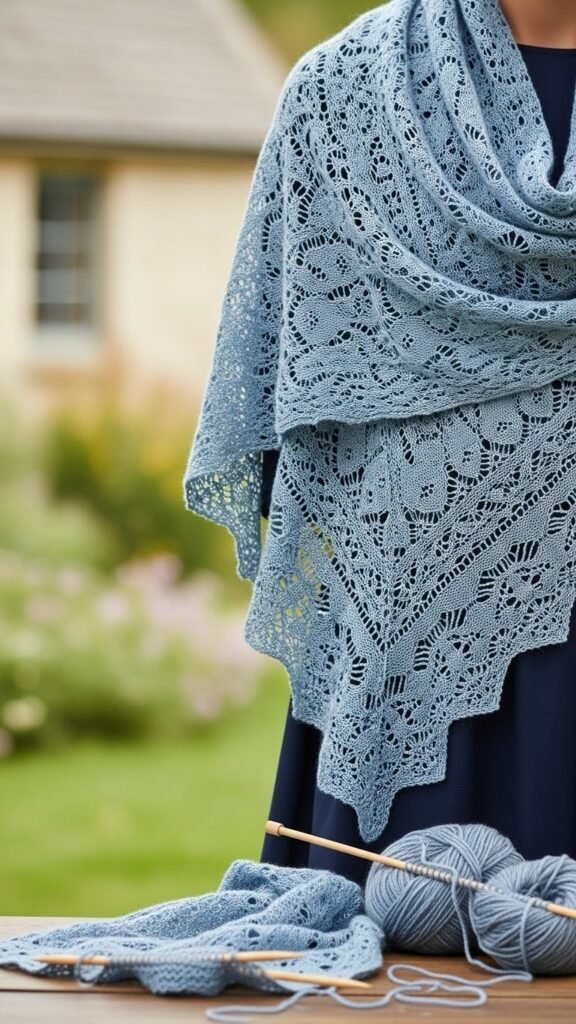
If you loved the airy blues and scalloped trim of the Coastal Cottage blanket, you’ll find the Lace-Inspired Scalloped Edge Wrap brings that same gentle rhythm into a more delicate, wearable form.
You’ll drape soft yarn with open lace motifs and follow a measured scallop repeat, shaping rows to flow around shoulders. Work on loose needles, block gently, and wear freely for cottage strolls.
Quick Weekend Scallop Border Project
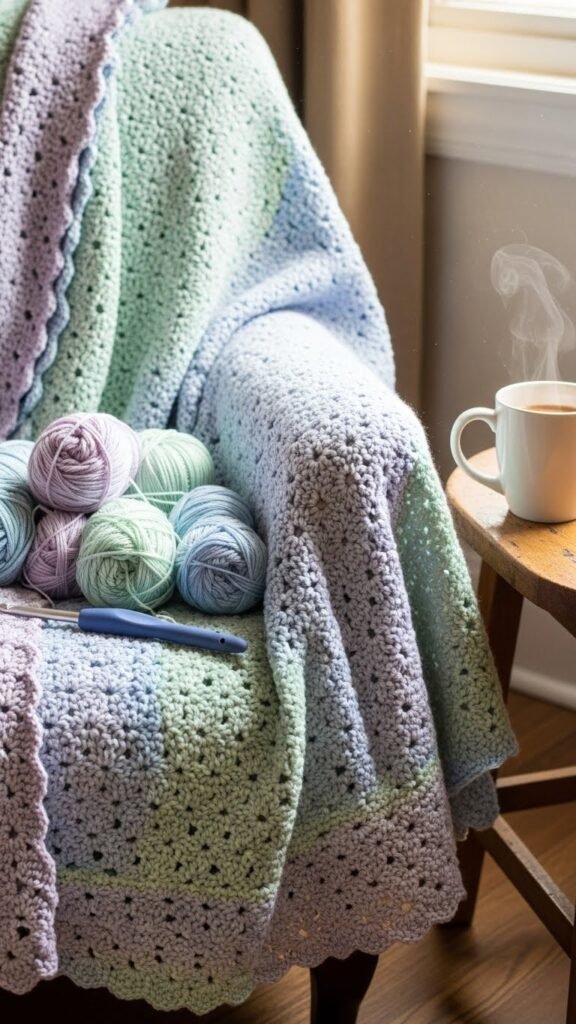
Pick a small, satisfying project you can finish by Sunday—this scallop border is perfect for adding a cozy, polished edge to a finished blanket, throw, or even a pillow cover.
You’ll love a weekend workshop vibe: pick soft yarn, a comfy hook, and use scallop shortcuts—larger stitches, consistent tension—to breeze through rows.
Finish with blocking for crisp, liberated charm.
Eco-Friendly Scallop Edge Merino Throw
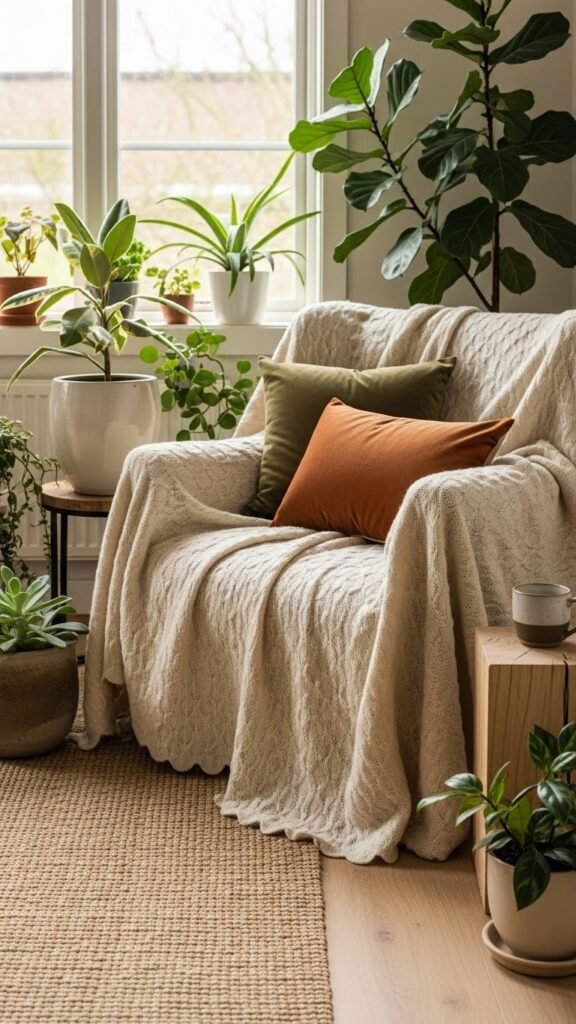
Softness meets sustainability in this eco-friendly scallop edge merino throw you can actually feel good about using and gifting. You’ll choose sustainable fibers like organic merino, dye with low-impact methods, and stitch scallops by hand for a personal touch.
Keep scraps to a minimum, plan cuts to create minimal waste, and drape the warm, airy throw over chairs to invite cozy, unfettered living.
Decorative Trim Scalloped Fleece Blanket
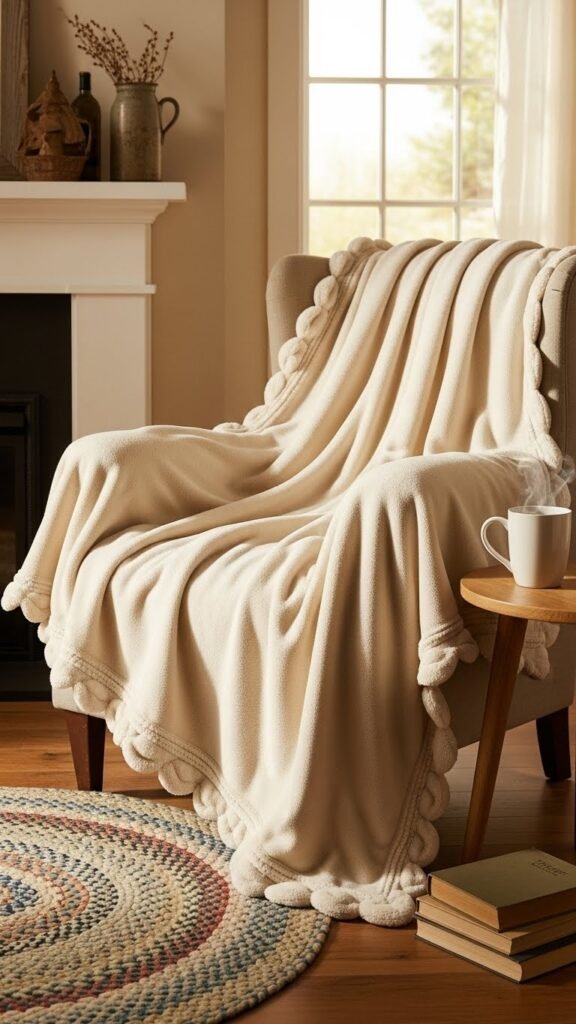
Often you’ll reach for a fleece blanket when you want instant warmth, and adding a scalloped decorative trim turns that everyday comfort into a polished accent piece you’ll be proud to display.
You’ll stitch a textured trim along edges, snip precise curves, and finish neat corner scallops. Choose bold or neutral fleece, press seams flat, and let your cottage-style blanket reflect relaxed, confident freedom.
Layered Shells for Extra Warmth Blanket
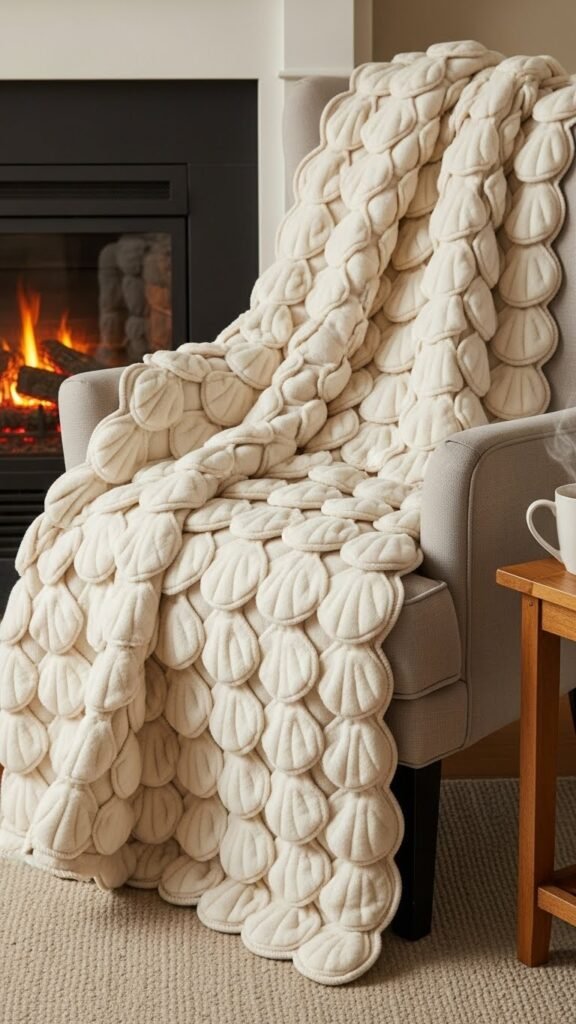
When you want extra warmth without bulk, stitch scalloped “shell” layers along the blanket’s surface to trap heat and add visual texture. You’ll sew overlapping rows of thermal scallops, spacing them to create air pockets that act as layered insulation.
Choose soft wool or insulated fleece, secure edges neatly, and vary shell size for a free, cottage-ready look that’s cozy and practical.
Contrast-Color Scallop Fringe Blanket
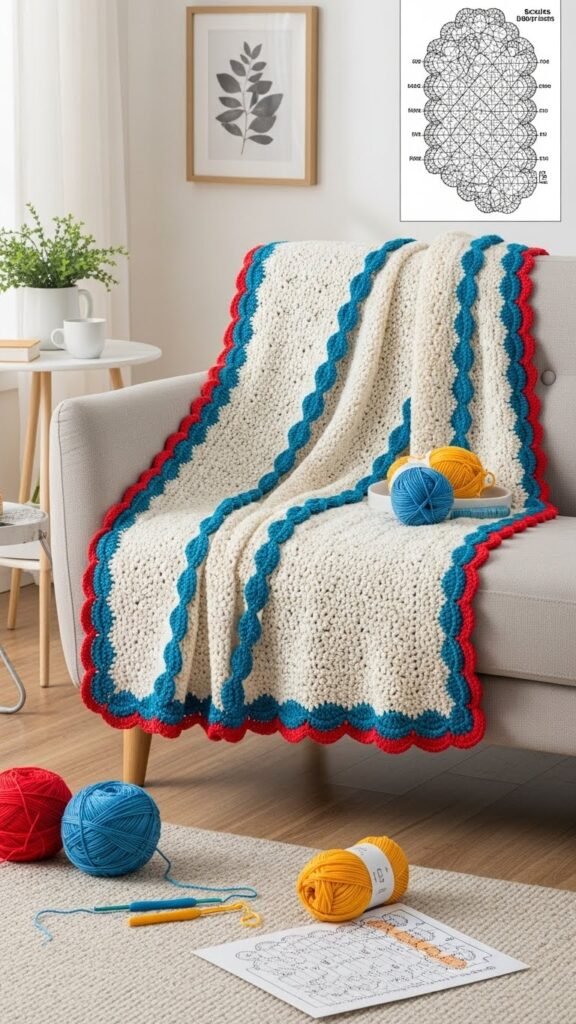
With a pop of contrasting color along the edges, a scallop-fringe blanket instantly becomes a focal point in your living room or bedroom; you’ll stitch neat, repeated scallops in a bold hue to frame the main body fabric and add a crisp, finished look.
Choose yarn for color contrast, plan scallop placement at corners and sides, and work steady, even stitches for a free, polished result.